Home forest at the bottom – Valtavaara, Kuusamo.
I have developed an appreciation for Nordic nature. I cannot imagine my holiday on a scorching sandy beach, but rather amidst crunchy and rustling snow. The desire to encounter the snowy landscapes familiar from my childhood led me in March 2015 to Kuusamo, located in the region of Northern Ostrobothnia in Finland. For years, I had seen stories and captured moments of this place through acquaintances who are photographers and nature enthusiasts. The postcard-like views depicted in the photos I saw, where trees groaned under the weight of snow or where hikers had thrown themselves into the embrace of deep and soft snow, touched me so much that I tagged along with a tour operator years ago.
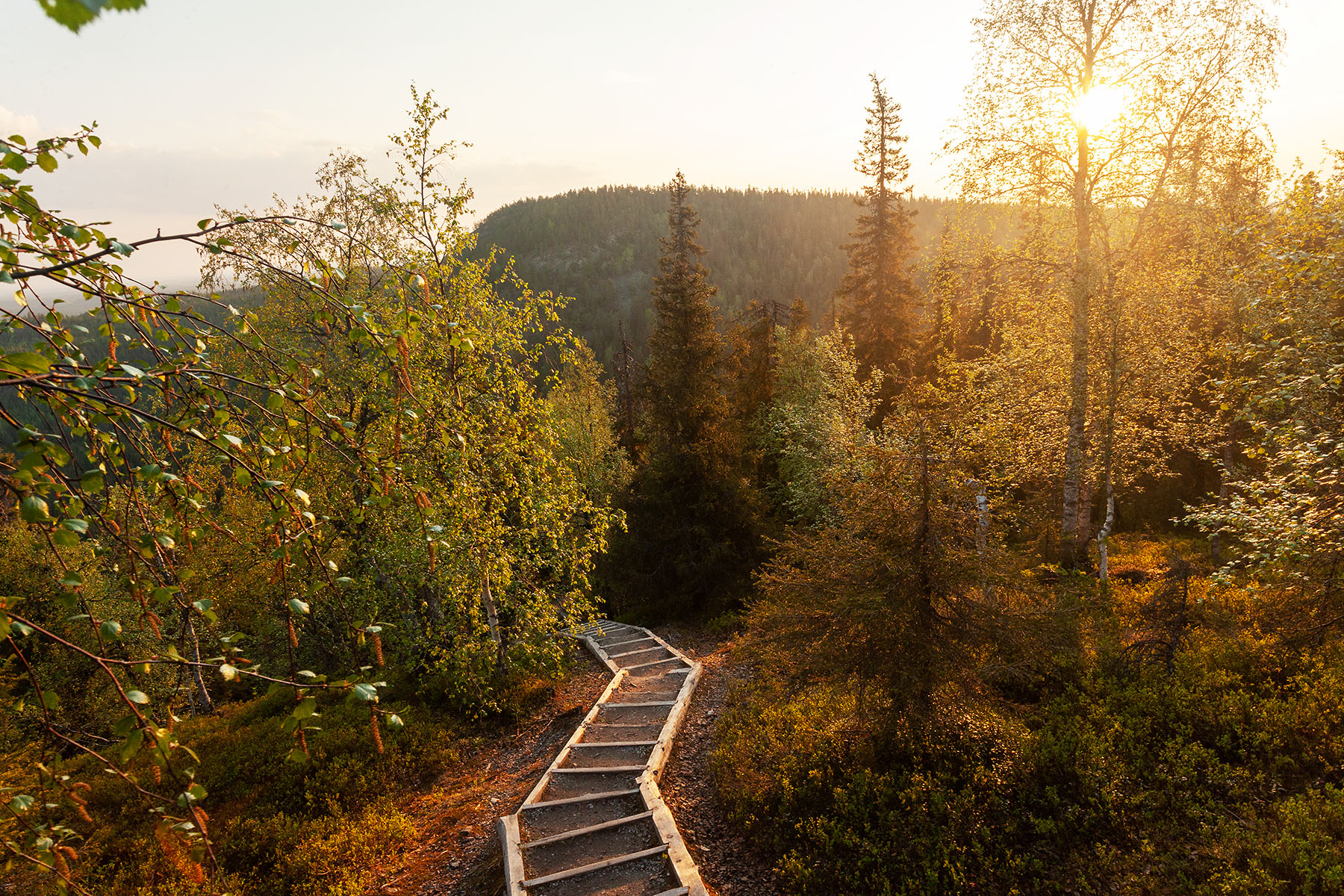
The days spent near Kuusamo were full of visits to various popular hiking trails. Naturally, I didn't manage to get a complete overview of the region's natural treasures with that single trip, of course. Even so, the first time infected me to such an extent that visiting Kuusamo has become something of a disease. To date, the trips have added up to a baker's dozen, and even on that basis, I wouldn't dare claim that I know the local conditions inside out. I'll have to go again.
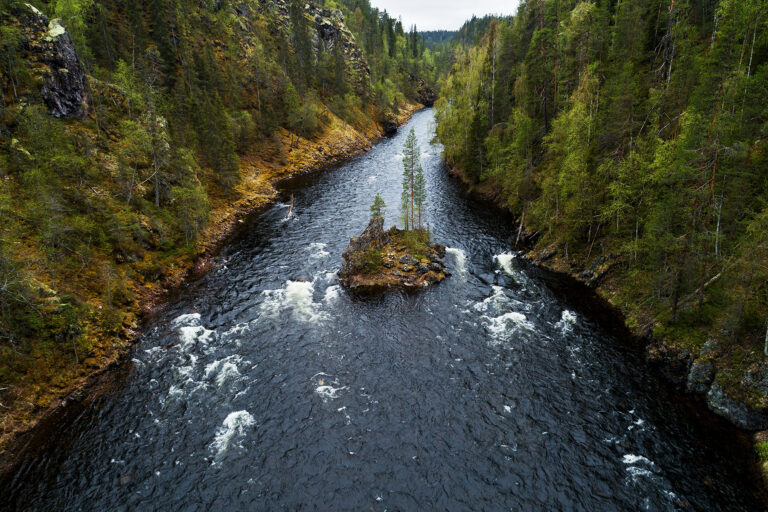
It is possible to travel from Tallinn to Kuusamo using various modes of transport, such as by flights or by crossing the Gulf of Finland by ferry, for example, and driving overland for nearly 800 km. There are also several tour operators in Estonia that organise trips there when possible. Kuusamo covers 5,809 square kilometres, the vast majority of which is forest land, though numerous rivers and streams, small lakes, and bogs also catch the eye. Just over 15,000 inhabitants live in this vast area, mostly concentrated in village centres or the town of Kuusamo. Despite the sparse population density, buildings can be found almost everywhere. Mostly these are mökkis, or holiday homes, which are frequently accommodating tourists visiting the region.
Interest in this place is constantly growing. This is largely reflected in the ever-increasing number of buildings, infrastructure renewals and also the growth in the number of service providers. It is thus possible to order a local nature guide. I recommend first walking the various marked trails; for those, of course, a nature guide is not needed. There are dozens of nature and hiking trails in Kuusamo, the best known and longest of which is the Karhunkierros (Bear's Trail), which also extends into the neighbouring municipality of Salla.
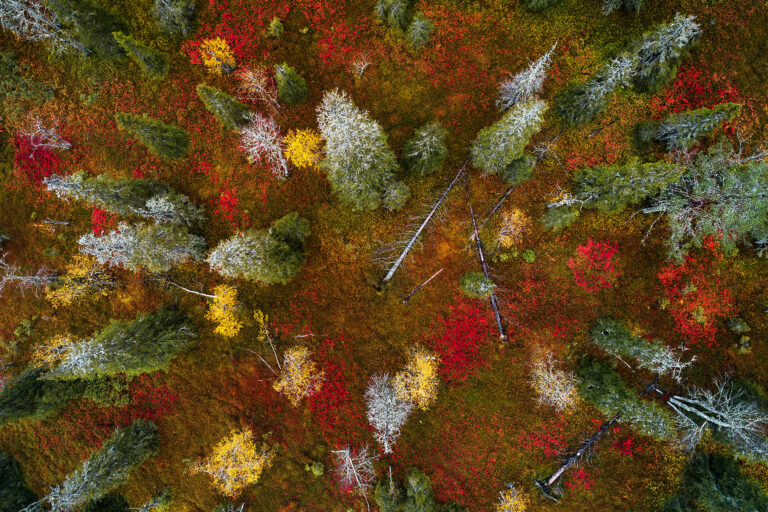
The most visited and considerably shorter nature trails are located in Oulanka National Park in the northern part of Kuusamo, which also extends partly into the neighbouring municipality. The best-known trails in Oulanka are Kiutaköngäs, Hiiden Hurmos, Kanjonin Kurkkaus and Pieni Karhunkierros, or the Little Bear's Trail. When walking along them, you can be sure you will cross paths with at least a few hikers. During the peak season, such as in summer, winter and from September to October during the ruska, or autumn colours, however, there will be significantly more nature enthusiasts.
Even during the peak season, despite the large number of visitors, one can see curious Siberian jays along their trails, and with luck, self-absorbed pine grosbeaks, hazel grouse scurrying along the dwarf shrubs, three-toed woodpeckers tapping quietly on spruces, or, for example, rare plants such as the rare fairy slippers blooming from late May to mid-June, which are also the symbol of Oulanka National Park. These wonderful, tiny orchids burst into flower essentially right after the snow melts, when the surrounding nature is still in golden tones. The easiest place to see them is around the Kiutaköngäs trail.
Often falling in mid-October, the snow cover in Kuusamo sometimes remains until the first days of June. This is one of the snowiest regions in Finland. Depending on the year, the average snow depth can range between 80 and 90 cm. Last winter, however, it even exceeded a metre. The abundance of snow places certain limitations on moving through the landscape for both people and forest inhabitants, and at that time, approaching birds and animals is very difficult.
Kuusamo is often called the gateway to Lapland. It is a place where, thanks to the soil and diverse habitats, species living in the north and south, east and west meet; a place where there is something to discover in every season, including spring and summer.
Primeval forest in the north
Regardless of the weather, on every possible morning I make my way to the conifer forest rising nearly 100 metres from the garden, to ponder amongst its Scots pines, and to observe and make sense of my surroundings. I consider this place a soul-reviving home forest, where neither the bark-clad trees nor the feathered inhabitants are strangers. I have several home forests whose well-being I care about and with which I have developed a bond over time, and some are even outside Estonia. Over the years, such an attraction has developed for the ancient forest of Valtavaara, stretching near the village of Ruka in Kuusamo, nearly 1000 km away from my home village in Pärnumaa.
Valtavaara is one of the most prominent ridges in Kuusamo, standing out clearly from the surrounding landscape due to its elongated shape. When talking about Valtavaara, the word mountain rarely crosses my lips, despite the fact that its highest point is nearly 490 metres above sea level and it is one of the highest peaks in the region of Northern Ostrobothnia.
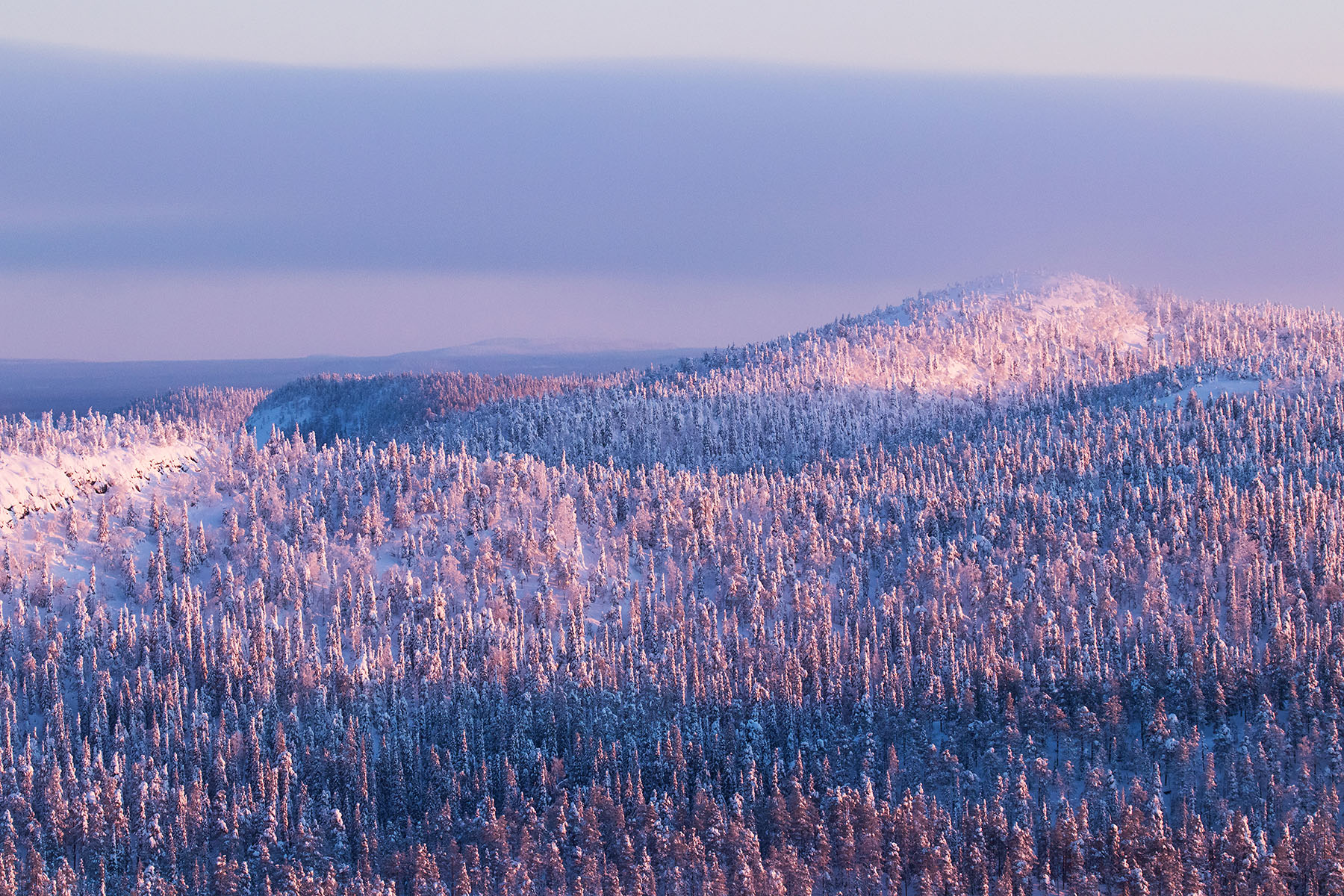
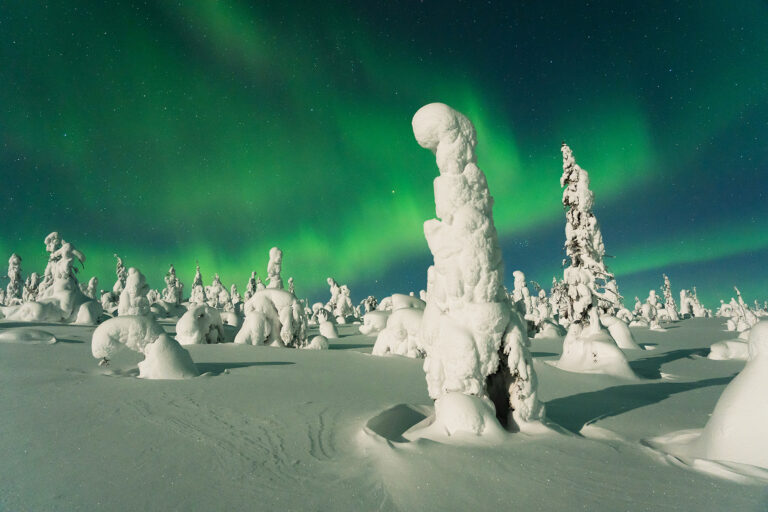
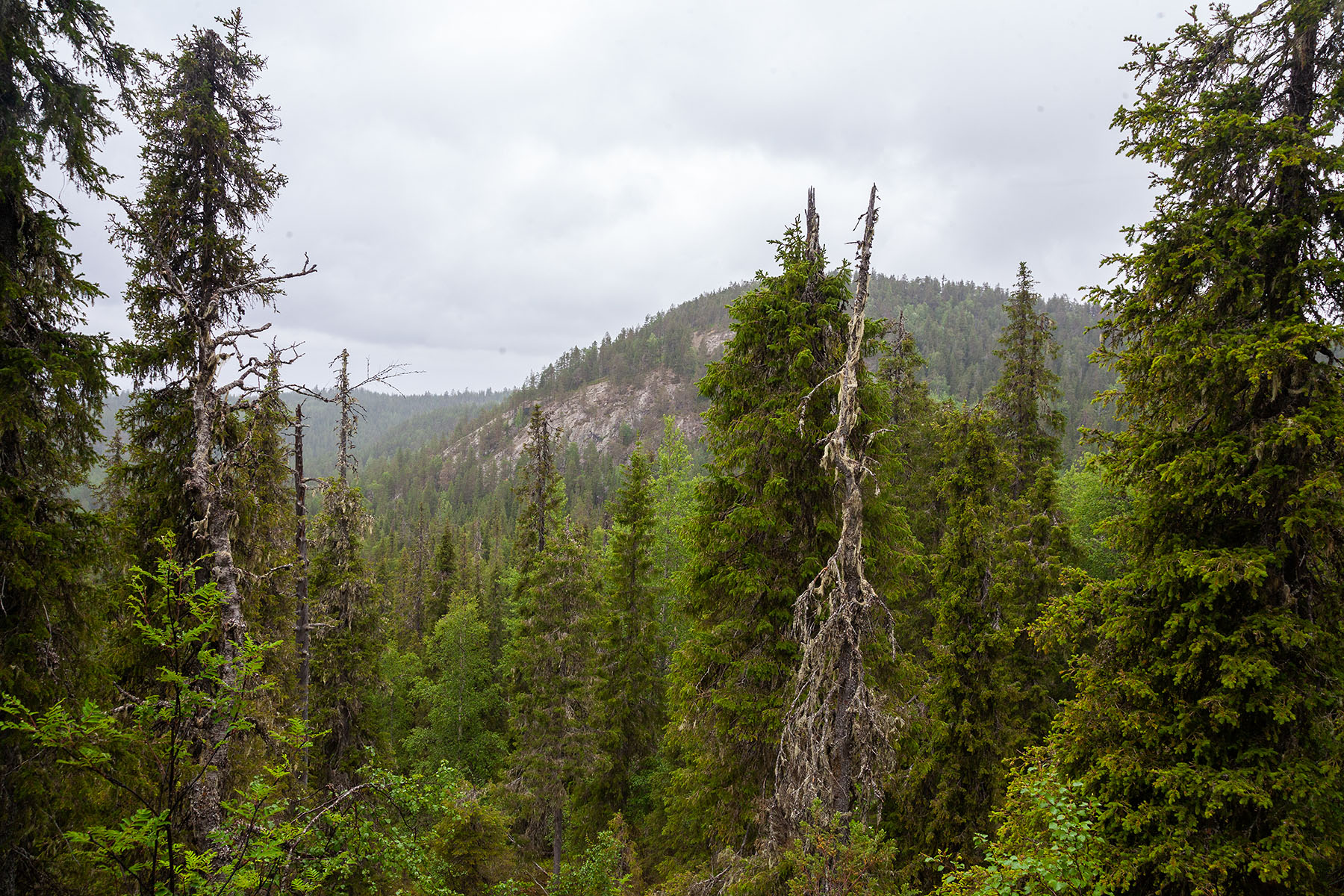
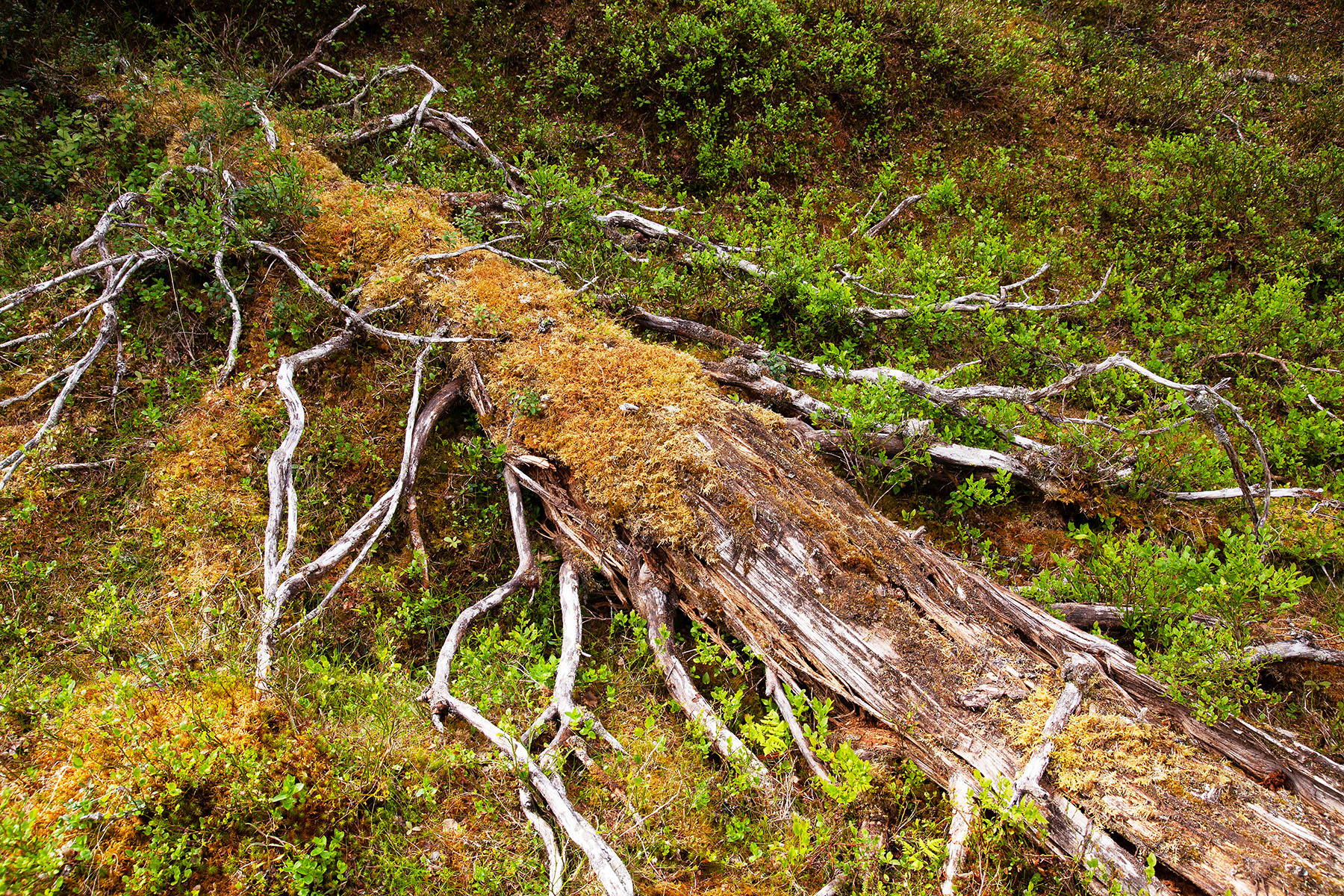
Now wandering through the forest on steep slopes both in late winter and early summer, by night and by day. In the snow-free season, the forest is characterised by tree giants resting on a carpet of moss, lichens adorning stiff branches hardened by fickle conditions, and large, human-height wood ant mounds, with even patches of cowberry bushes covering their crowns like caps. Winter Valtavaara also has its own charm. This is a time when one does not easily stray from the trails in this area without snowshoes or touring skis, as the bold nature lover may in places be greeted by a blanket of snow up to one and a half metres thick. The trees are also covered in a thick mantle of snow, and the ears begin to ring with the silence.
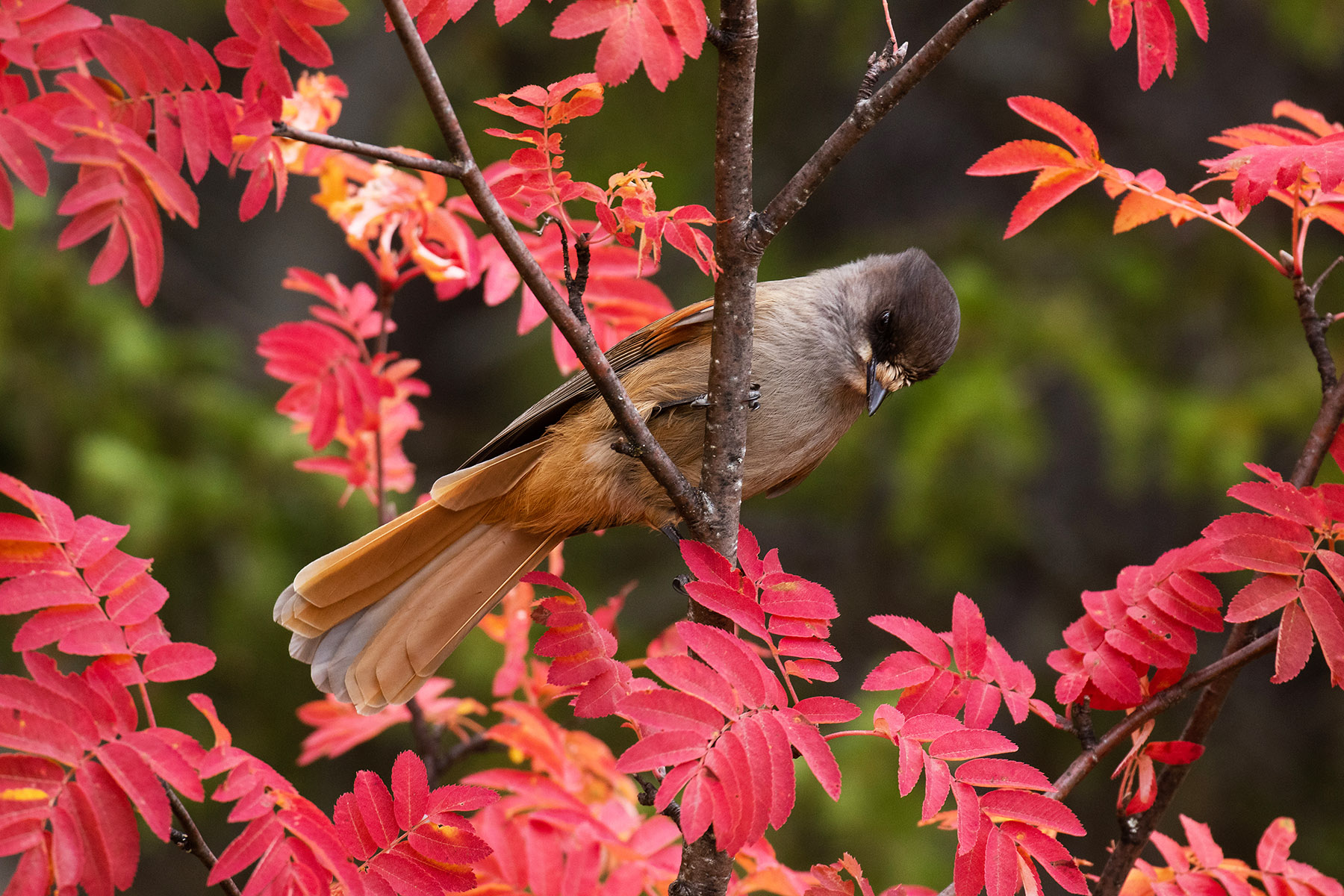
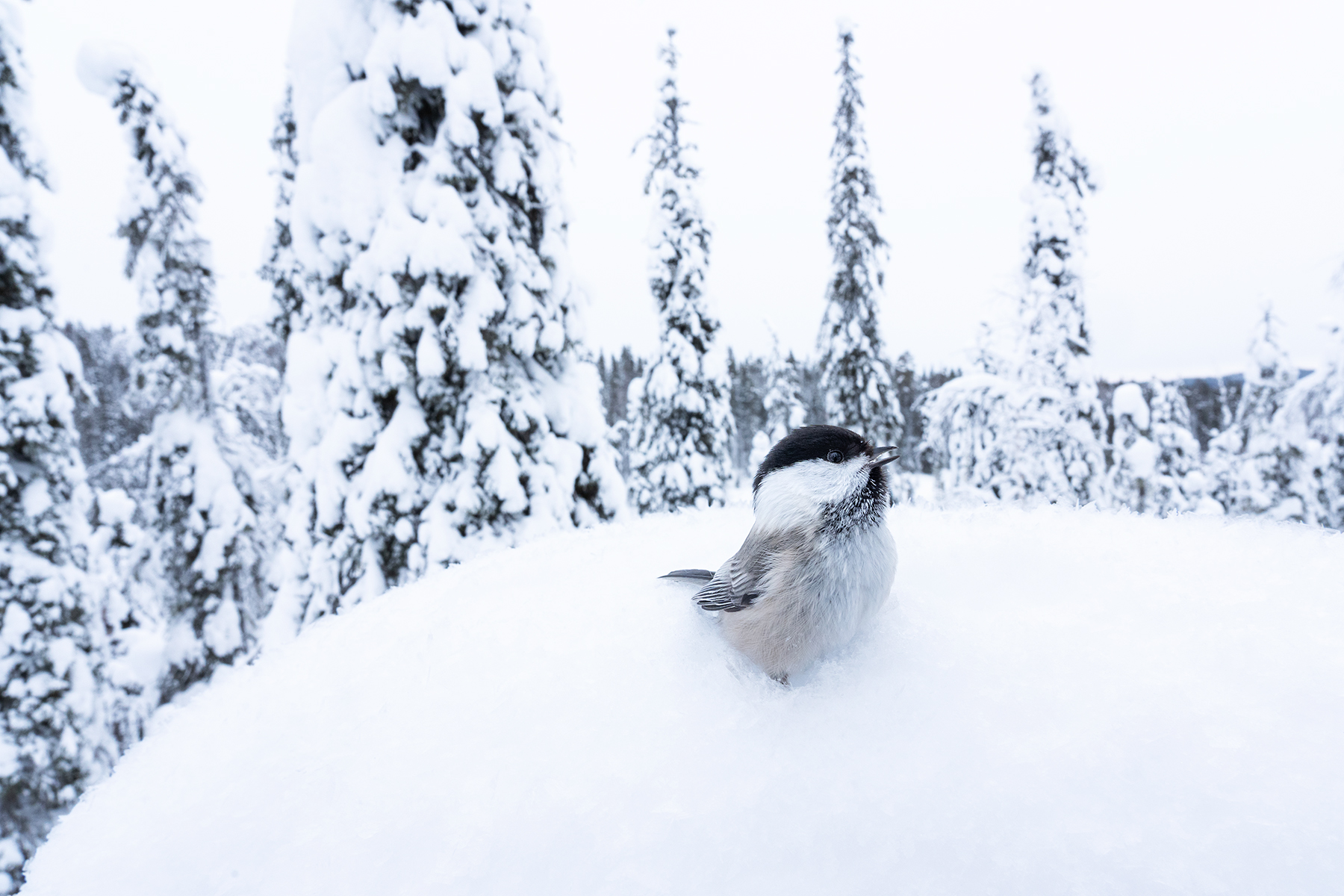
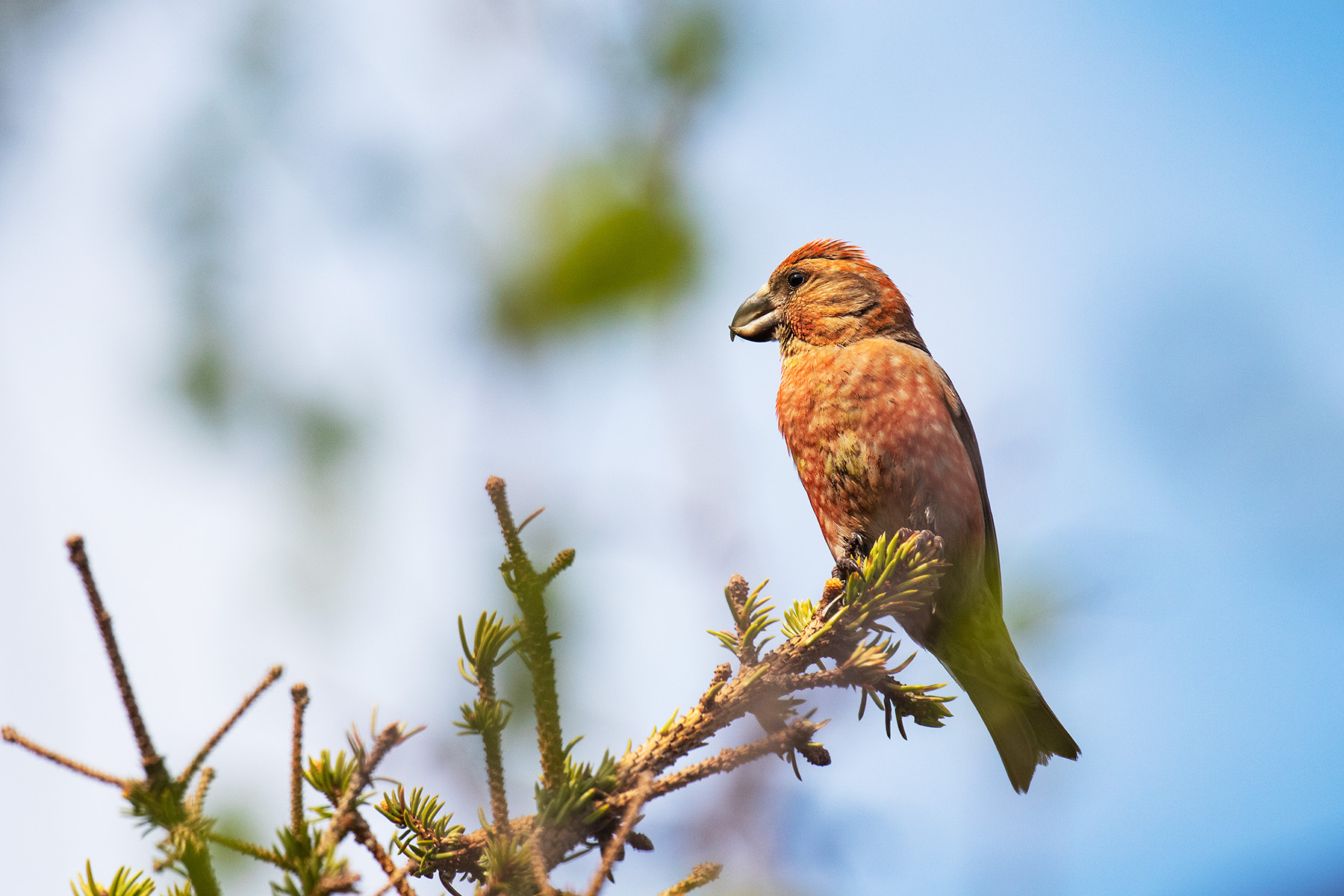
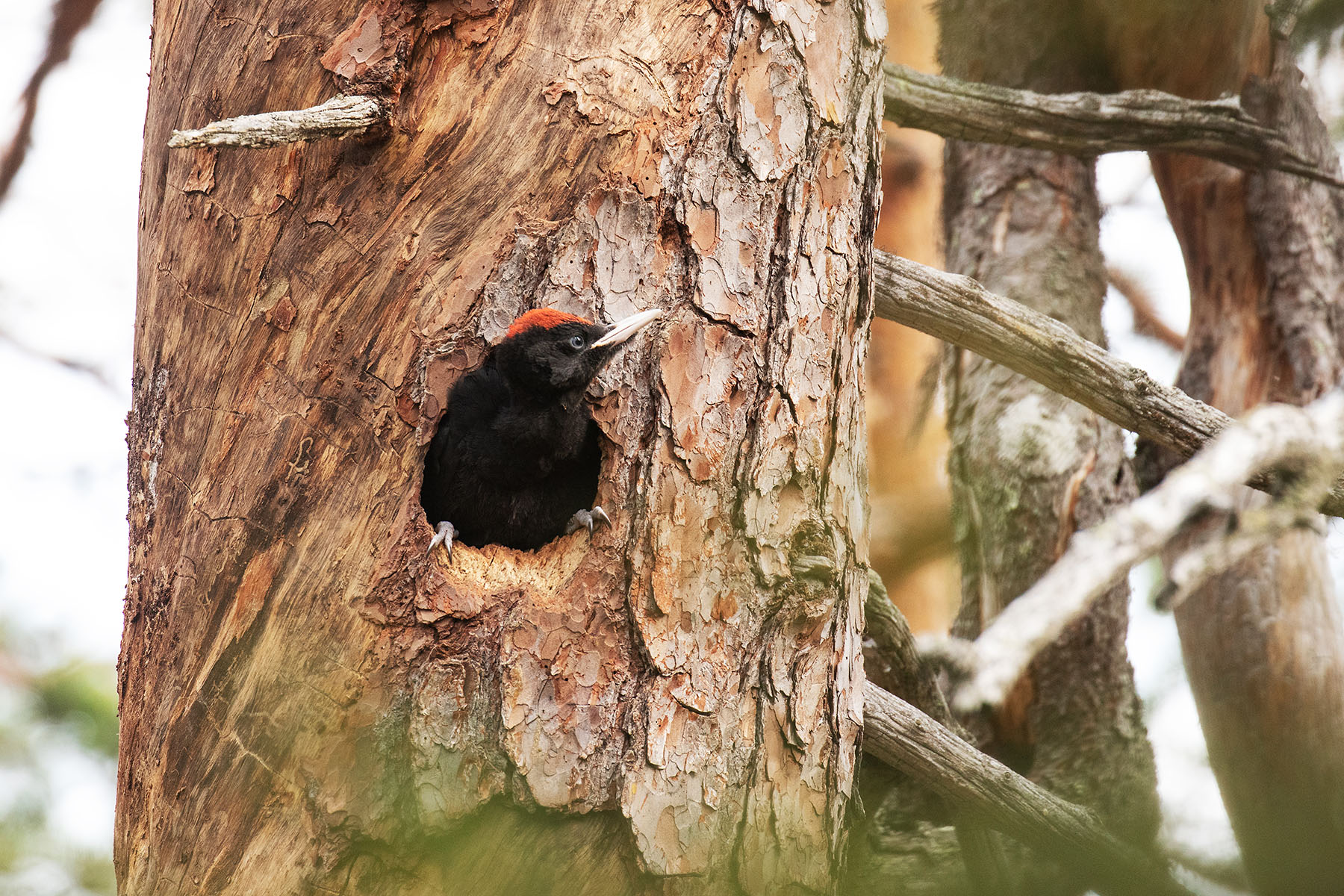

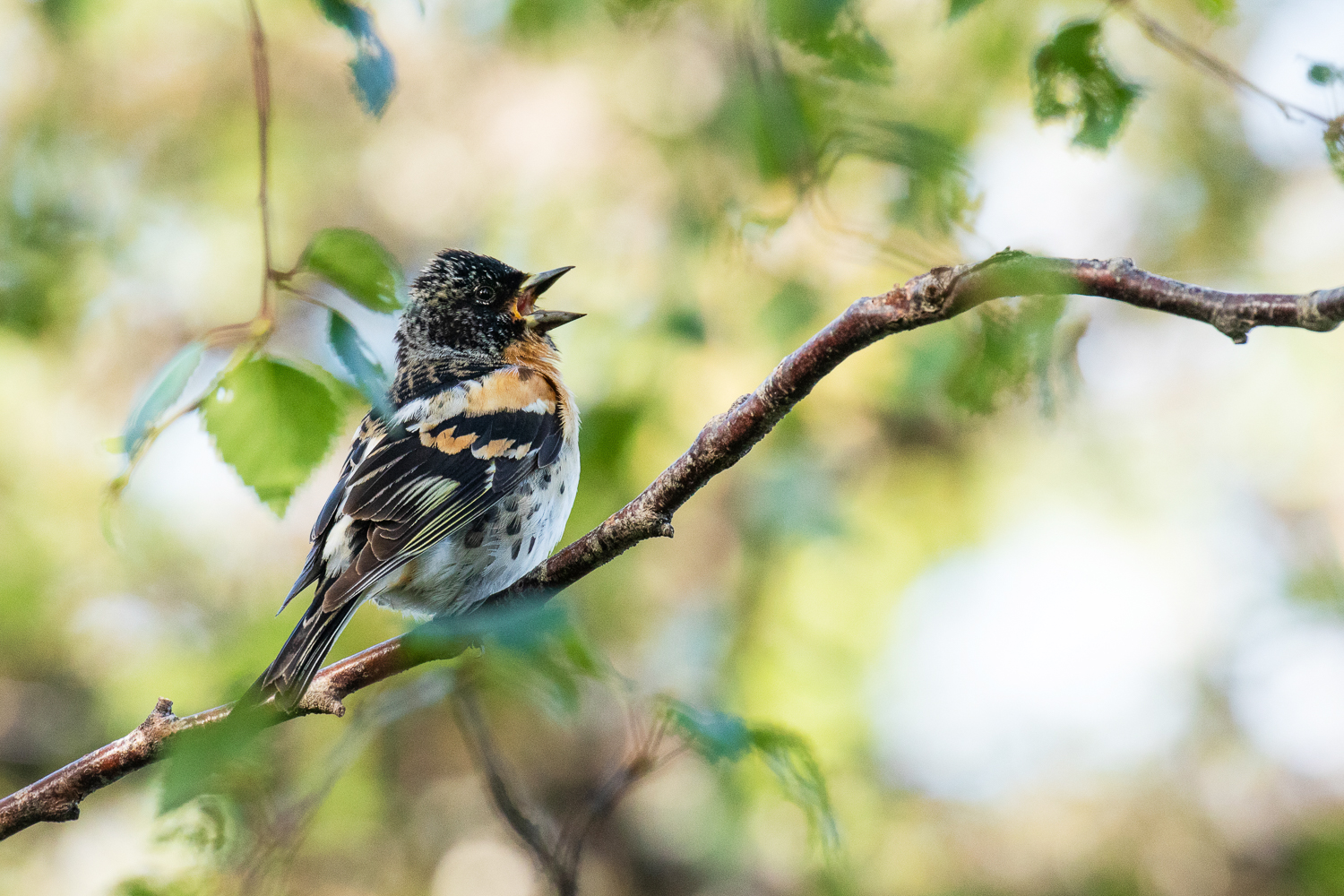
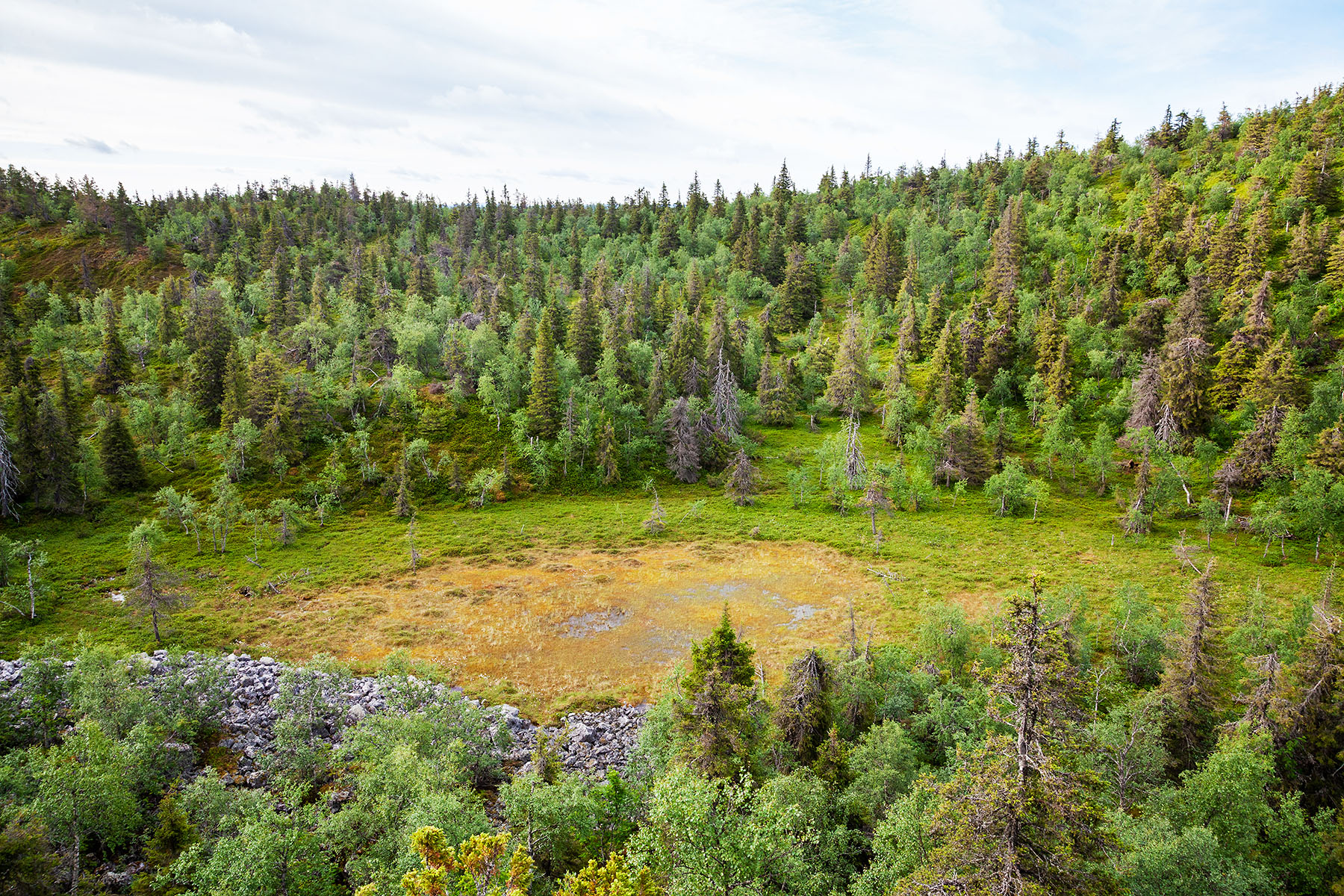
One thing that catches the eye, in addition to the weather-beaten trees or nature enthusiasts trudging along the hiking trails of Valtavaara, is the abundance of birdlife in the place. It is rather like an island of birds in the middle of intensively managed stands and cabins scattered amongst the forests. Regardless of the fact that the ever-expanding Ruka ski resort is located right next to Valtavaara, and the area is crossed not only by smaller nature trails but also the Bear Trail (Karhunkierros), silence can be found amidst the tree trunks. Peace and a suitable habitat in the form of bog flushes, pools, ancient forest corners and slopes have also been found by the feathered ones.
That this is one of the region's best forest birdwatching spots is something that local ornithologists, nature guides and travel guides have all confirmed to me over the years. I have mostly been a bit sceptical about such recommendations, since, at best, the spots recommended in print travel guides have only revealed birds operating at a distance. As for Valtavaara, however, I can confirm that the bird species characteristic of the region can genuinely be seen with one's own eyes in this very spot.
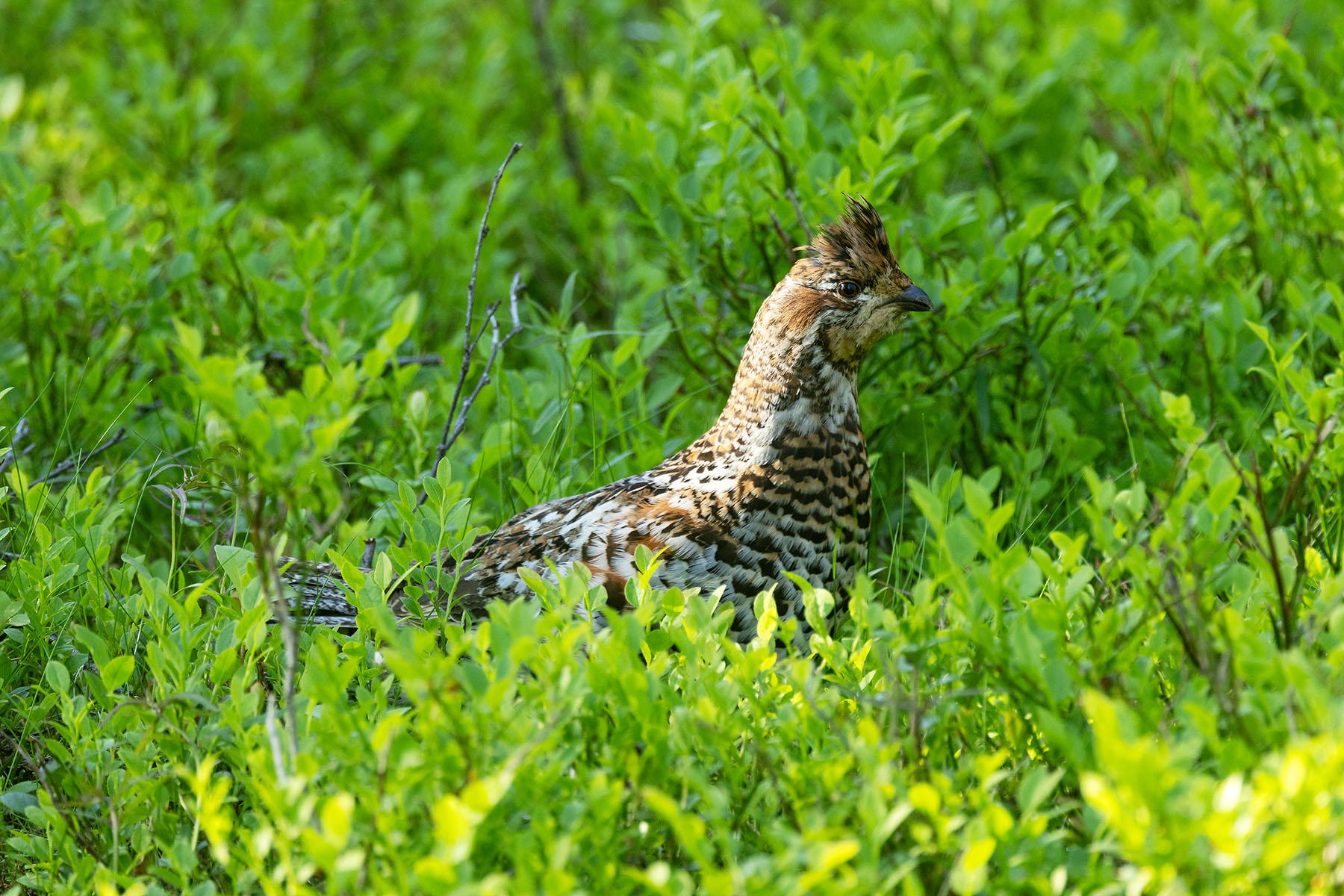

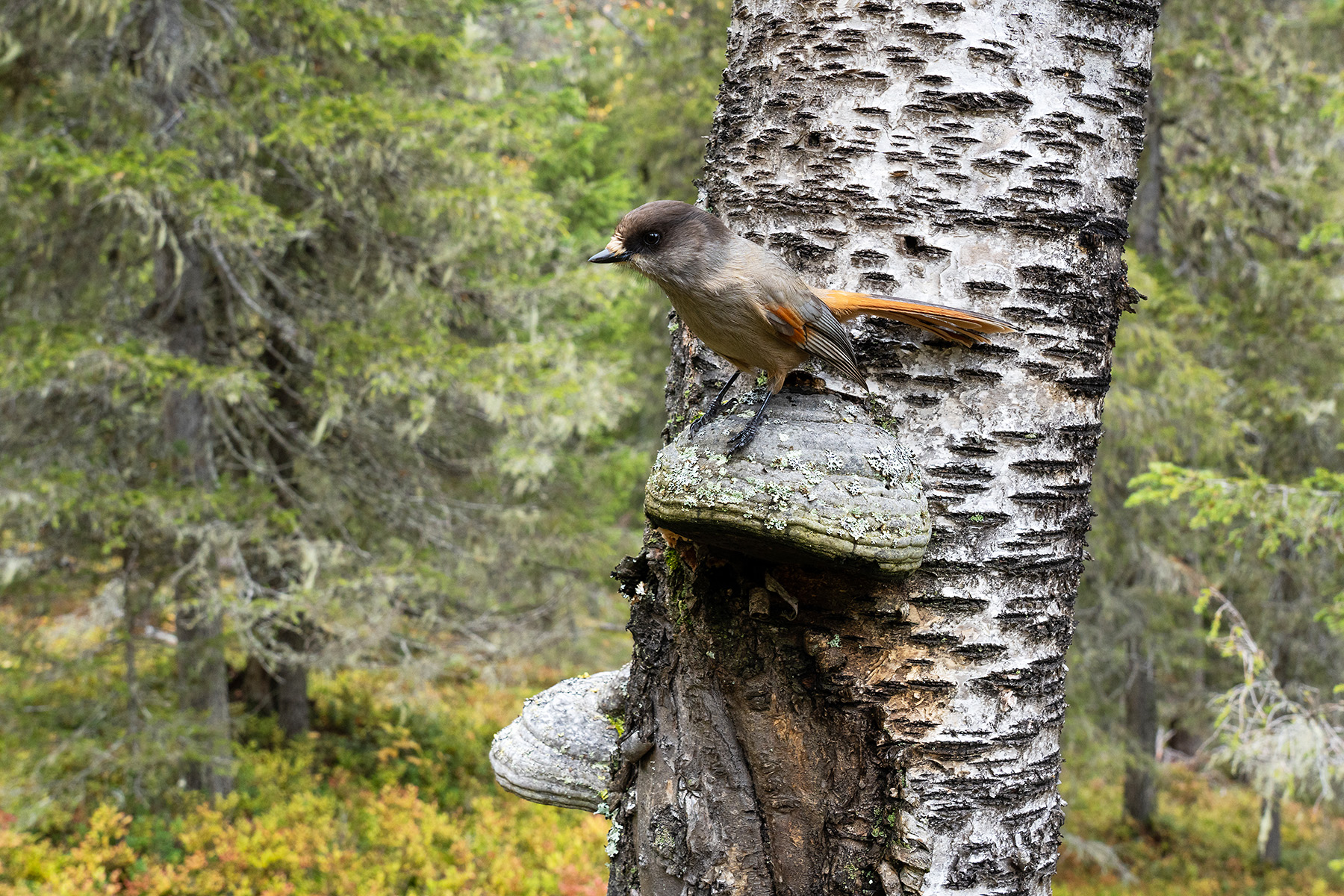
At the beginning of summer on Valtavaara, you might thus encounter pine grosbeaks, capercaillies, redstarts, rustic and little buntings, Arctic and greenish warblers, redpolls, bramblings, waxwings, ring ouzels, Eurasian three-toed woodpeckers, Siberian jays, willow and hazel grouse, red-flanked bluetails, barred and parrot crossbills, Eurasian pygmy owls and Tengmalm's owls, and many other feathered friends. In my opinion, the best time to experience this true bird paradise is from mid-May to mid-July.
As there are several different habitats to be found in Valtavaara, you should not forget the opportunity to discover the summer plant life either. Thus, in various places you might come across blooming rock cranesbill, alpine bearberry, cloudberries or twinflowers.
Duck and willow grouse shooting
In April 2012, while adventuring on the banks of the river running through my home village in Pärnu County, I happened to cross paths with a most peculiar feathered creature – a red-flanked bluetail. Red-flanked bluetails haven't turned up overly often in Estonia. My encounter with it was the fourth known one in our parts. Following that fortunate moment, I secretly dreamed of meeting this beautiful winged creature in the ancient spruce forests of Finland too. By studying books, I gathered that the best nearby location to bump into one is in Northern Finland, in the Kuusamo region. It took 7 years until I found myself on a summery Valtavaara – one of the best bluetail observation spots in Finland.
Since the 1990s, the red-flanked bluetail has become an annual breeding bird in Finland, with its total population there this century estimated at 150–6,500 pairs. In Europe, the red-flanked bluetail breeds regularly primarily in Finland and Russia. Across the Gulf of Finland, the red-flanked bluetail inhabits mainly old-growth coniferous forests, particularly spruce forests on mountain slopes. Suitable breeding sites are, of course, plentiful in Kuusamo. Iivaara, which rises near the Russian border, and Valtavaara, located near the village of Ruka, stand out particularly for their abundance of red-flanked bluetails. However, the former is not as popular a destination among birdwatchers as Valtavaara.
Adrenaline surged as I stepped out of the car in early June 2019 amidst the conifers of Valtavaara and heard one red-flanked bluetail singing, then a second, and indeed even a fifth. Unnoticed, I had managed to climb a steep slope that would normally leave me puffing, only to see a dark blue singer atop a candle-shaped spruce. My disappointment was immense when a young male came into view. The subsequent bluetails I managed to observe from a distance were also rather modest in appearance, and the striking dark blue plumage predominantly seen in bird guides was nowhere to be found. Nevertheless, there were dozens of red-flanked bluetails in these forests in early June, and it was evident that territorial disputes among them were commonplace. I managed to photograph the young and single males from a distance, after which I decided to sit down on a moss-covered boulder.
I couldn't enjoy my moment of rest for long, as a very colourful character was busily pottering about among the junipers and broken spruces. The long-awaited older male bird was feeding between songs like a flycatcher and on more than one occasion came within a few metres of me. Suddenly it flew up to the top of a nearby spruce and began brightly proclaiming its territory. Although it changed treetops when I approached, I didn't notice the timidity that bird books and local bird guides had attributed to the red-flanked bluetail. The red-flanked bluetail is indeed cautious, but in my opinion a little more tolerant of human presence than, say, the common redstart or the redwing. Of course, it's worth bearing in mind that every individual has a different threshold of tolerance.
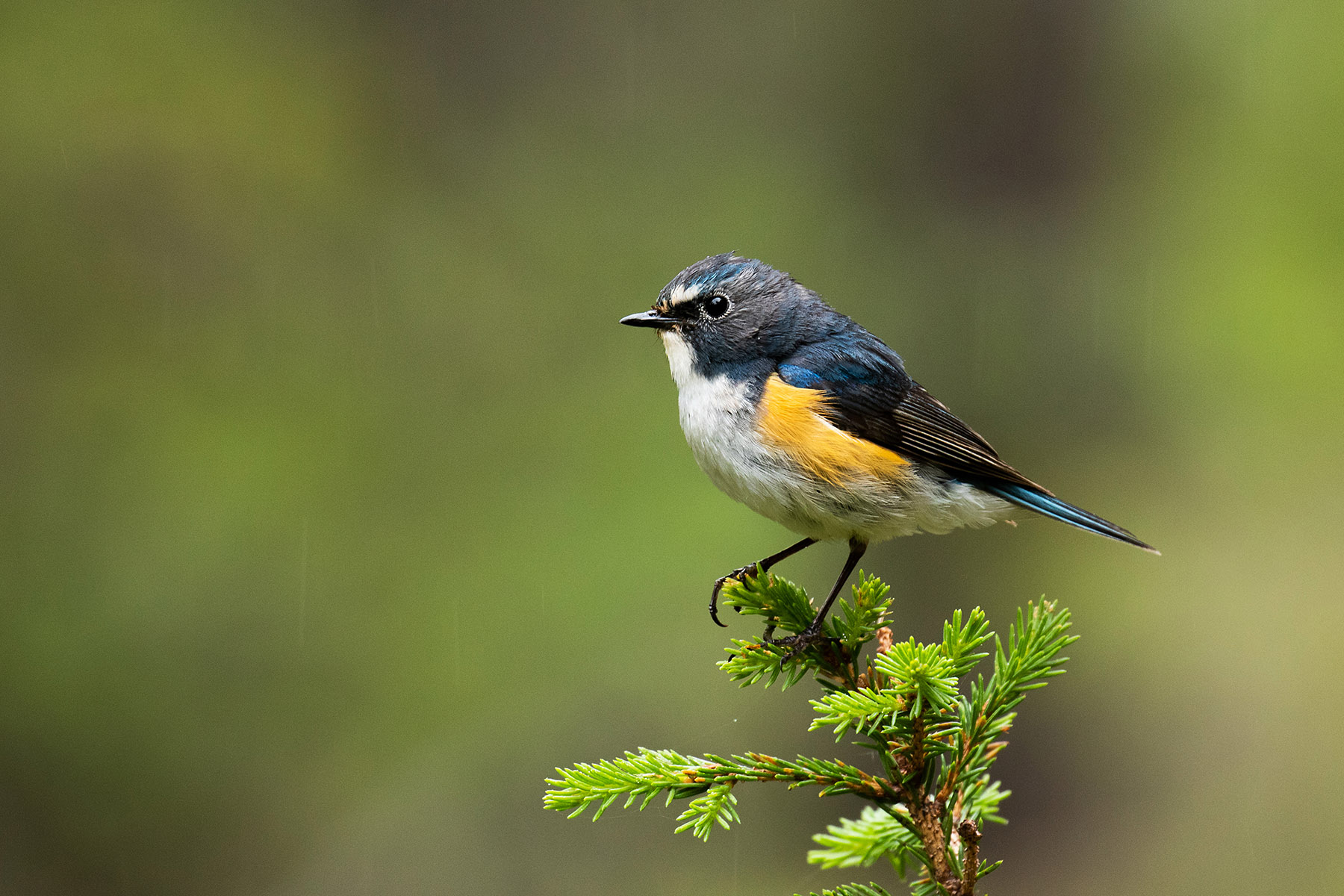
By now it has become clear over a couple of summers that these particularly colourful, old male bluetails roam the forests of Kuusamo in far fewer numbers than the young ones. Since this bird often climbs to the top of a tree to sing, it stands out from afar. The early mornings from the end of May to the first days of July are especially rich in song. But bluetails sing cheerfully during the daytime too.
In addition to this beautiful taiga forest dweller, over the years I have tried to encounter the willow ptarmigan. In Estonia, the willow ptarmigan is one of our most native breeding birds, which has now become quite rare and could chiefly be found living in remote bog massifs. The increasingly snowless winters of the past few decades are putting Estonia's willow ptarmigans to the test, since the willow ptarmigans, which acquire white plumage in late autumn, are easy prey for predators in a snowless environment. The situation with willow ptarmigans is considerably better in Finland, where, in addition to tundra areas, it also nests in open habitats with natural shrub layers in the northern forest zone. In Kuusamo too, willow ptarmigans can be spotted in many places. With a bit of luck, even right in settlements.
Mostly I have spotted willow grouse in this area on small bog patches or at their edges, where both birches and willow bushes are spreading. Although it might seem that, thanks to their white plumage, it is impossible to spot willow grouse in an equally white environment in winter, I think it is even somewhat easier than at other times. Namely, willow grouse mostly operate on the ground and leave behind plenty of signs of activity. Whether these are leaf buds fallen onto the white carpet under the birches, a trail of footprints in the snow, or yellowish-brown, elongated droppings. While during the autumn moult, before the arrival of snow, they are quite timid, in a snowy environment they seem to trust their plumage and do not flee by flying at the first opportunity.
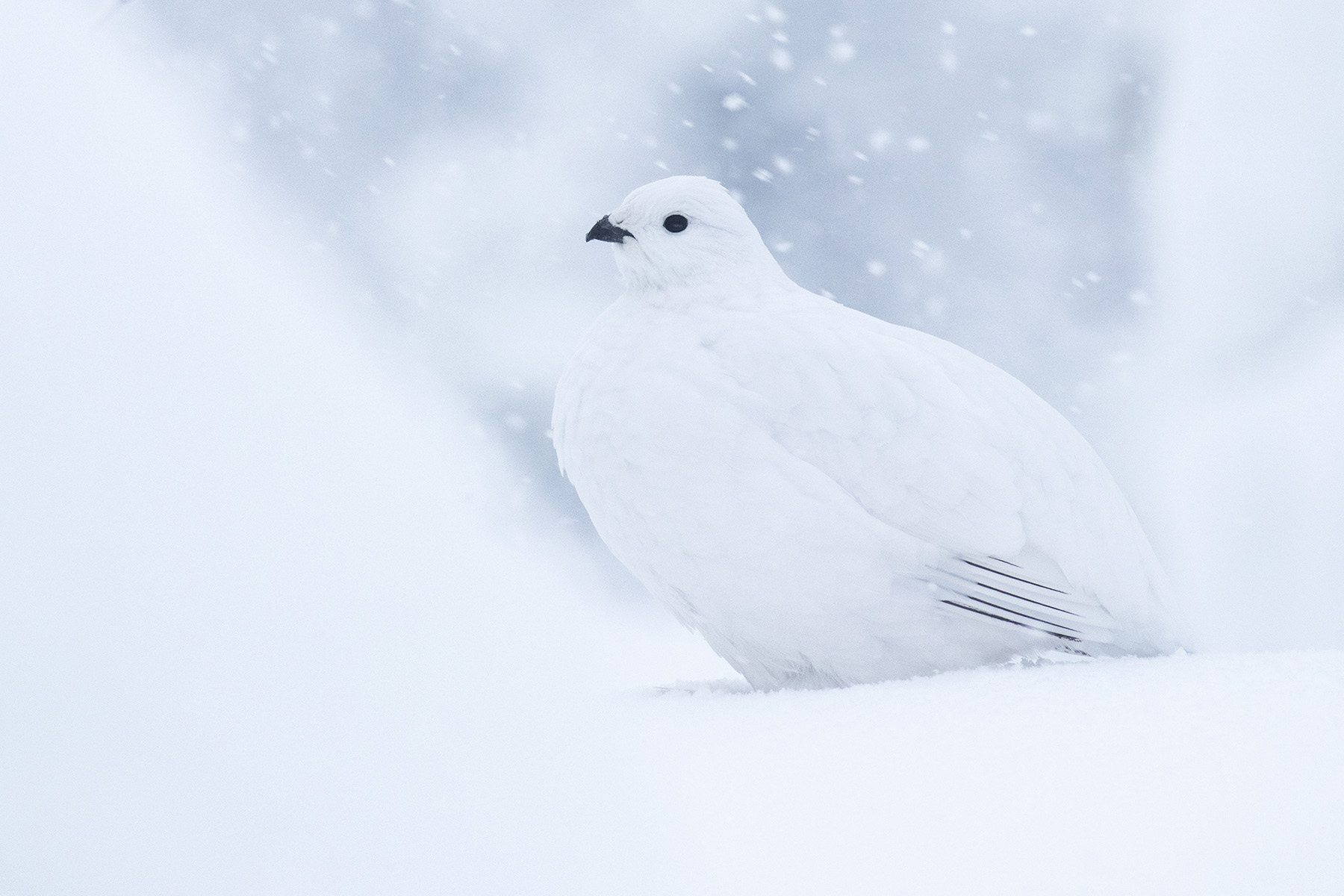
Willow grouse take flight as a last resort. Often, when someone approaches, they remain motionless for a while or zigzag into the snowy trees. If salt patches are visible along the roads that might suit willow grouse, it is worth taking a trip there in the morning before sunrise or shortly after sunset, as the grouse come to the road to peck at small stones to aid digestion.
I have never once managed to capture a photograph of willow grouse by the roadside. Surprisingly, I have come quite close to willow grouse precisely on Valtavaara. Once, even so close that in early summer, with hasty steps, I almost trod on a brooding female bird. Winter sightings, however, have required a bit of track-following. The first time, I came across fresh tracks in a snowstorm, which I set about following without snowshoes in snow reaching up to my waist. Trudgeing nearly 600 metres took over an hour, and after that exhausting effort, I finally managed to find the dark eyes belonging to the willow grouse, which were the only distinguishing mark against the white background. That fleeting moment when our eyes met was worth the reward for that effort.
I have repeatedly asked local wildlife photographers and enthusiasts about creeping up close to willow ptarmigan, and so far the response has been practically unanimous that it is almost impossible. You need a huge amount of luck, white camouflage clothing, and the only place you could photograph them is by the side of the road. Hearing this, it felt awfully good to prove the opposite. Last winter I also took up the tracks, this time on snowshoes, and was not disappointed this time either. A more diligent tracker might also come across a mountain hare going about its business in the snowy environment.
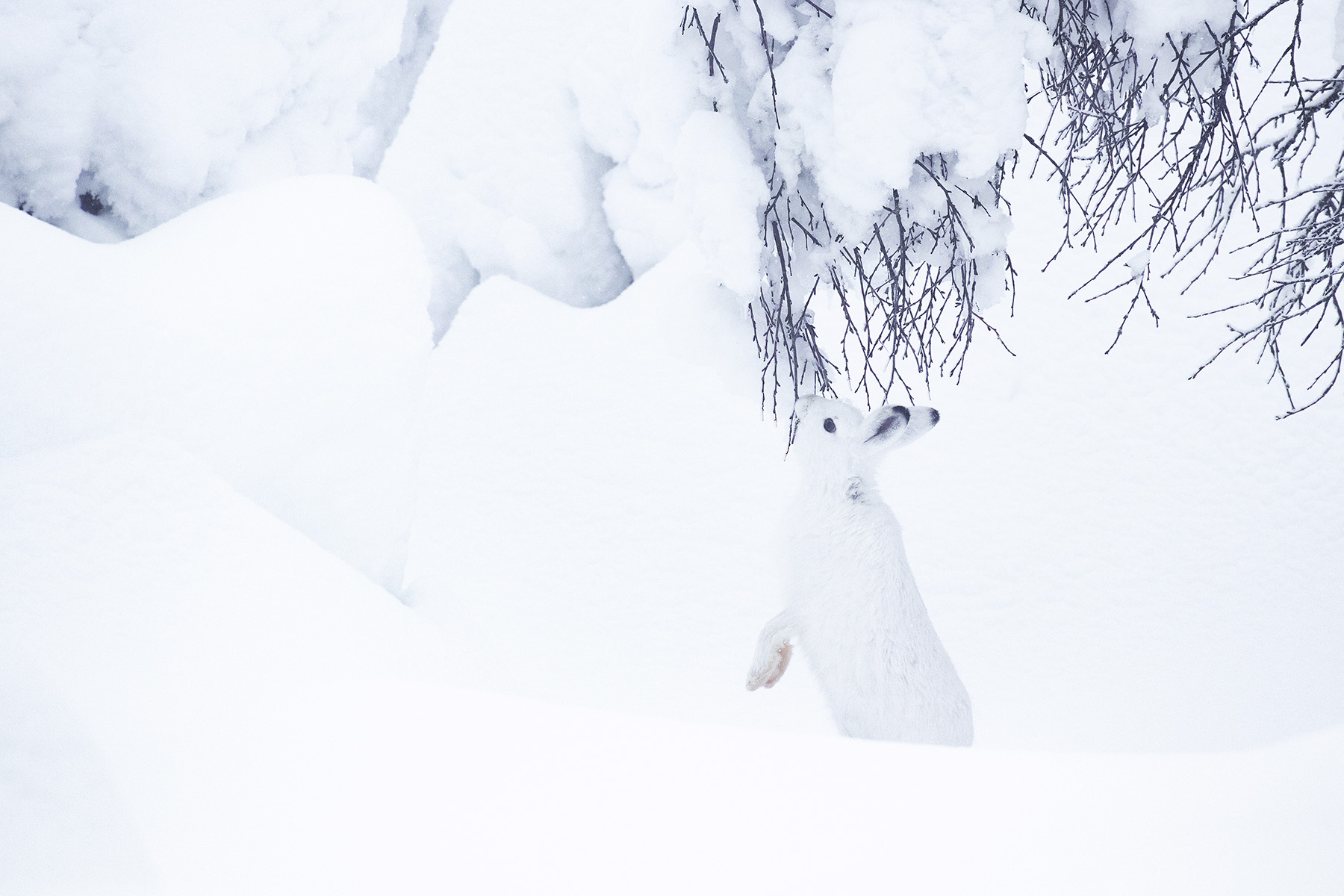
From all my visits to Valtavaara, I have always found something familiar yet new and exciting. By visiting this place, I have had confirmation that a forest is still a forest even when it does not feel the hand of man, and is even better suited for living creatures then. At the same time, I have been given the opportunity to see mountain hares and willow ptarmigan going about their business in winter in their natural environment. This is a sight that could once be seen much more around here than is the case now. This place is a kind of time machine where it is possible to see what has long since receded or is receding from our areas.