Visit Oulanka National Park. Kuusamo region in Finland.
On the first day of January 2019, shortly before 6 a.m., a small group of nature enthusiasts rubbed the sleep from their eyes with a stretch. This early morning gathering at Tallinn's Terminal A was the starting point for a trip to Northern Finland to see and capture a tiny miracle with their own eyes. Strange as it might sound, that day's ferry crossing and car journey of over 800 km were to culminate in seeing a single tiny plant.
I first had to summon up the momentum for a nearly week-long trip to Northern Finland at the beginning of summer, because that period is, after all, one of the sweetest times of the year in Estonia too, and as a nature photographer, one would have to wait over 300 days for such bubbling-over life again. The further north the vehicle travelled, the clearer it became when looking out of the window that the kind of lushness and abundance of flowers we had left behind us to the south would still have to be awaited a little longer in the north. Kuusamo welcomed the company in the late evening of the first of June with straw-yellow grass, birches just coming into leaf, and mountain hares scurrying along the roadsides, whose coarse coats indicated that moulting was underway.
Fatigue weighed down all the expedition members, but the excitement of what was to come overshadowed it. The boundaries between night and day had blurred, as the solar disc did not hide below the horizon for very long at all. At times it seemed that both at sunset and sunrise, the sun dragged itself quite close to the tree line, painting the surroundings in golden tones for a long time. At that coolest time of the day, they were accompanied by the seemingly nonstop song of the redwing, which in Estonia seems to be getting scarcer with every passing year.
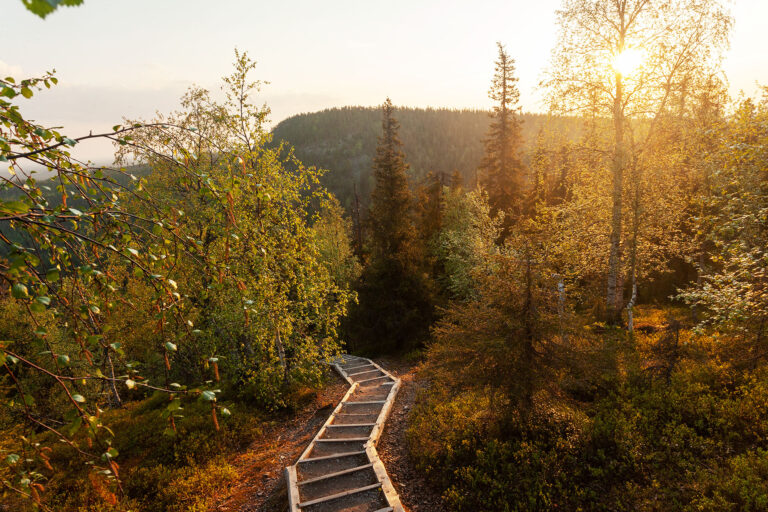
On our second evening of presence, we left the vehicle in the car park of Oulanka National Park. This place was familiar to me, and largely to the other five members of the trip too, from previous visits, but only a few of us could tell tales of summer in northern Finland. Trudge-marching along the Hiiden Hurmose hiking trail running alongside the Oulanka River, with tripods clinking from time to time, everyone's anticipation visibly rose. At times, this turned into a positively childlike competitive spirit – as to who would manage to spot the goal of the trip first. The thick blanket of snow had retreated from that place only a few weeks earlier and therefore a faded green surrounded us, making finding the bright pink bloomer seem quite simple.
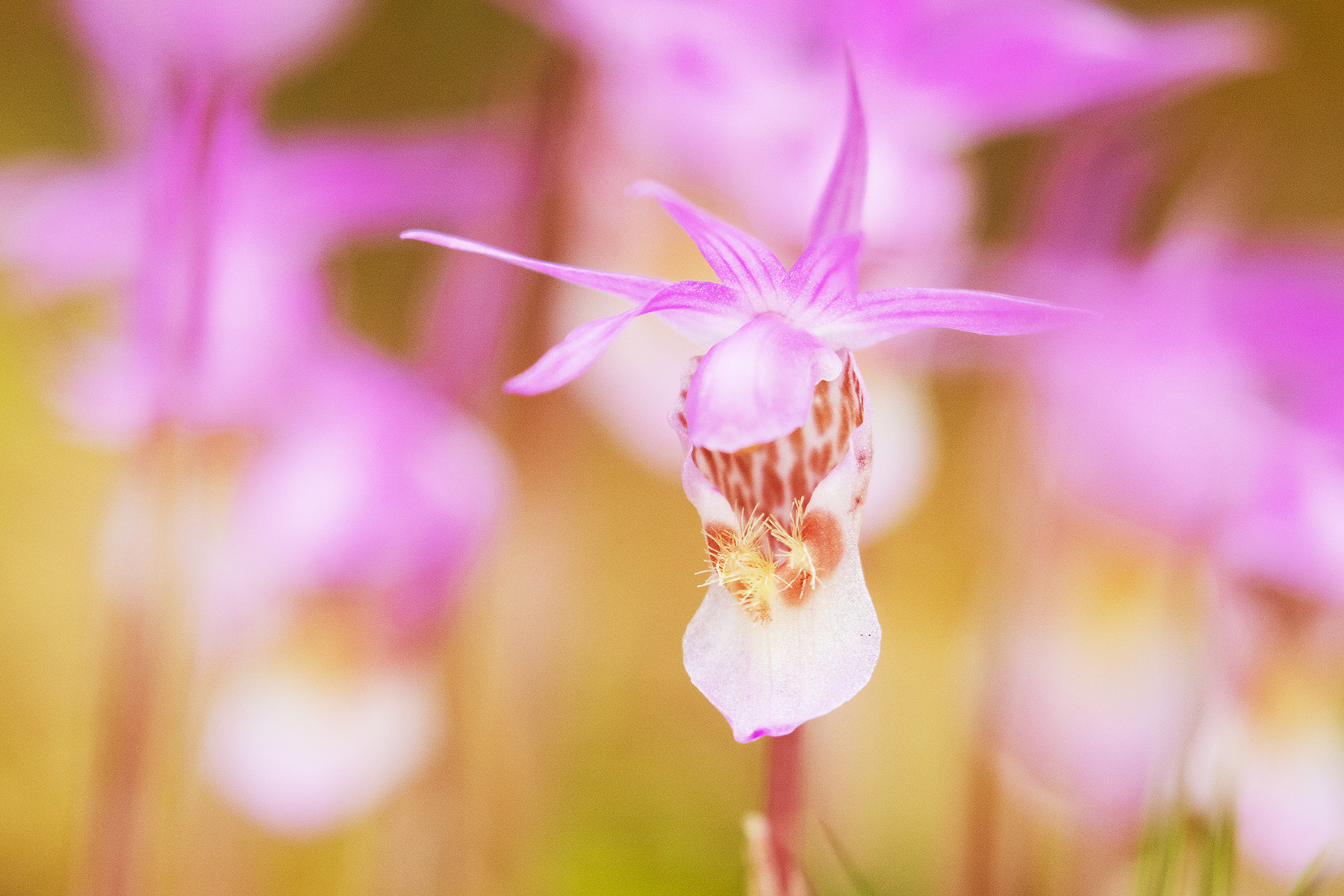
Prompted by the Finnish name lady's slipper, as we searched amongst the cowberries, we constantly asked each other whether anyone had managed to spot the calypso orchid yet. The leader of the trip had to keep pointing out that the Estonian name is actually fairy slipper. The blooming plant was familiar from various pictures as well as the logo of Oulanka National Park, so we knew very well what we were looking for. The finding of the first fairy slipper was announced with cheers. The whole group gathered to see the orchid, which is shorter than the cowberries, with their own eyes, and the first enthusiast had already carefully managed to lie down at eye level with the plant.
After finding the first one, we started seeing twinflowers almost everywhere beneath the forest canopy. Seeing such beautiful and at times downright exotic blooms in an environment lacking in vibrant green grass or spring flowers felt surreal. Although the plant looked tiny next to the junipers, bilberry and cowberry bushes, its flower was surprisingly large. Its diameter can reach up to 5 centimetres. The finishing touches of absolute exoticism are provided by five upward-pointing pinkish petals.
The shooting star blooms right after the snow melts, starting on sunny south-facing slopes. Just as I was about to lie down on my stomach by a clump of shooting stars I had chosen for photographing, I noticed that, following the thaw, thousands of wood ants scuttling along the ground had also made themselves at home. I immediately started looking for new, suitable shooting stars that wouldn't have ants crawling around them—creatures I am terrified of above all else due to childhood trauma. However, no suitable spots could be found, and so I was forced to overcome my fear. One could say that the shooting stars made me forget about the existence of these little busybodies for a while.
We could have stayed out photographing those rare plants for the entire white night, as we were plagued by the knowledge that a heatwave was approaching and their already short flowering period might be shortened even further by the warm light. Alongside the wonderful pink characters, we also checked out the Kiutaköngäs rapids roaring right there and the brick-red limestone cliff, which is visited by tens of thousands of people every year. It is one of the most popular sights in the Kuusamo region and, truth be told, there are no similar places in Finland. A spot of rain drove the nature enthusiasts heading home, but we arrived in Oulanka repeatedly during the trip.
Given that when staying near Kuusamo, Oulanka National Park receives attention multiple times during a single trip, this is quite usual. Mostly this area is visited in autumn and winter, but summer with its lushness can also enchant.
Rivers are the heart of Oulanka
Oulanka National Park, located in the municipalities of Kuusamo and Salla, was established in 1956, but the area has attracted the attention of hiking, nature and fishing enthusiasts much earlier. The idea of a national park had been simmering since the late 19th century. Oulanka National Park features numerous streams, lakes, bogs and rivers, the two most important of which are the somewhat calmer Oulanka River and the more rapids-filled Kitka River, which joins the Oulanka River just before the Russian border. The clear-water Kitka River gets its water from the large Lake Kitka, while the slightly brownish-water Oulanka River gets its water from the aapamire bogs of the Salla region.
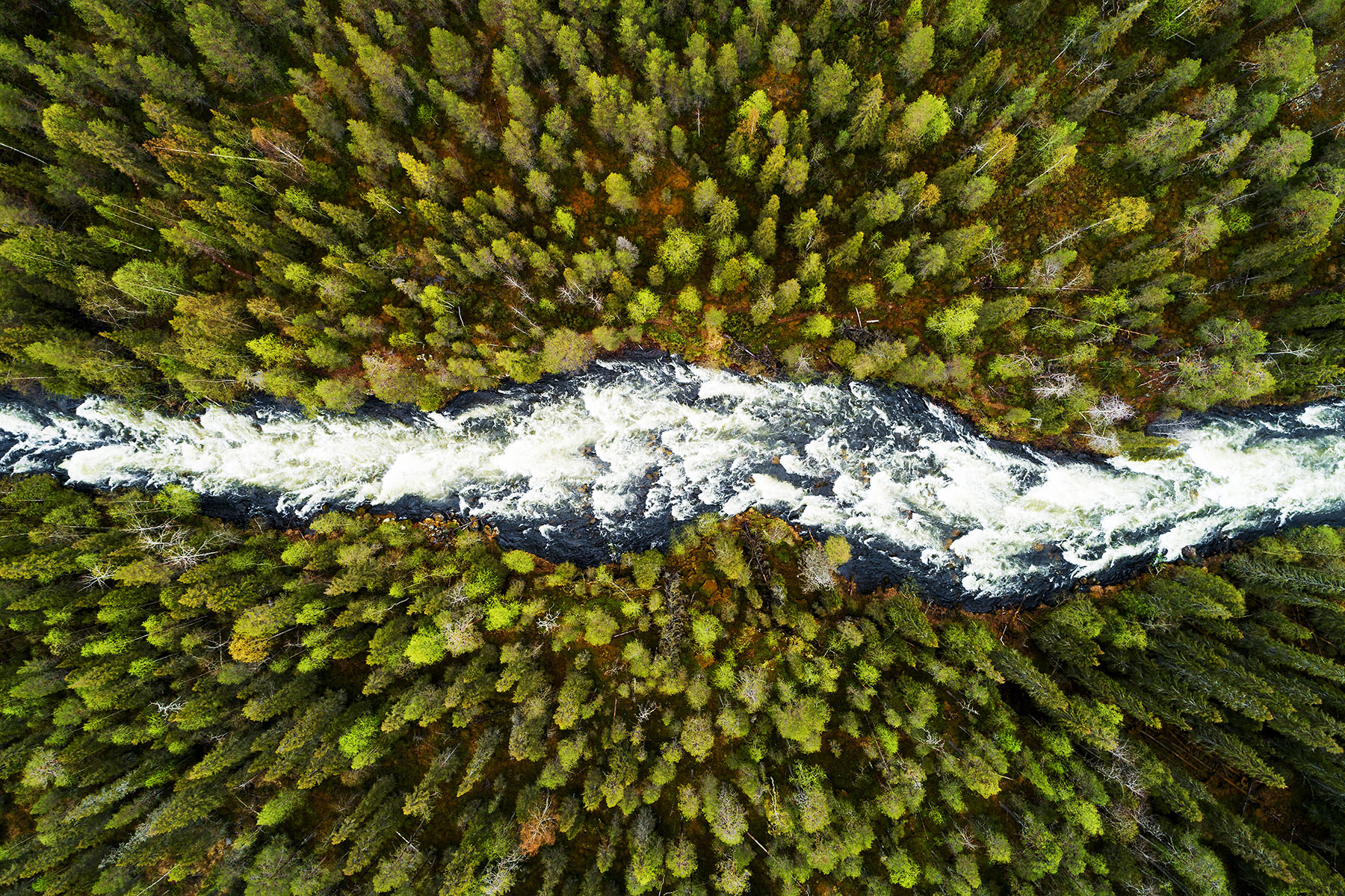
One could say that these two watercourses form the heart of Oulanka. In the 1950s, however, interest arose in harnessing these two rivers for hydroelectric power generation. As a result of strong opposition and public concern, the national park was established. Since then, Oulanka National Park has been expanded on several occasions and now covers an area of nearly 290 square kilometres. Although this is a slightly smaller area than our own Soomaa National Park, it is home to an unimaginable wealth of natural treasures and stunning landscapes. Just under 400 different protected species inhabit this area, and from time to time species are found within the national park’s territory that are not found anywhere else in Finland. Or species that are entirely unique to the national park are discovered; examples include the lichens Atla oulankaensis and Verrucaria oulankaensis.
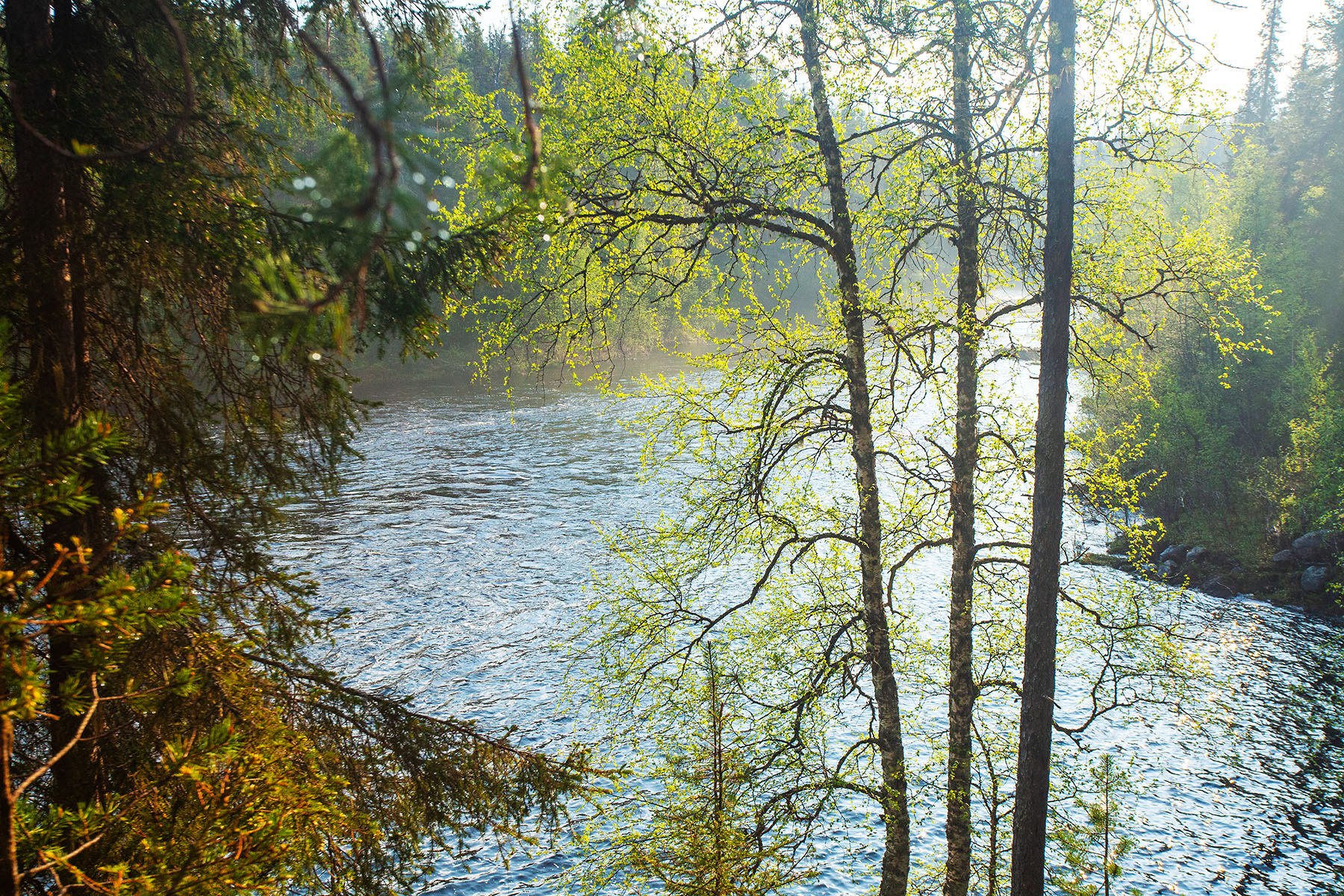
This area brings together both steep-sided canyons and the diverse rivers flowing through them, which are inhabited by taimen and grayling, among other fish. In Oulanka, one can see cliffs, bogs including aapa mires, forest lakes and streams, old-growth forests and areas affected by wildfire. Signs of past forest fires can also be seen while moving along the trails. It is noteworthy that Metsähallitus, the enterprise managing the national park, continues to carry out controlled burns to this day in order to support the survival of fire-dependent species. As one walks alongside many an older pine stand, it becomes noticeable how fire has contributed to the creation of fallen dead wood and various new habitats, as well as to forest regeneration.
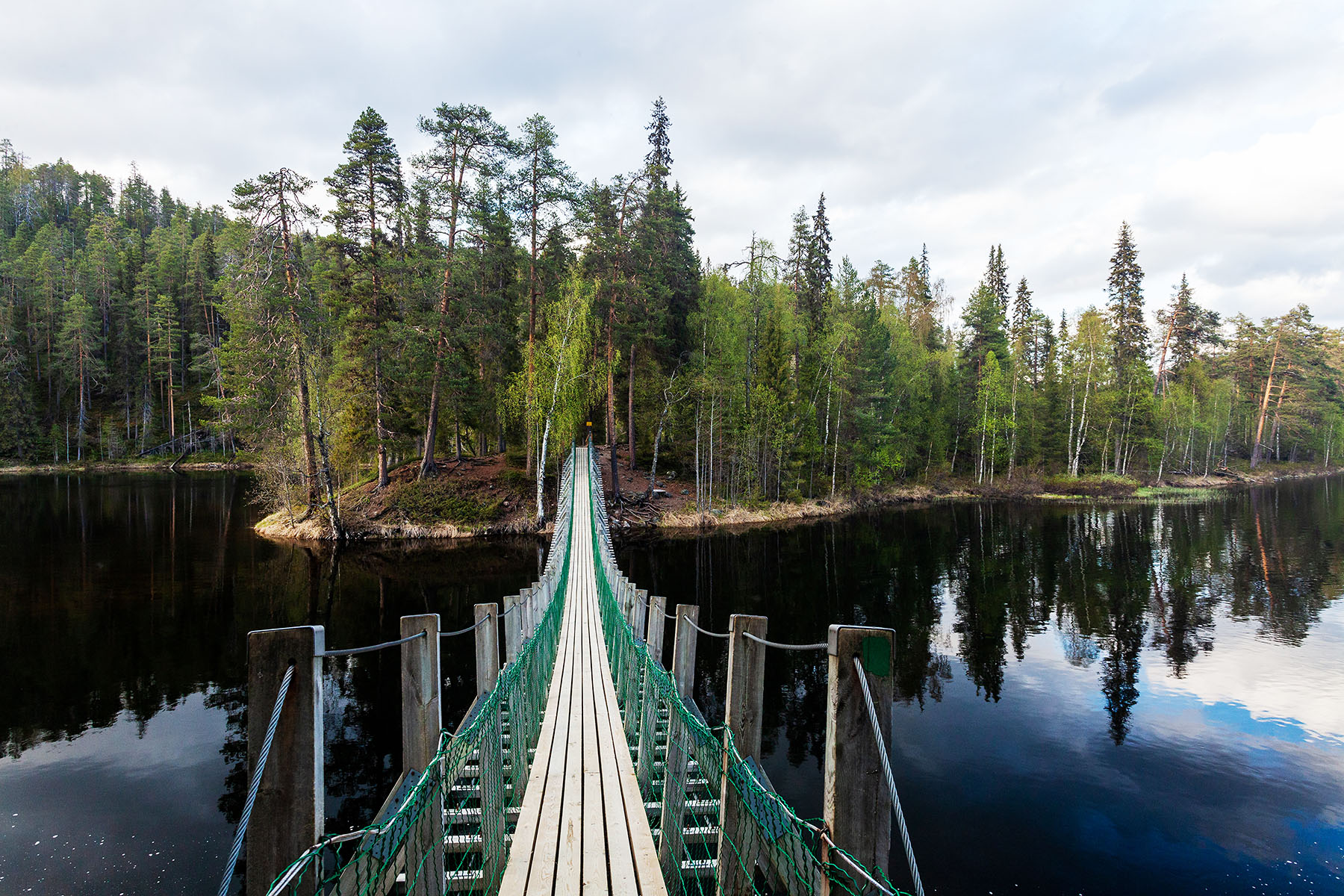
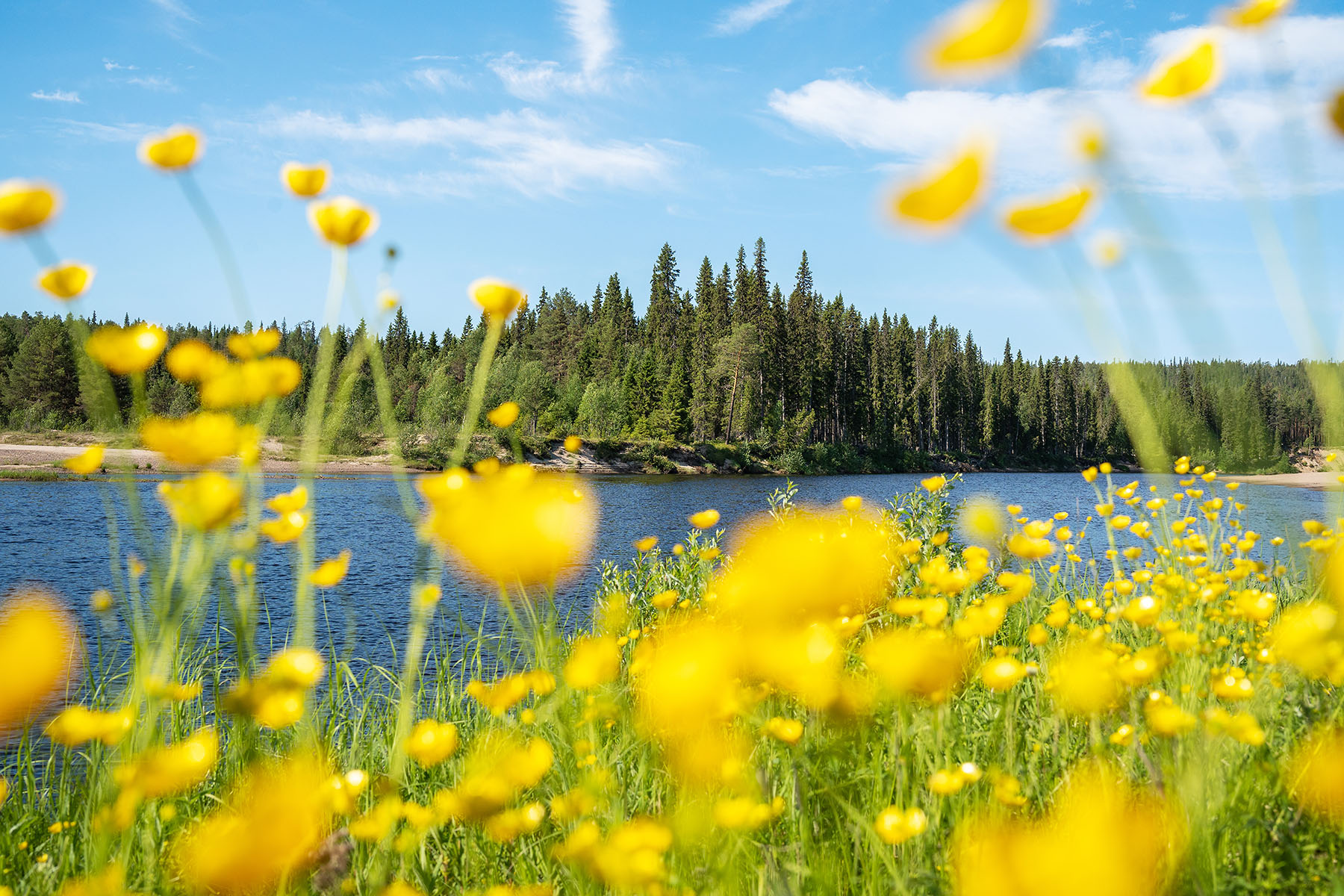
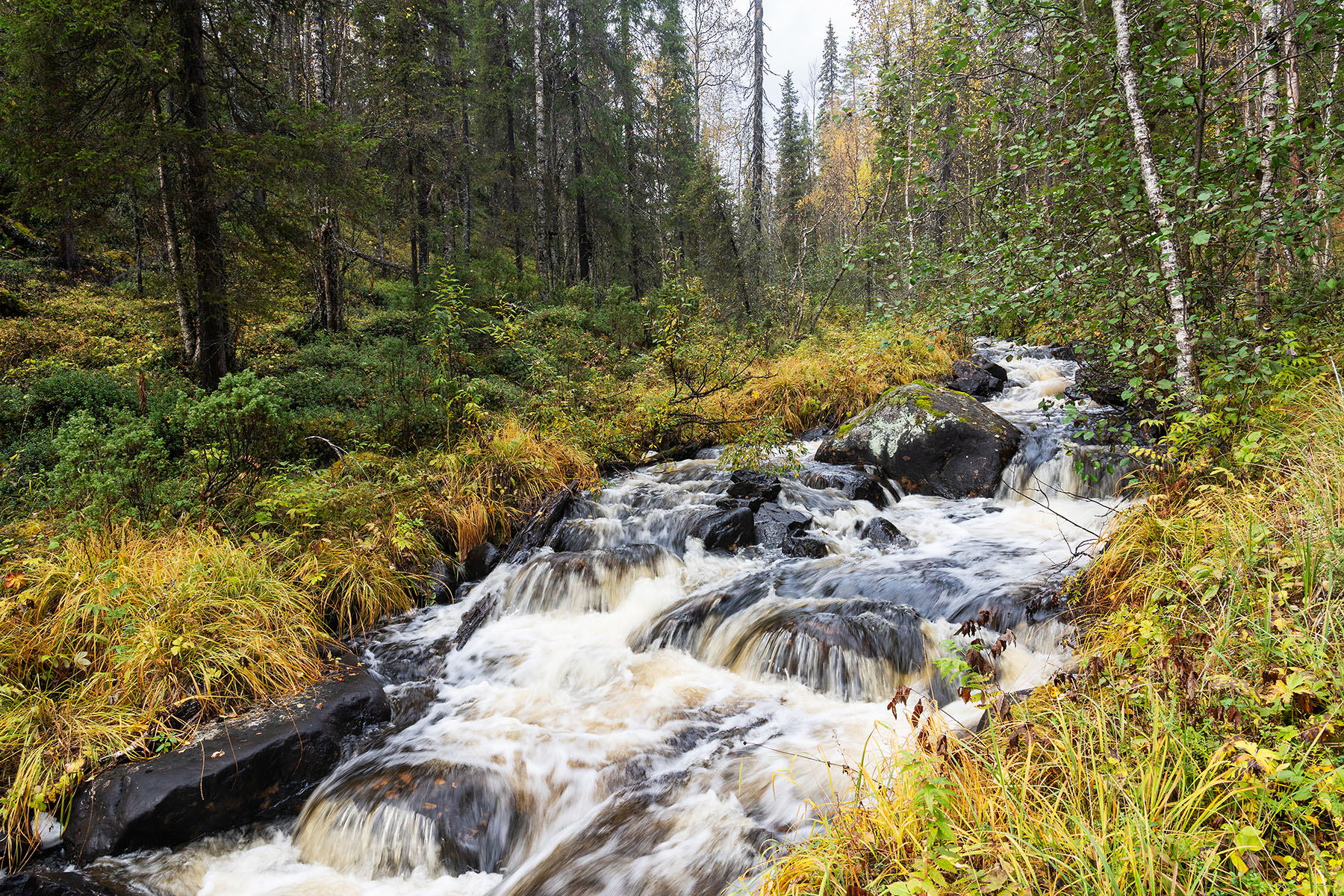
Given such a diverse choice of habitats, it is hardly surprising to hear the claim that northern, eastern and southern species all meet in Oulanka. From May to July, in different corners of Oulanka and at different times, alongside the calypso orchid flowering in early June, it is possible to see, among others, the lady's slipper orchid, cloudberry, fragrant orchid, dark red helleborine, Siberian carnation, alpine pasque flower, twinflower, saxifrage, and alpine butterwort. In addition, the national park is home to narrow-leaved arnica, the cold-loving marsh milkvetch and alpine bartsia, all of which have a much more northerly distribution. The same can be said of the mountain avens, whose nearest related neighbours are hundreds of kilometres north of Oulanka.
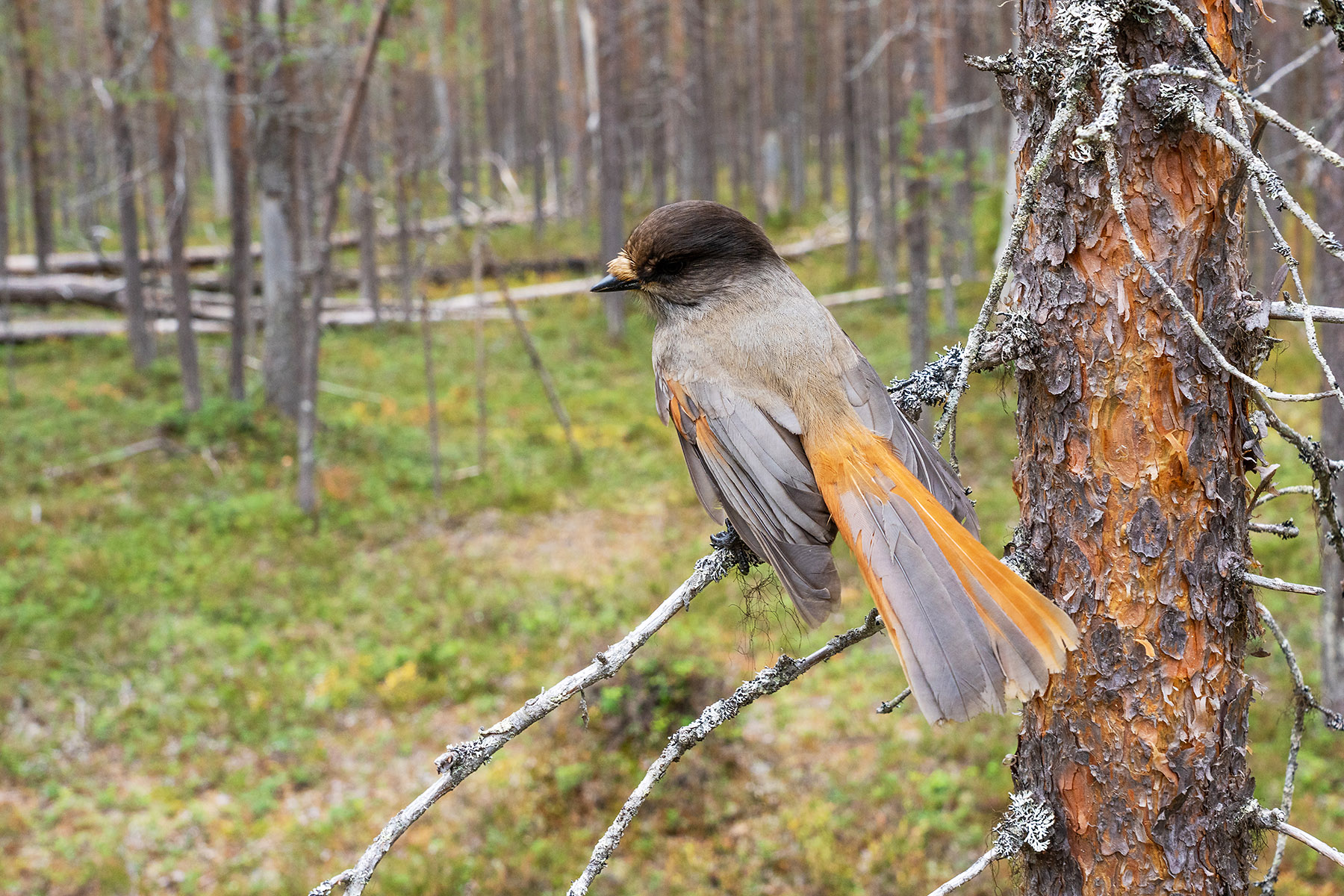
Bird enthusiasts may, however, be drawn by black grouse, capercaillie, willow and hazel grouse, Siberian jays and three-toed woodpeckers operating in various places; by turbulent rivers one can encounter white-throated dippers and near Kiutaköngäs even grey wagtails. Siberian tits have also established themselves in Oulanka, though admittedly they are rarely seen in this region. With a bit of luck, one might also spot golden eagles, Tengmalm's owls, pine grosbeaks, waxwings, and bramblings. Moving around the different ends of Oulanka, one may inevitably get the feeling of having stumbled into another national park – which is why this place is ideal for nature lovers who appreciate diversity and seemingly untouched nature.
The landscape sets boundaries
Over the years that I have been able to explore the corners of Oulanka National Park in different seasons, I have noticed the cultural heritage located in this area. Particularly striking are the marsh meadows, touched by human hands and spreading out in many places, as well as the numerous river floodplains where fodder for animals was once gathered and livestock even grazed. The most accessible trail for seeing the marsh meadows and hay barns is Rytikönkkään reissu, which is located near the Oulanka Visitor Centre. Around Midsummer, both beautiful lady's slipper orchids and globeflowers can be spotted along this trail.
Today, paved roads and marked trails help people reach these places, but one cannot fail to notice the bogs, cliffs and numerous bodies of water lying amongst these meadows, which can make travelling as the crow flies all but impossible. While they may suit birds, plants, lichens and other living creatures, they put humans to the test at every step.
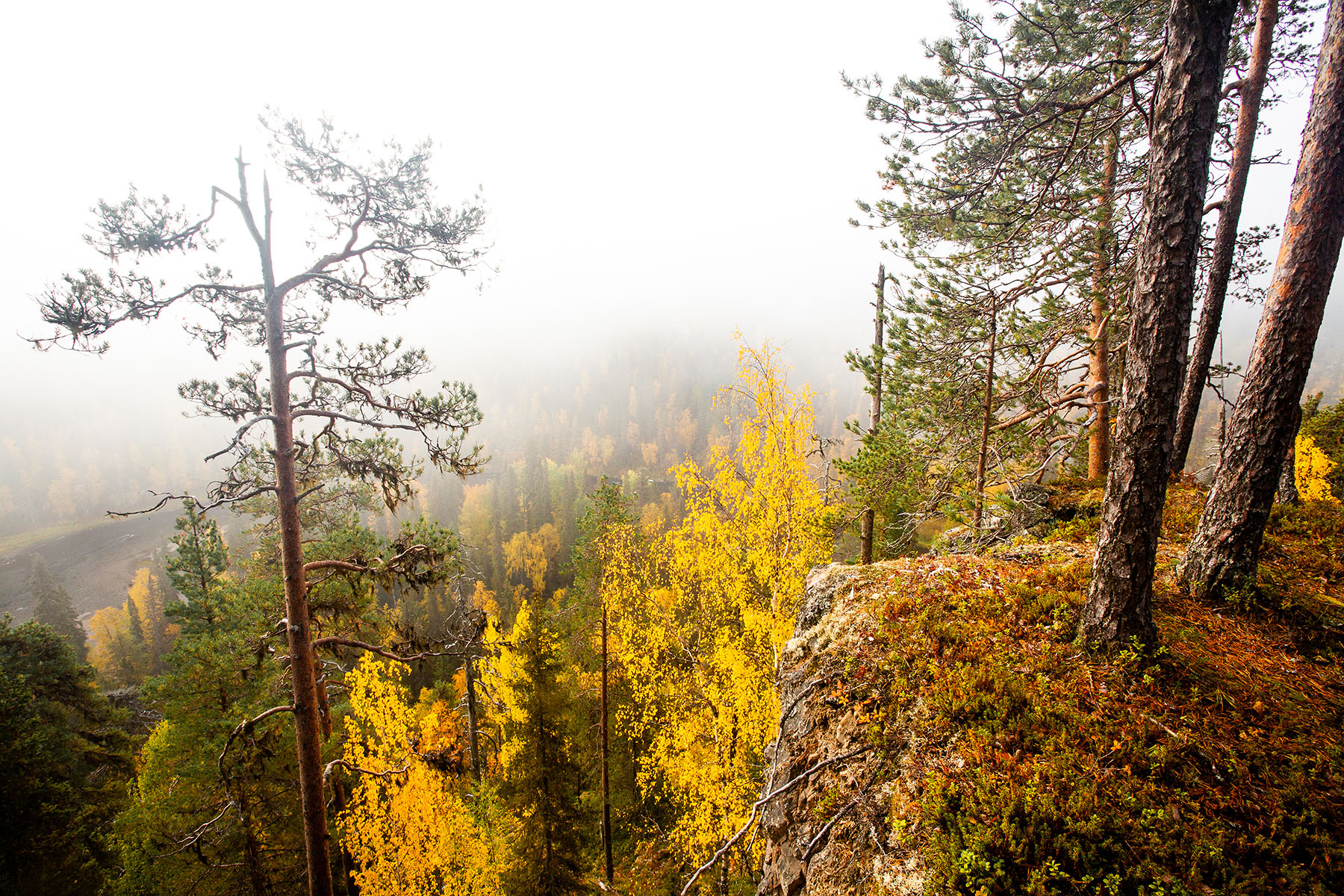
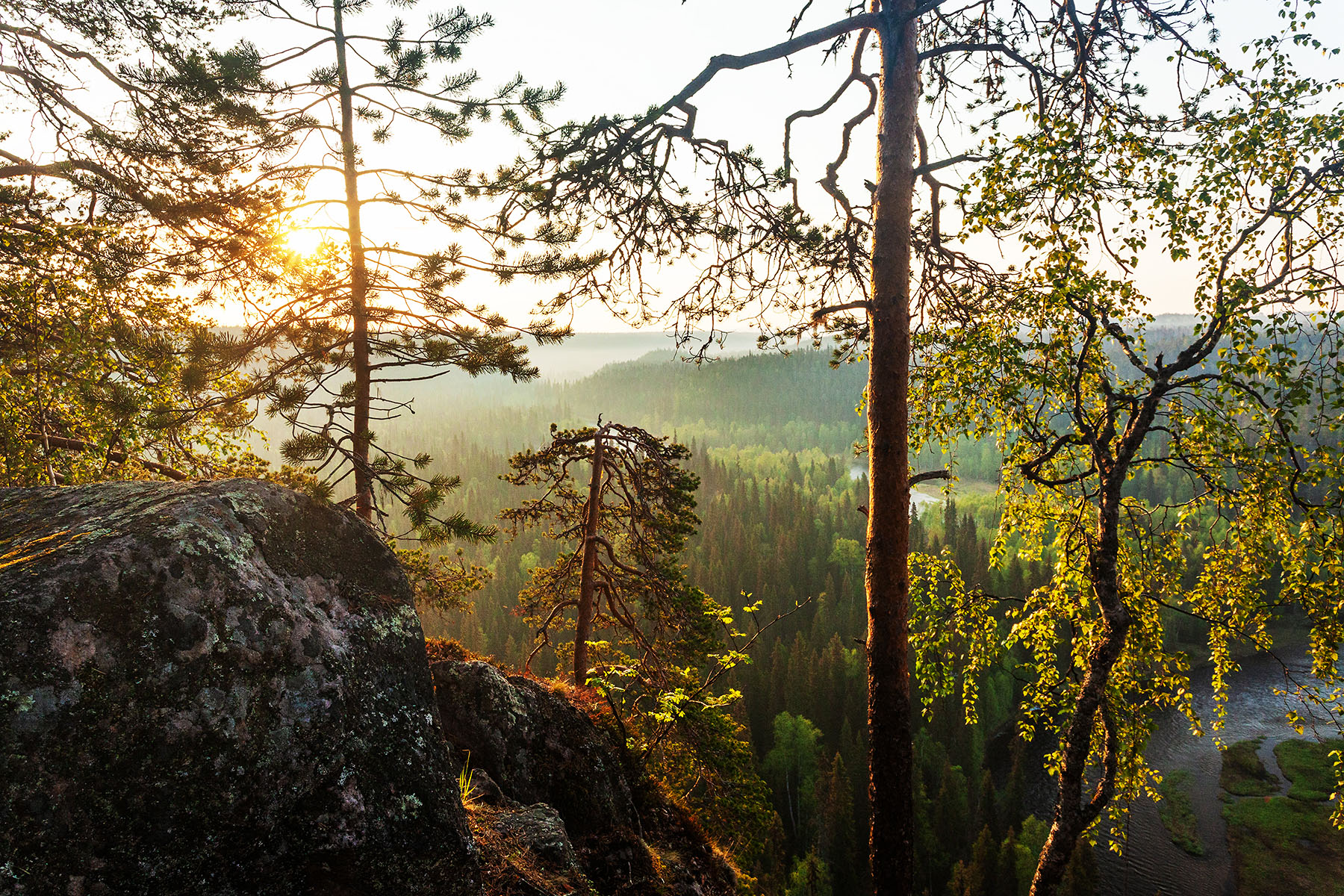
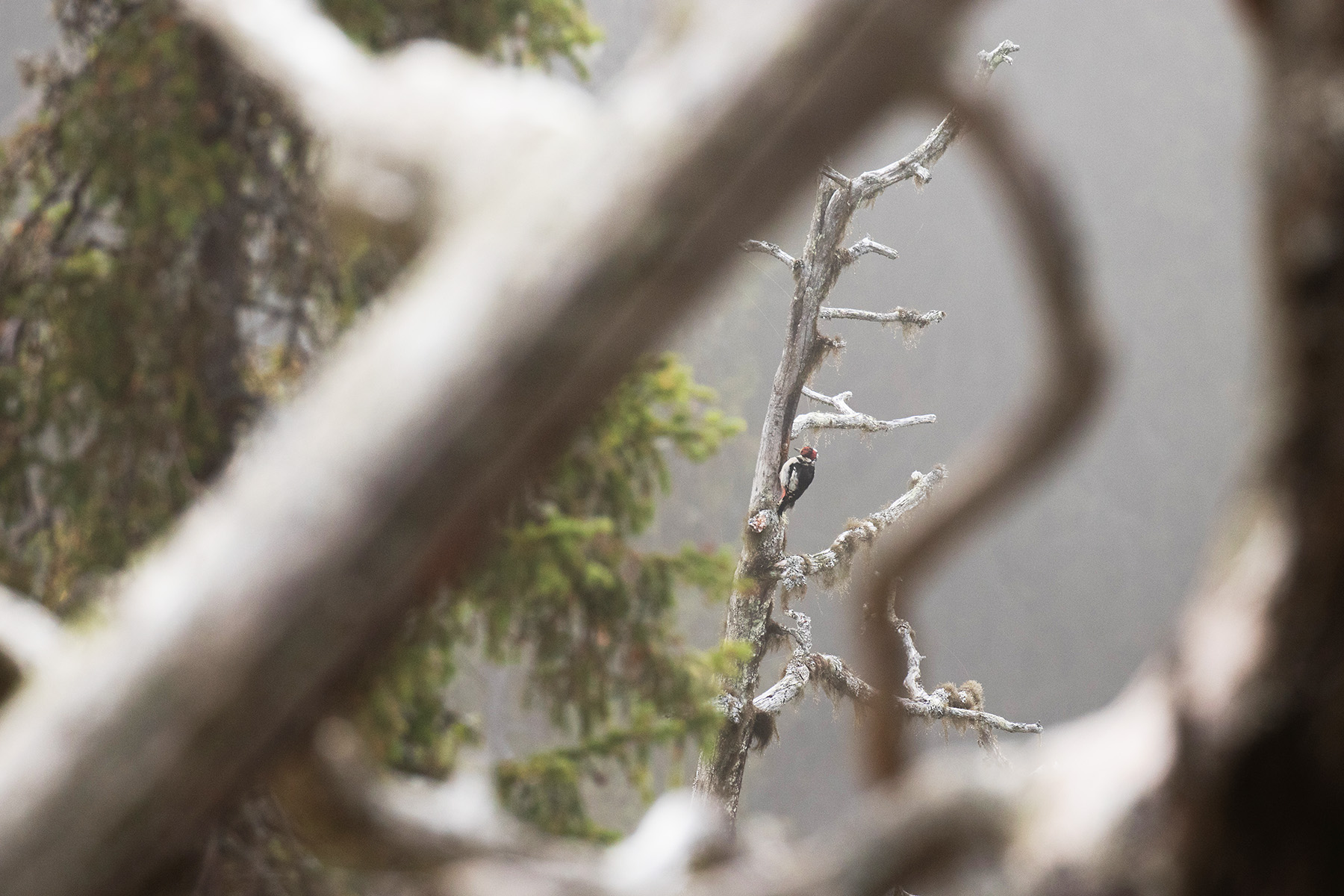
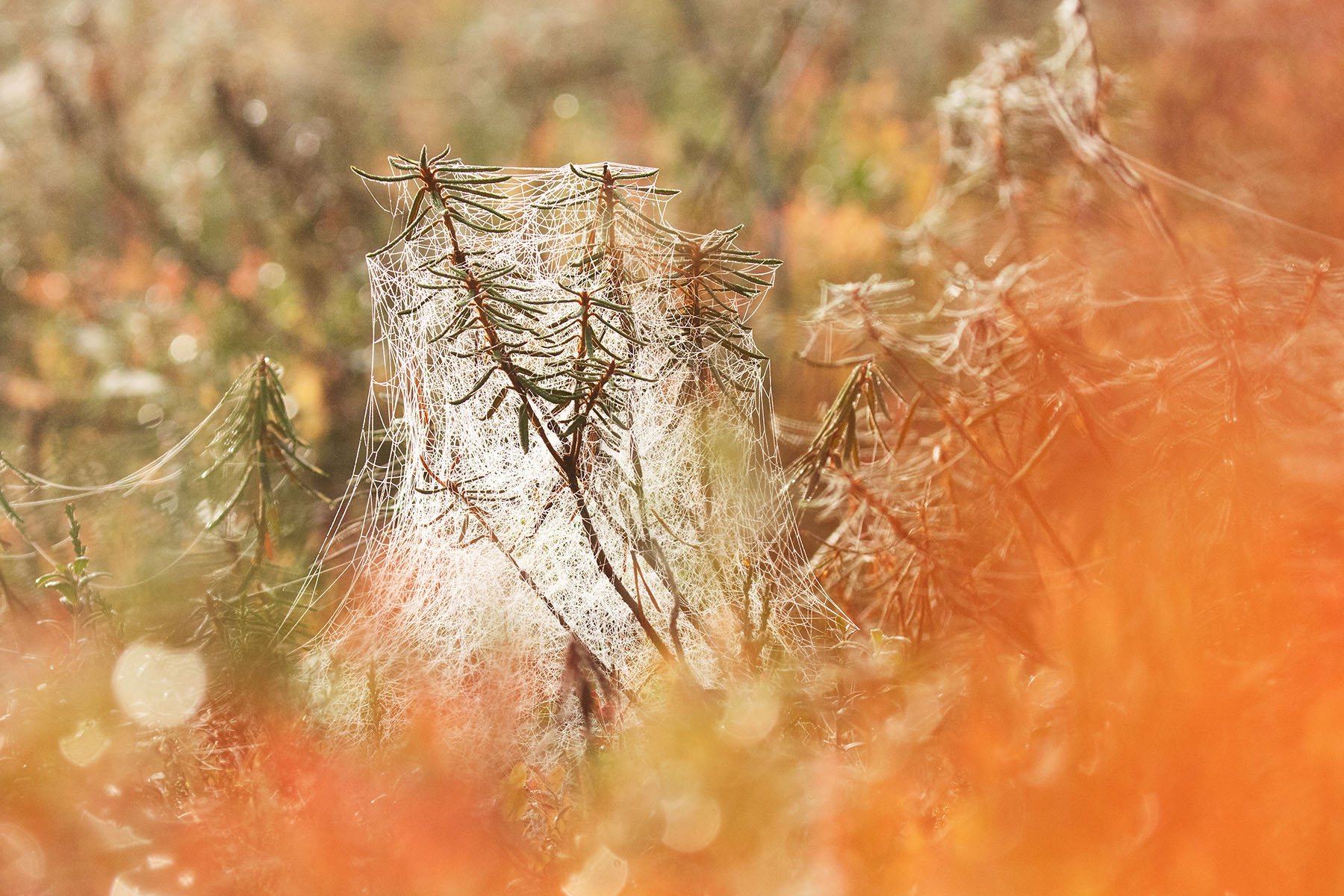
Walking along the riverbank on late autumn, spring and early autumn mornings on the Hiiden Hurmose or Pieni Karhunkierros trail, one can hear numerous hazel grouse cocks singing. These grouses feel at home year-round in the river valleys with their slightly milder climate, and the food base is also rich thanks to the deciduous trees. The slopes have either been too steep for me to approach them, or the stealthy route has been strewn with plenty of fallen timber, and thus I have had to abandon my approach dozens of times. Nor do loose boulders that have come to rest on the steep slopes and donned a concealing coat of moss make the stealthy route any safer. What makes giving up especially bitter is the knowledge that most of these singers haven't even been particularly timid.
Rapids in river valleys that remain ice-free even during severe frosts attract various bird species throughout the year, such as the peculiar passerines – white-throated dippers – which dive almost incessantly and seemingly selflessly into the rushing river water. Human common sense might not share such an activity, but dippers, which are the size of thrushes, need to find caddis larvae on the riverbed to eat voraciously. One can watch the activities of dippers for hours.
The harsher the frost and the fewer open bodies of water remain, the more likely one is to encounter semi-aquatic otters and American minks by the river. White-throated dippers, usually territorial, also become slightly more tolerant of their conspecifics and pay little attention to humans at a time when foraging is particularly crucial. Both in autumn and winter, the easiest place to spot white-throated dippers is at the start of the Pieni Karhunkierros trail, right by the Myllykoski watermill.
Power cut
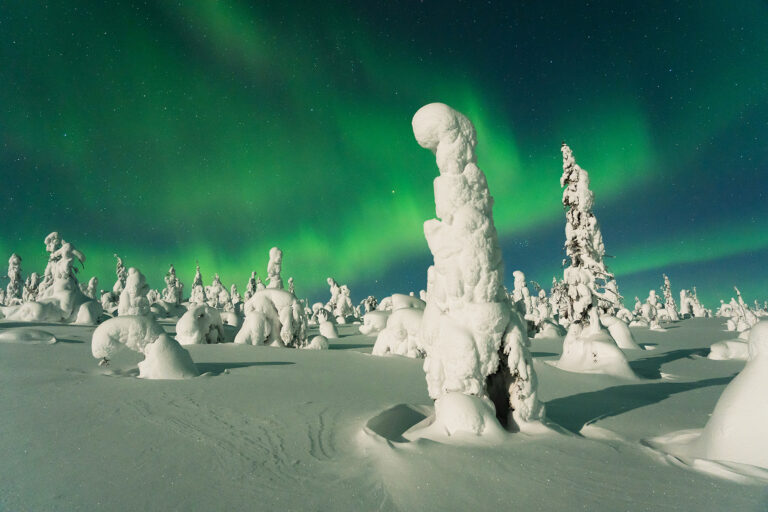
Kuusamo is known for its snowy winters. During this difficult time for all living creatures, fox tracks are rarely encountered in the snow, and the life of the pine marten is not easy either. Depending on the year, a blanket of snow nearly a metre deep covers the dining table of many quadrupeds. Beneath this burden, more than a few arboreal giants snap and small rodents find shelter. Although the more popular Oulanka trails are monitored and maintained to some extent during the winter months, there are trails in Oulanka that are inaccessible or even life-threatening for a wanderer.
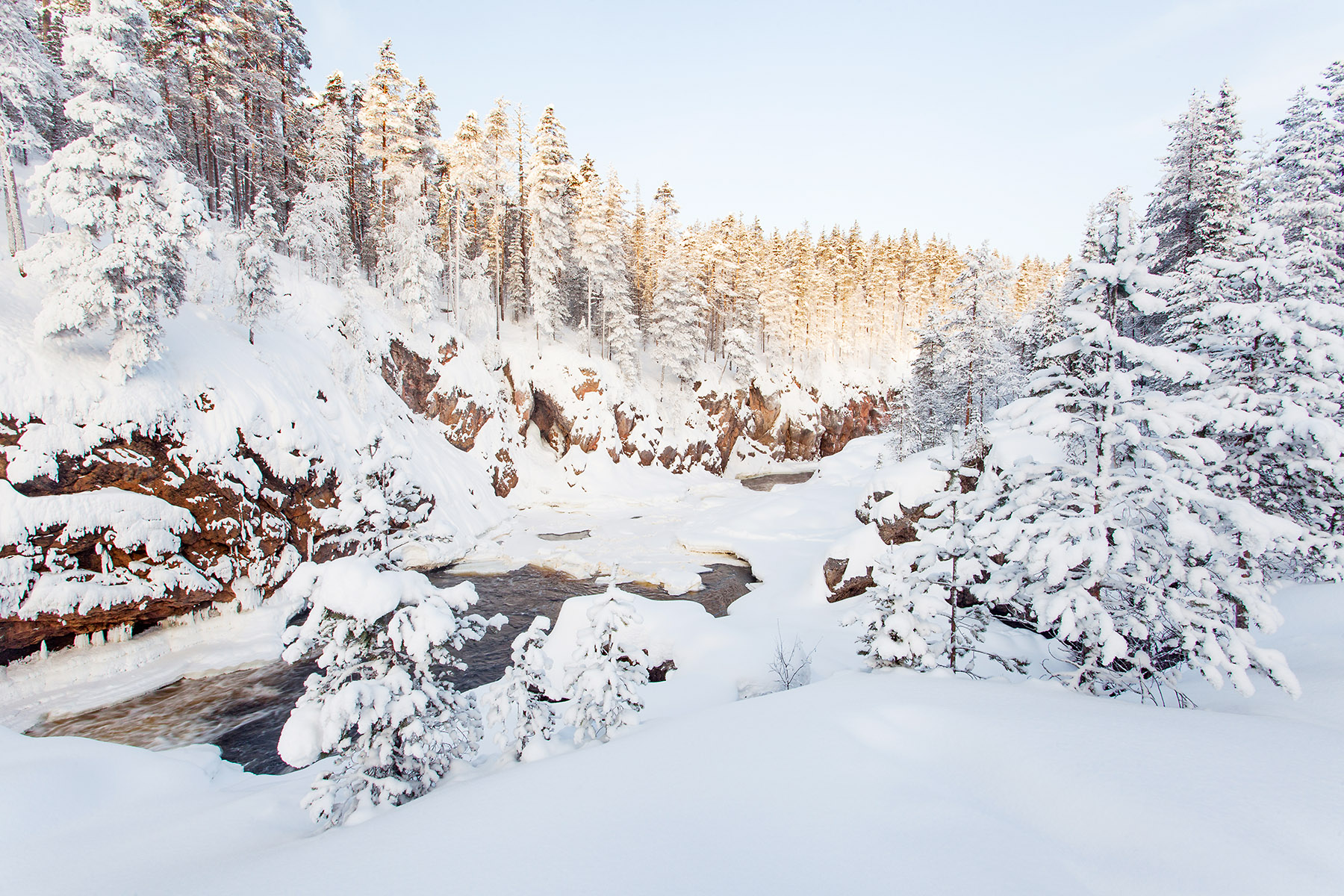
Therefore, day-trip enthusiasts would do well to cross off their lists during the winter both the Keroharjun Kuiskaus and Kanjonin Kurkkaus trails, as well as the routes leading to Ristikallio and Päähkänäkallio, one of Oulanka's most scenic spots. There are many places in Oulanka where one should keep a level head even when walking on maintained trails. Specifically, snow conceals steep slopes, tree stumps, fallen wood and various sticks, and sometimes even holes. For this reason, throwing oneself into the snow off the side of the trail, for instance, should be thought about very carefully.
However, the melting of snow brought on by a warm spell can be followed by floods, and in river valleys rising water may engulf some sections of trails and display its power by catching trees. The extent and timing of the retreat of snow and subsequently water also has an impact on wildlife that make a long journey to Oulanka every year to breed. Last spring, the thick blanket of snow melted rather late and quickly. This caused water levels in both rivers and lakes to rise abruptly, and the clutches of many waterfowl that had settled to breed along lake shores were flooded. Consequently, only a few pairs of whooping swans with grey-feathered chicks could be seen during the summer. Other waterfowl were also scarce.
I have often been surprised by how, after a snowy winter and even what might be called a ‘late winter’, the world around us manages to switch to summer mode so quickly. The sun’s power suddenly becomes so intense that winter can turn into summer in the space of just a couple of weeks, and it feels as though there’s no room for spring at all. At the same time, summer is rather short, and so, judging by the behaviour of all the inhabitants of Oulanka, one can sense a sense of urgency to nest, flower and bear fruit in time.