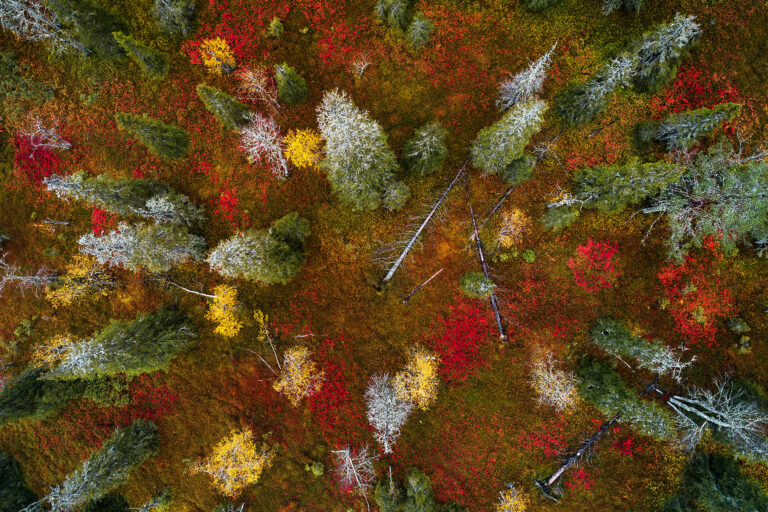
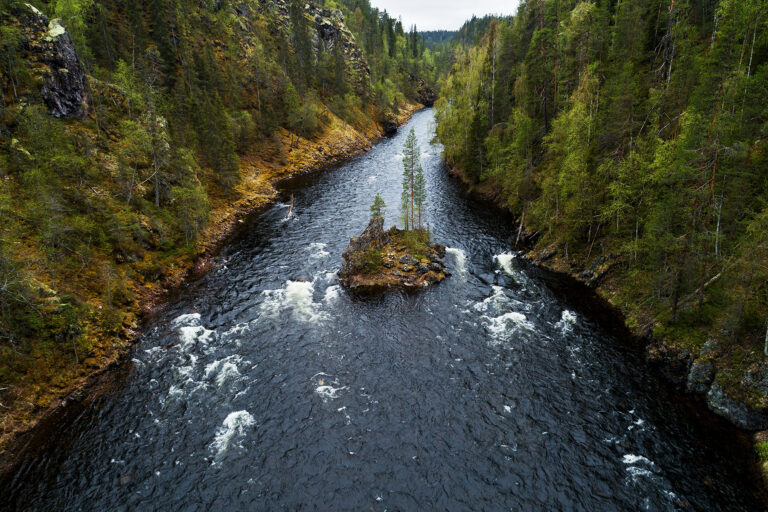
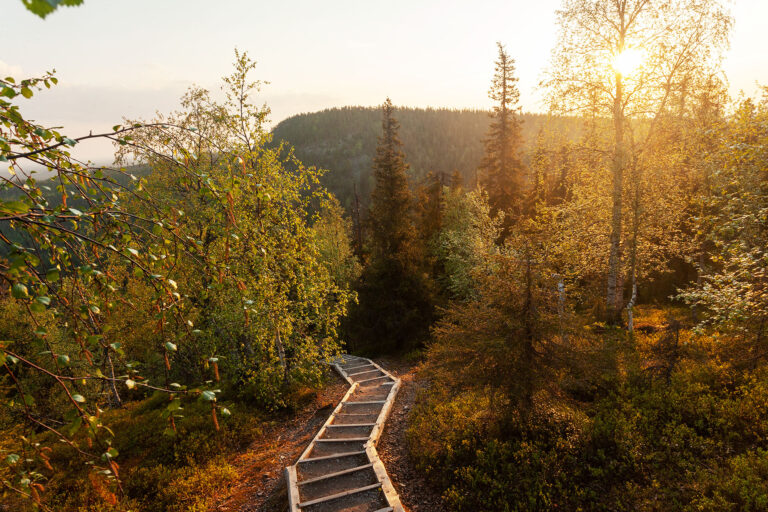
Riisitunturi. Winter and summer.
I like our domestic nature. The diversity that is hidden in such a tiny patch of land. Sometimes, however, I glance elsewhere too, in order to appreciate what we have even more. Thus, on quite a few occasions, my paths have led me to various corners of Northern Finland, where moving across the landscape is shaped by uplands, bogs and lake labyrinths alike. Over the years, Riisitunturi, located on the border of the Lapland region, has shaped into one of my dearest national parks.

I am more than sure that Riisitunturi National Park is familiar to hundreds, if not thousands, of Estonians. On almost every trip, at least one vehicle with Estonian licence plates has graced the car park, sometimes more. The popularity of Riisitunturi is ever growing, as evidenced by the fact that the main car park, which has been expanded several times, was enlarged in 2020 from 70 parking spaces to a massive 200. A café was also built next to the main starting point, and in 2019 a large shelter was constructed alongside one of the main trails, from which smoke and the scent of grilled sausages drift over the trees during the day. In recent years, when travel requires a little more enterprise, domestic tourism has rather sustained the number of visitors to Riisitunturi.
The vast majority of the 77-square-kilometre Riisitunturi National Park lies at least several hundred metres above sea level, and Riisitunturi's higher peaks – Riisitunturi and Pikku Riisitunturi, which are also traversed by trails – are just over 400 metres high. Calling them mountains is, of course, an exaggeration. The term "upland" or "hill" is rather more likely to spring to mind. As you make your way up to the sparsely wooded peaks, views open up in every direction – towards the large Lake Kitka and the Ruka fell, the wind turbines and masts that grace the area, and the seemingly endless taiga forests and patches of mire.
Numerous different marked trails for both hiking and winter skiing run through the national park. The main trails that are worth getting acquainted with initially and which are circular are the approximately 4.3-kilometre-long Riisin rääpäsy loop and the approximately 10.7-kilometre-long Riisin rietas loop.
Although information leaflets or web materials might create the impression that trails are impassable without snowshoes during the winter, in light of the increased crowds the trails have been packed down hard and you can manage without snowshoes as well – as long as you do not step off the trail. Otherwise, there is a chance of sinking into a metre, or in some places even a metre and a half, of snow. This might feel a bit unusual and, depending on the snow conditions, getting out of it can be very difficult, taking into account the heavy coats and gear you have pulled on. However, finding a supportive trail can be problematic after fresh snow or during a heavy blizzard. The trails generally feature gentle ascents and descents.
Postcard views
For my first trip, in 2015, I took quite a long time to get going. For years, I kept coming across photographs of slender, snow-laden spruces and a winding winter landscape. Postcard-like views, the likes of which I had seen before the internet age in a few books and among my grandmother's Christmas cards. On the trip in early March, I saw the many faces of Riisitunturi. First of all, by the car park, I was introduced to crested tits, pine grosbeaks, and Siberian jays chasing a hawk owl; then, as I headed towards the summit, I was accompanied by ever-changing weather, at times with steady snowfall, and at others with a blinding blizzard.
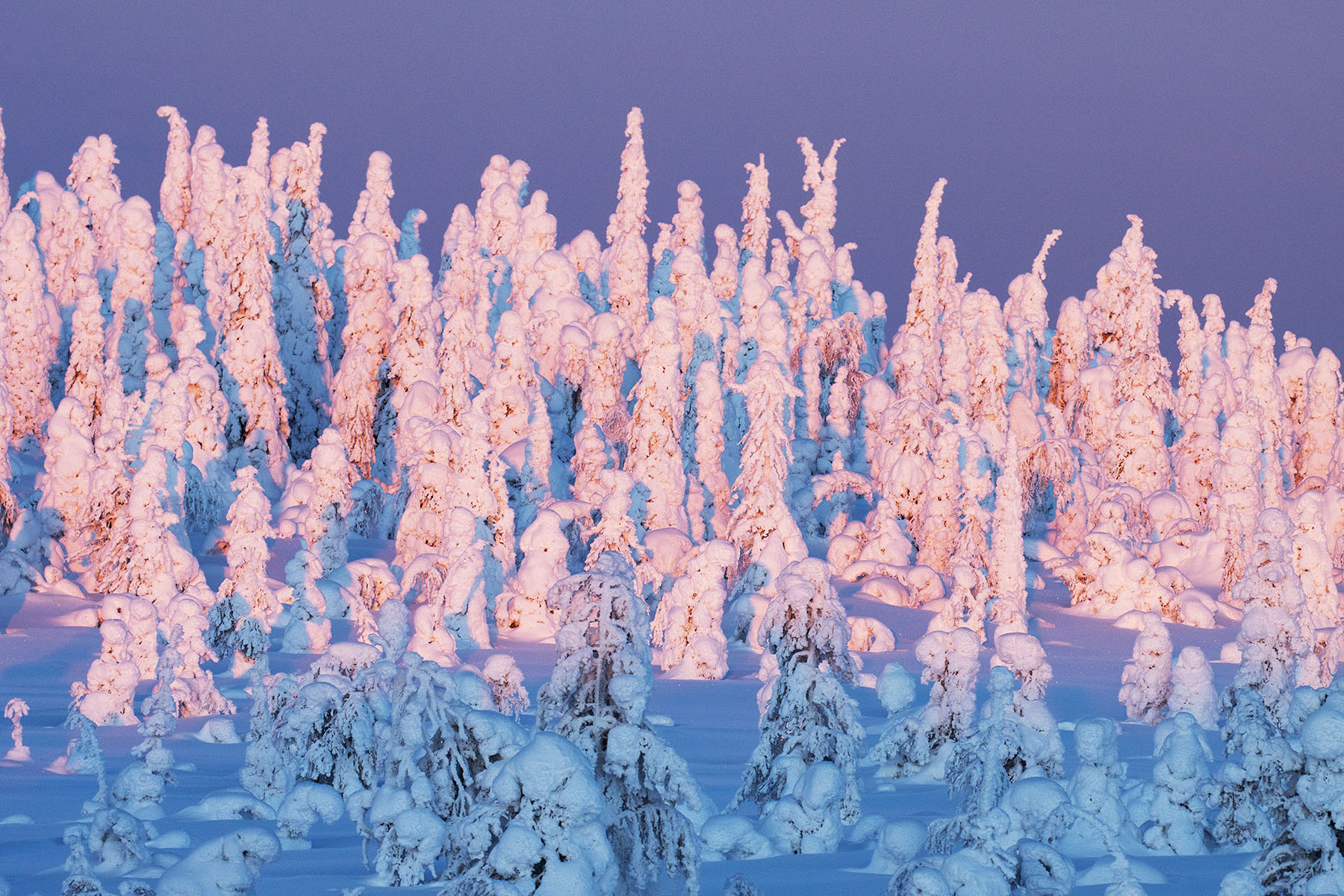
As the rush subsided, peace arrived. The lights and tones were in a state of constant change. So many different emotions, as gathered this time in Riisitunturi in just an hour, sometimes do not accumulate here in Estonia in an entire winter. Finally, the sky became free of the clouds drifting around, and the surrounding snow-covered trees were painted in the colours of sunset. There was indeed a lot of snow in this place – yet the sunny weather of March had already left its mark. The powerful sun had shaken a lot of snow off many of the trees, but overall they still appeared snow-covered.
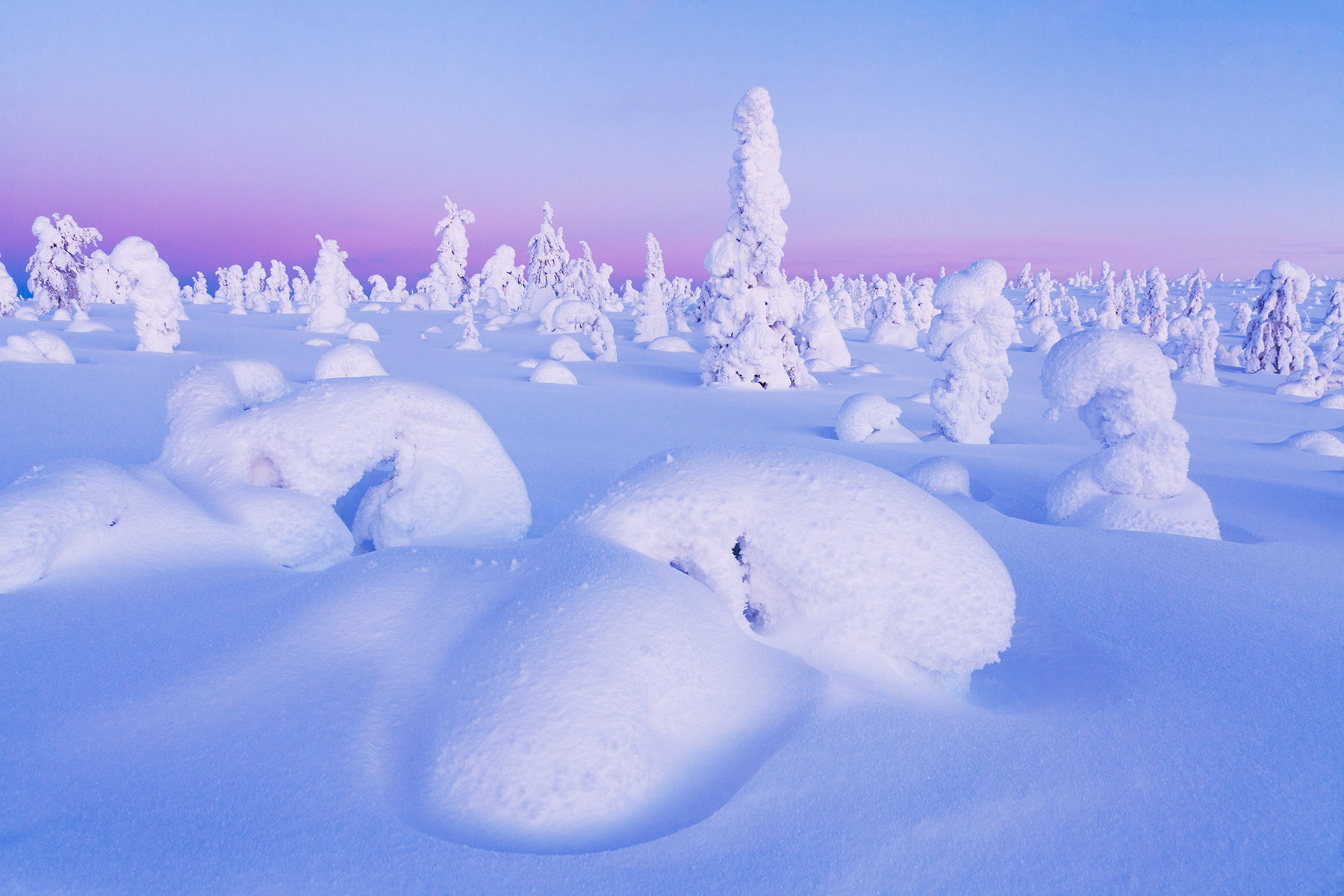
Riisitunturi is known for its high precipitation. A prerequisite for this is high air humidity. This is also confirmed by the trees covered in a thick white coat, the outlines of which are sometimes barely discernible. The moisture that condenses on tree branches freezes and gets covered with wet snow, which in turn freezes, layer by layer. The snow layer thus formed often persists even in stronger winds. The Finns also have a word for this – tykky. The mass of such a load on a single large tree can be as much as several tonnes. Smaller trees are bent close to the ground by such weight.
The vibrant sunset hues soon faded from the trees and surrounding slopes that evening, and I had previously decided to spend the night in the cabin along the shorter trail (Riisin rääpäsy). Of course, staying at this shelter had a hidden purpose too – had vibrant northern lights appeared in the northern sky, beautiful landscapes for night photography would have been immediately at hand. Nowadays, the cabin is very rarely empty, and it can happen that the sleeping places are fully or partially occupied, which is why staying overnight in the cabin should not be relied upon in your travel plans.
Its ascetic conditions felt refreshing, and the gale-force winds that started raging in the dusk felt somewhat milder inside the warm room. Nevertheless, one could kiss goodbye to any chance of seeing the Northern Lights that night. Sleep was constantly interrupted by the thuds of snow chunks knocked down by the wind and the gusts whistling through the logs. By morning, the trees were clear of snow.
If a thaw or gale-force winds, or what is even worse, both at the same time, should pass over Riisitunturi before a planned winter hike, then when crisper weather returns, the white layer on the trees will start to grow again. Based on the winter of 2019, I can say that following favourable conditions, the trees are covered in snow and rime frost again in as little as a week.
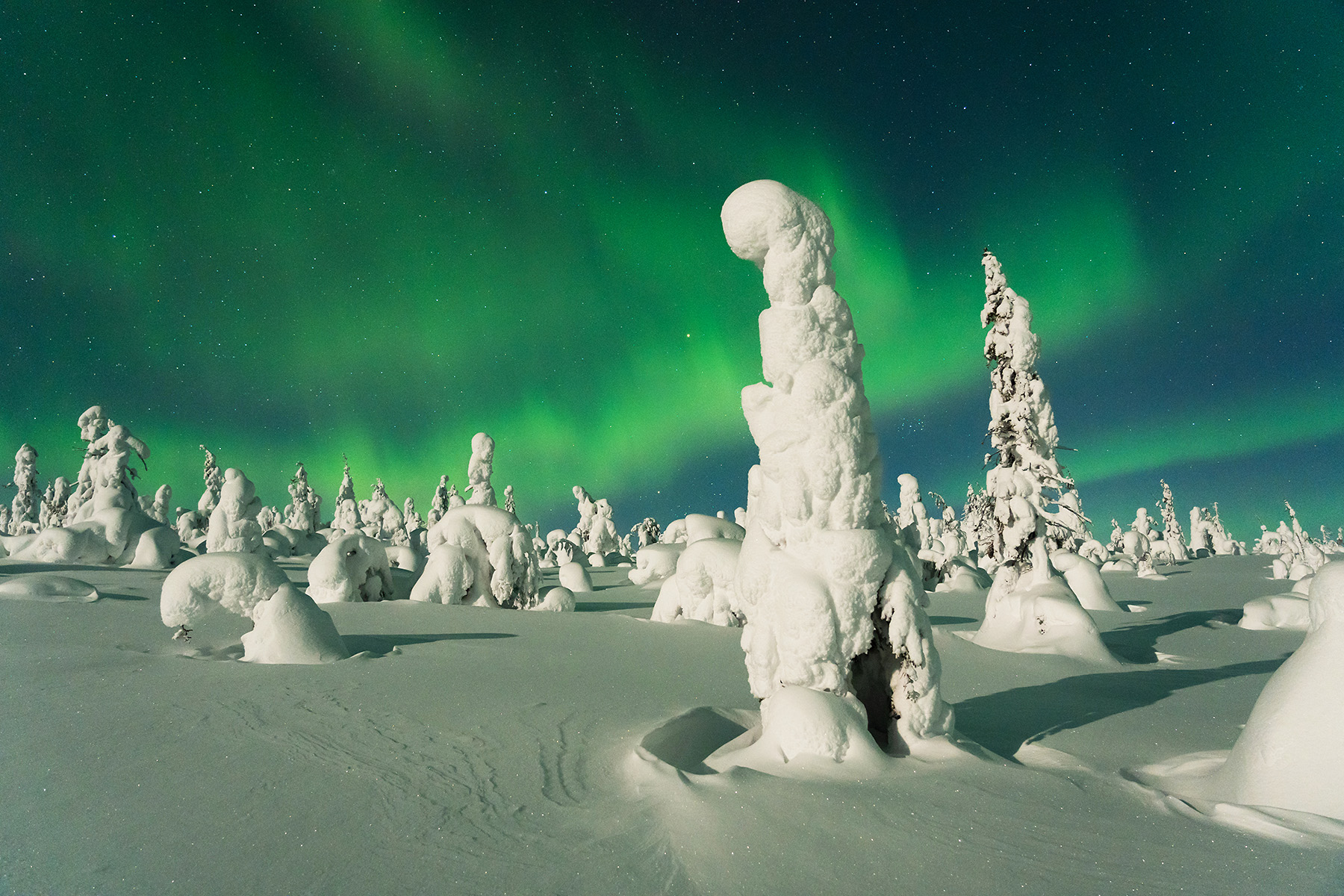
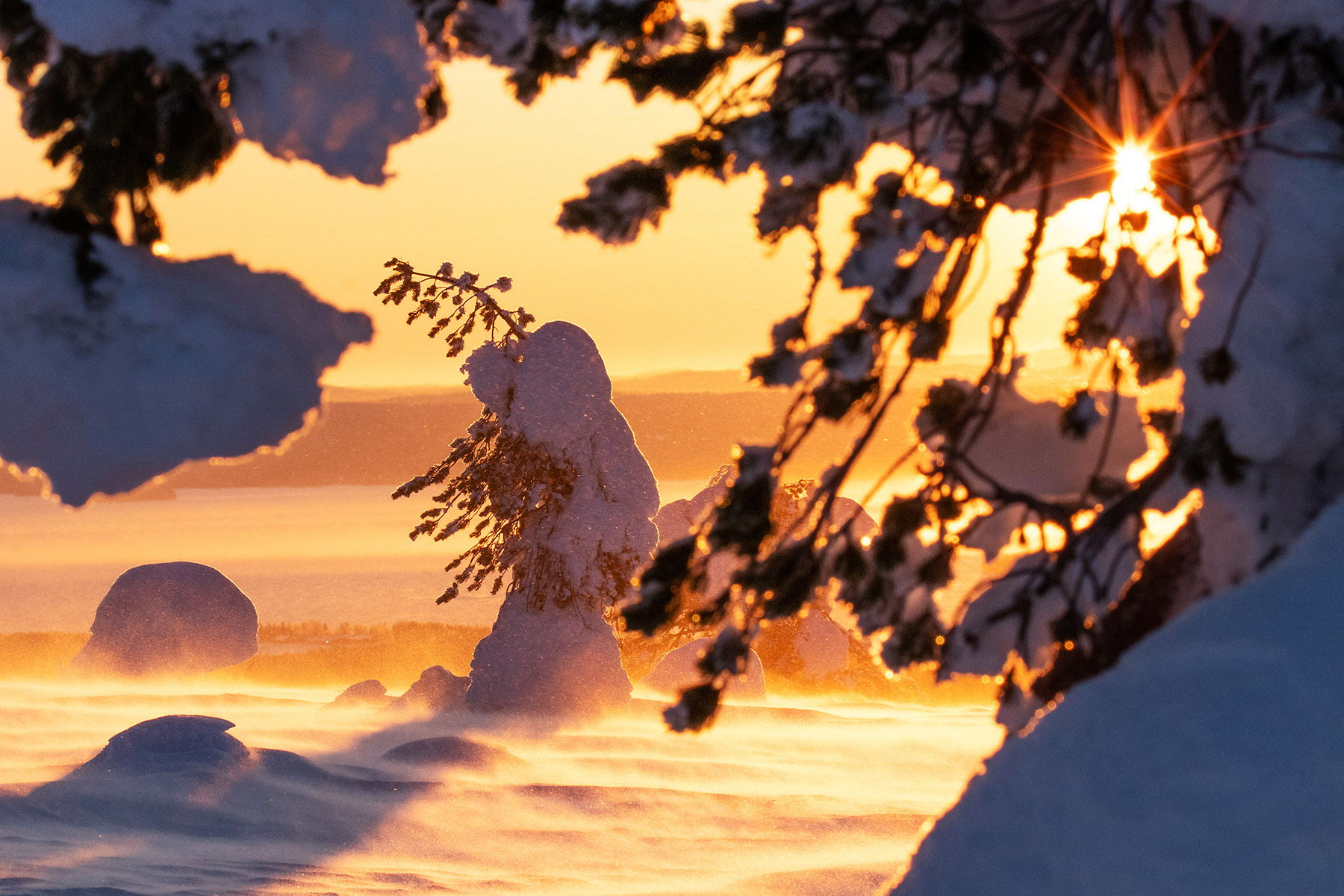
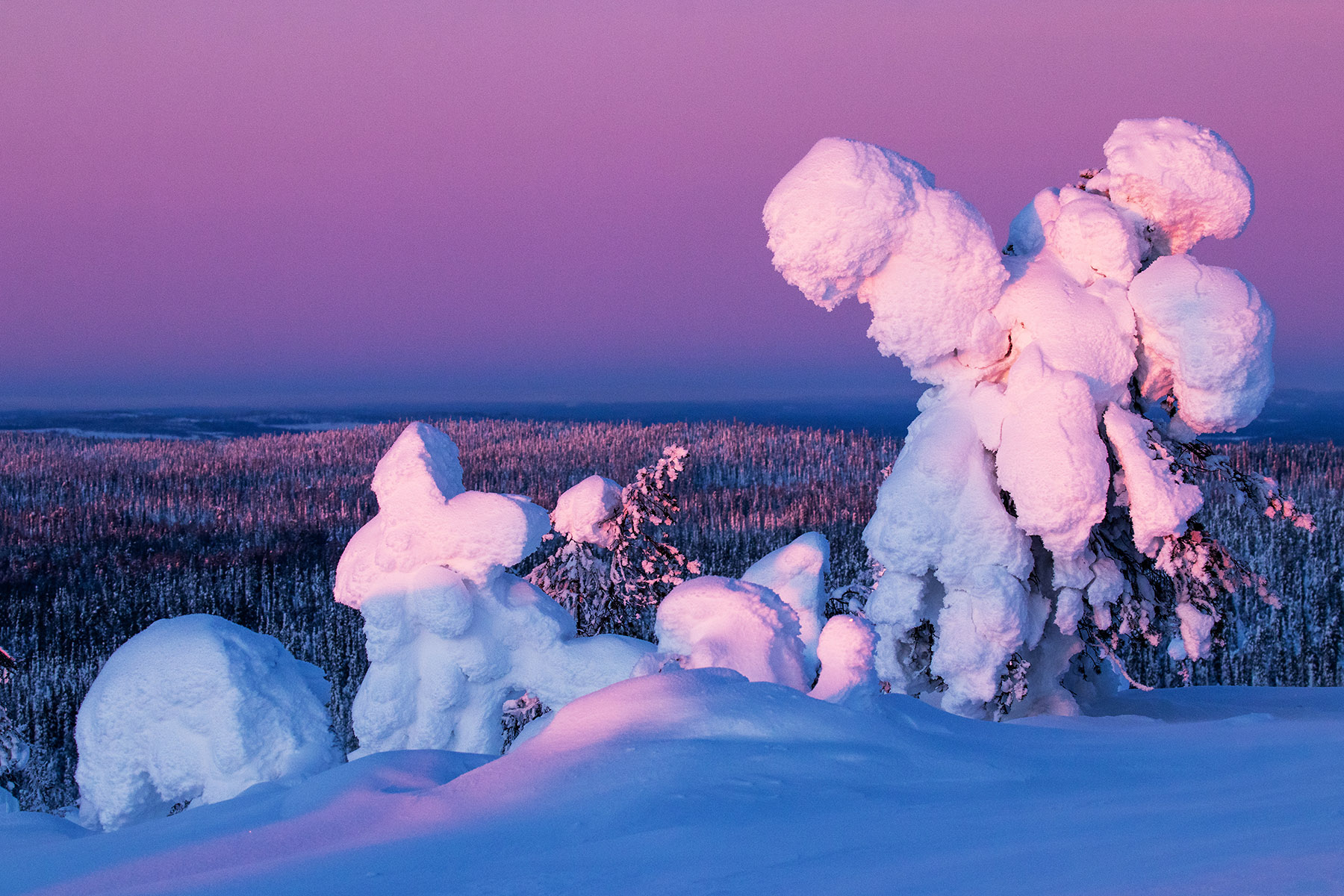
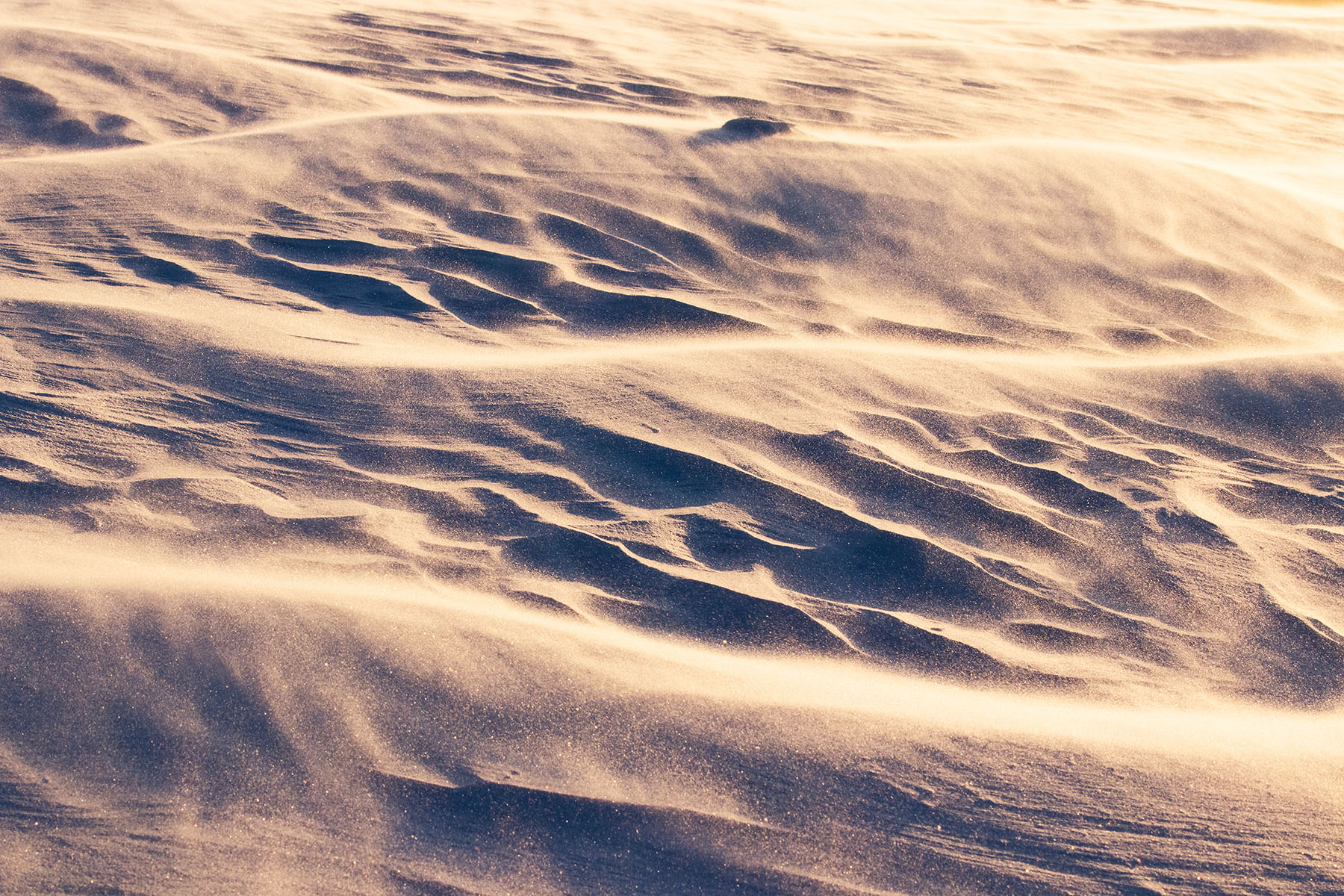
Wintery Riisitunturi offers experiences by both day and night. Especially on a full moon night or during the Northern Lights. When trying to capture these moments on camera, however, one might notice that the snow surface is peppered criss-cross with ski and snowshoe tracks. Therefore, I recommend undertaking landscape photography after a heavier snowfall, which occurs more often than one might think. There are slightly fewer hikers in winter on the longer trail (Riisin rietas), which is why it is worth heading up to the top of Pikku Riisitunturi. Standing in the higher areas, you can feel how the moisture and crisp cold want to creep under your skin, especially in the wind. A whipping wind is almost always present on these peaks, even during calm weather.
Winter is a time of resonant silence, both here in Estonia and in northern Finland. Feathered creatures are rather rarely encountered in wintery Riisitunturi. Ravens fly past, solitary willow tits busy themselves in the trees, and snow-white willow grouse trudge onwards through the rustling snow, snapping up birch buds. The latter are betrayed by the trails of tracks left in the snow and piles of droppings. Upon observing the surface of the snow, one might notice that mountain hares, which otherwise scamper about everywhere, do not venture into Riisitunturi very often during the wintertime.
Rather, the wintery Riisitunturi is about enjoying different forms, textures, shapes, lights and views. When observing a snow formation for a while, the imagination inevitably starts to work. You certainly won't encounter such snow dragons, horses and little men in Estonian winters.
Winter suddenly turns to summer
Spring as we know it is skipped in Riisitunturi. Or rather, the transition is such a fleeting moment that months of lingering winter mostly turn into summer all of a sudden. Already in early March, it is noticeable that the days are much longer and the power of the sun is great. The more the dark branches warm up, the more snow drops from the trees. While the trees are also cleared of snow after some winter storm, before long they are white again, supported by high air humidity and the cold. In March, this sight becomes increasingly rare. However, snow can still accumulate in both April and May.
Depending on the year, from the second half of April gravel roads, including the track leading to the main car park of Riisitunturi, turn into mud baths due to the thaw. Therefore, visiting Riisitunturi at that time is not very popular and for a certain period is made difficult or even blocked. In addition, many of the birds that nest in the summer are not present then, and you should not eagerly expect to encounter flowering plants either. In the first week of June, Riisitunturi has a rather battered appearance, but depending on the temperature, summer can settle in within just a few days.
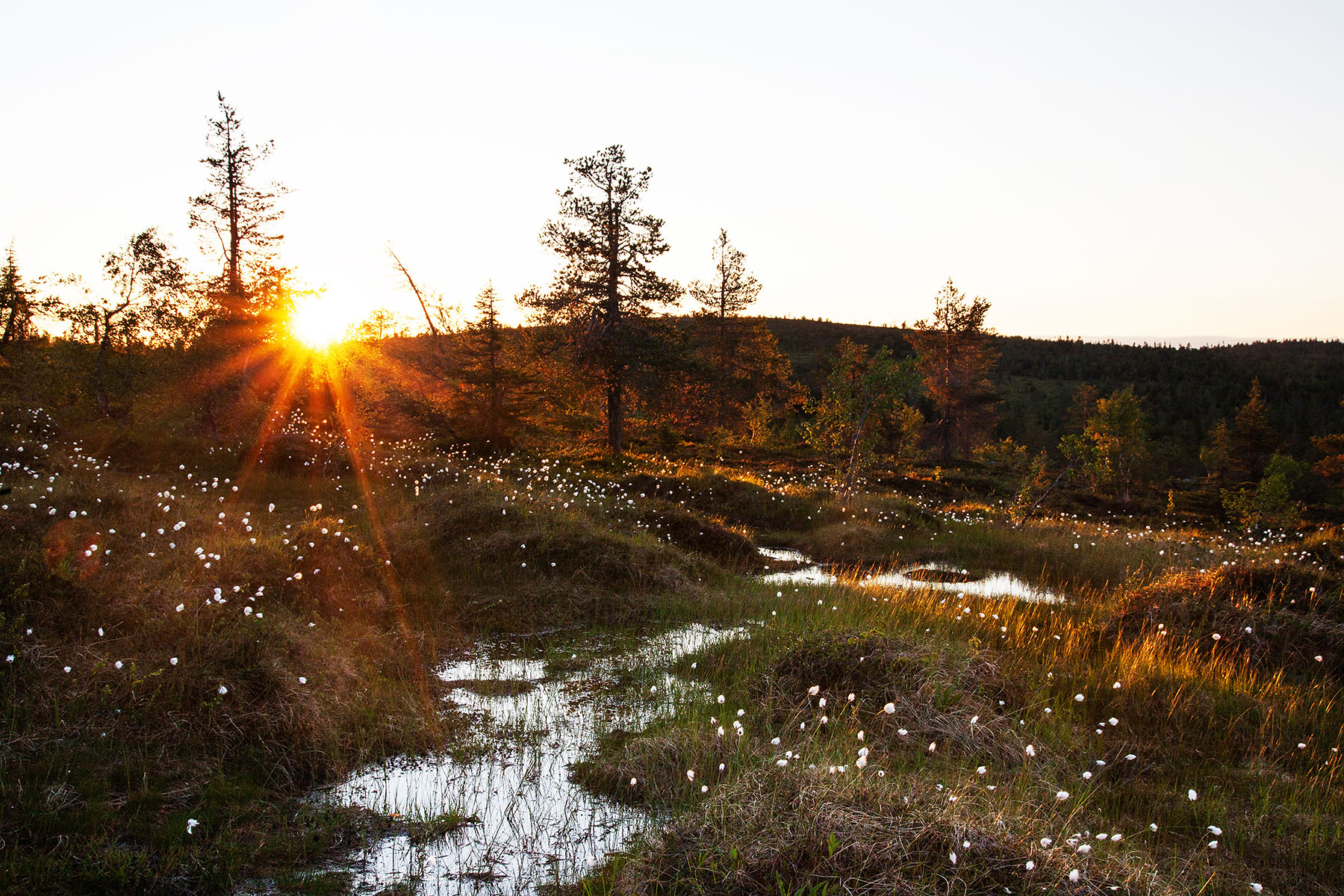
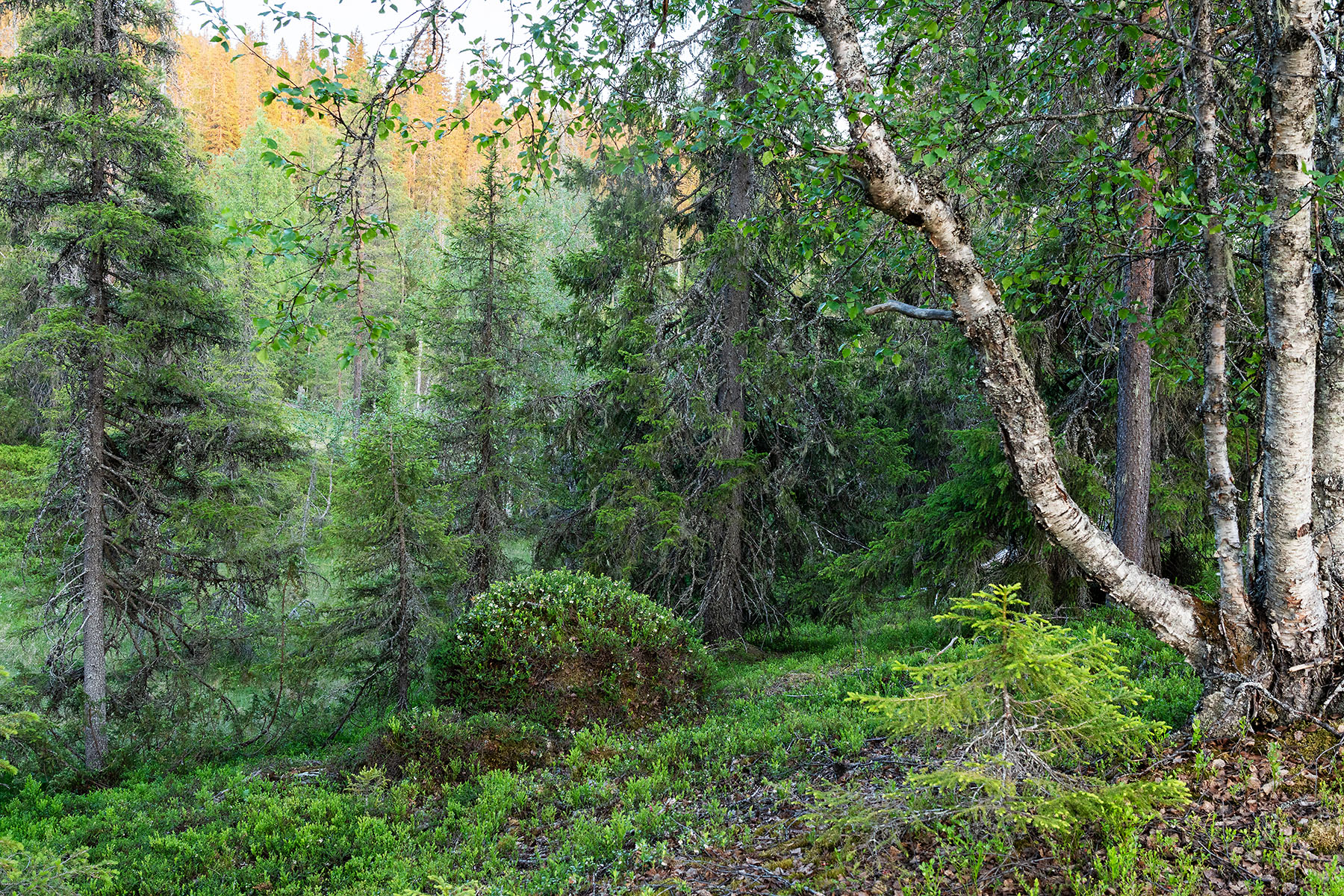
Anyone who has visited Riisitunturi only in winter and were to find themselves there in summer might not even recognise the environment. Instead of snow-laden trees, taller and shorter evergreen conifers wind their way through the landscape, interspersed with various species of birch, aspen, and rowan. The fallen tree giants are no longer overshadowed by a thick blanket of snow, revealing Riisitunturi in all its beauty – numerous living and dead, gnarled and slender trees, and a landscape that has remained unchanged for hundreds of years. Since the majority of Riisitunturi consists of damper spruce forests, the area has also been spared from major wildfires. However, harsh winters have left their mark on the trees.
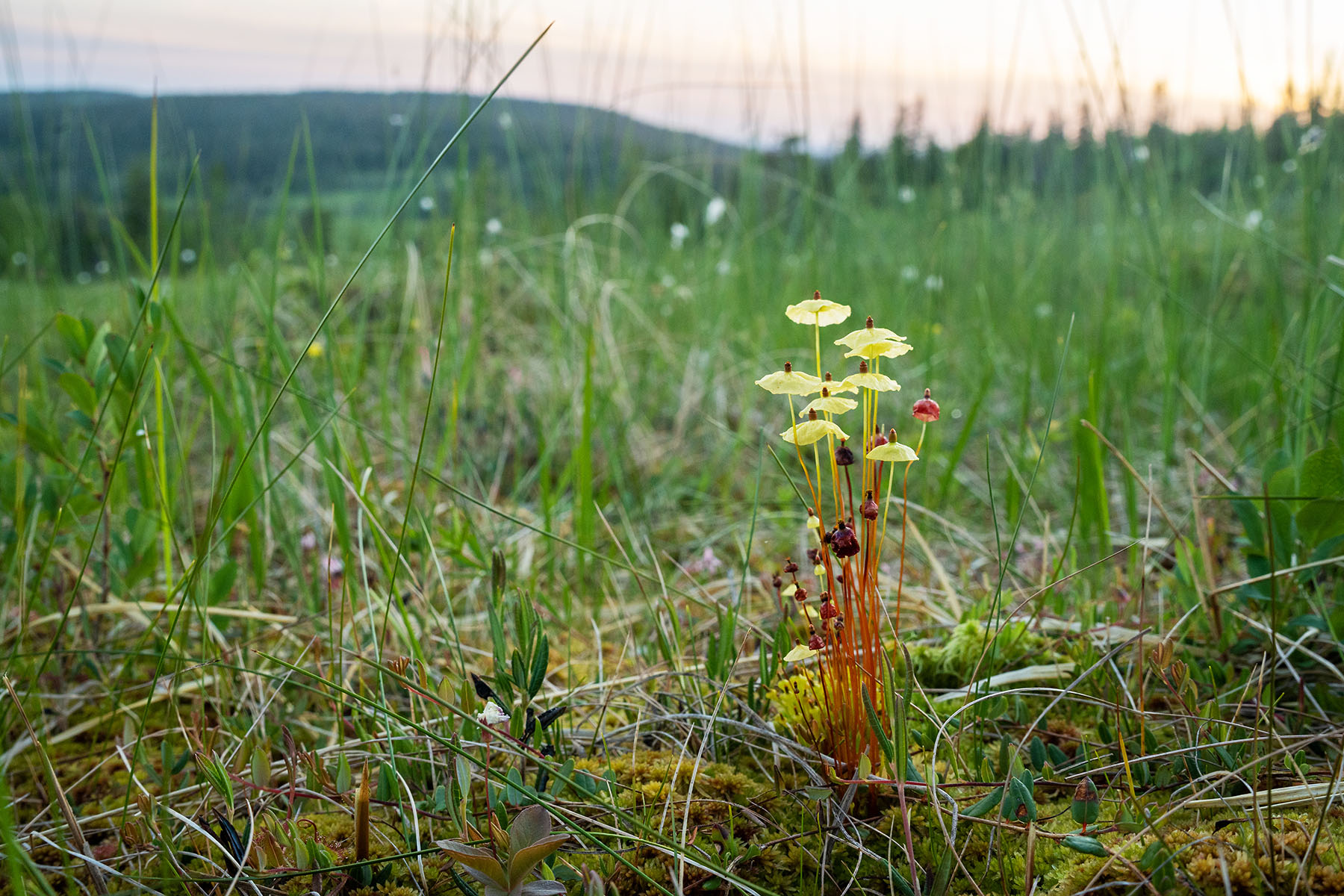
With the disappearance of the snow, moving along various paths and terrains becomes a lot easier. In my view, the best time to enjoy Riisitunturi in the summer is from the middle of June to the first week of July. It is precisely at this time that you can encounter the most flowers in bloom and lush greenery is in full swing. From late June, the beauty of blossoms is offered in almost every corner of Riisitunturi by broad-leaved marsh orchids and heath spotted orchids, and beautiful carpets of dwarf cornel. Especially in slightly damp patches.
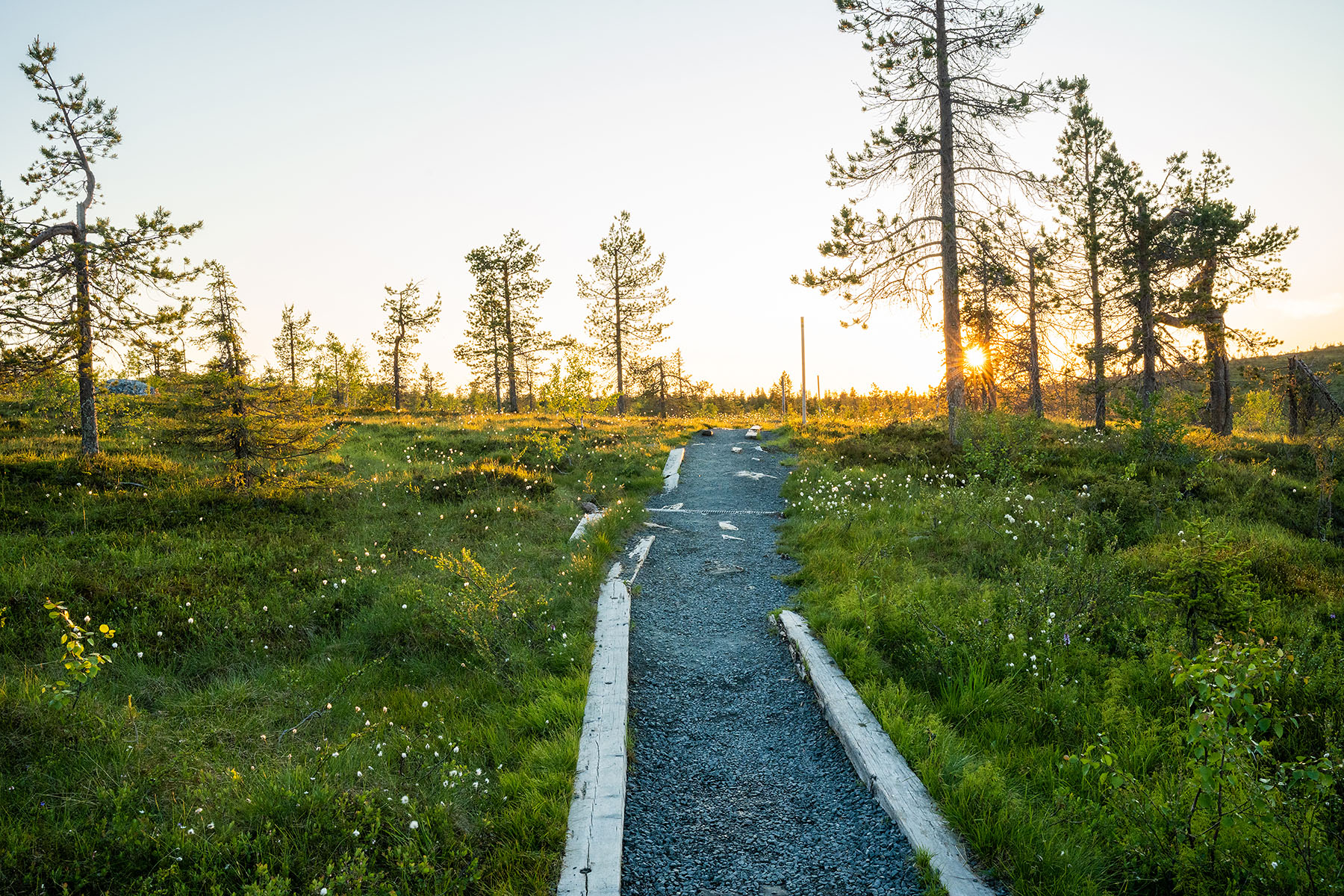
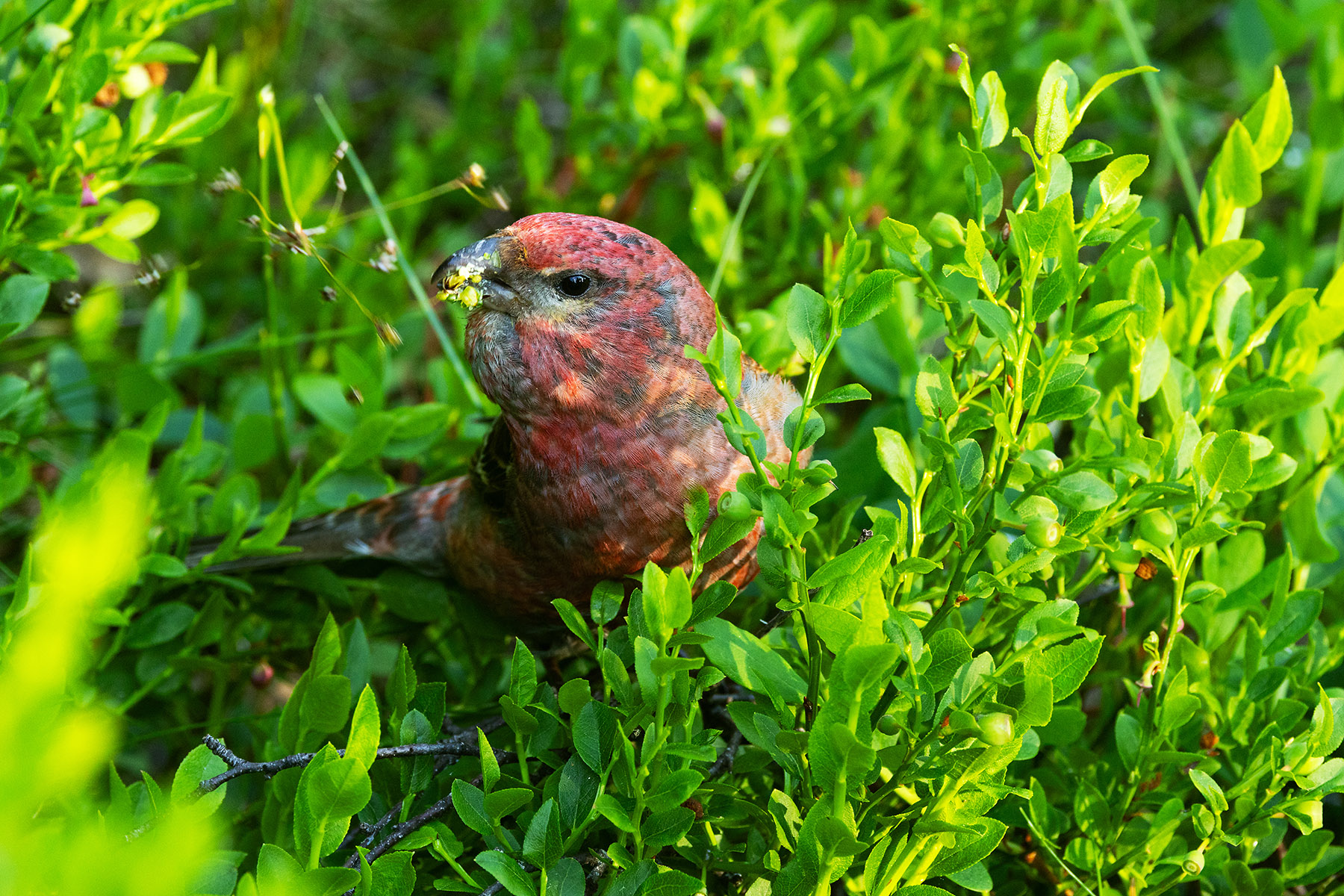
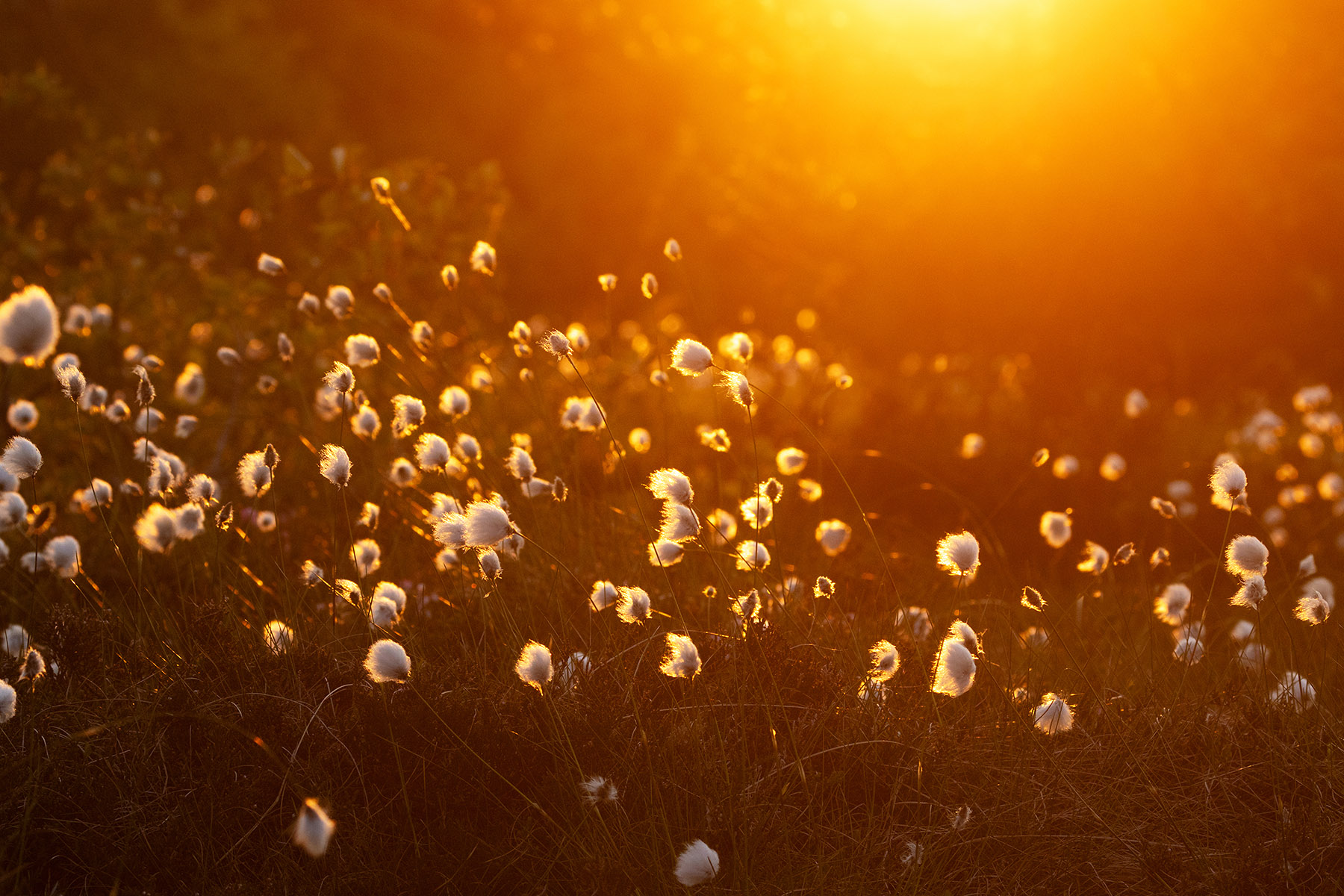
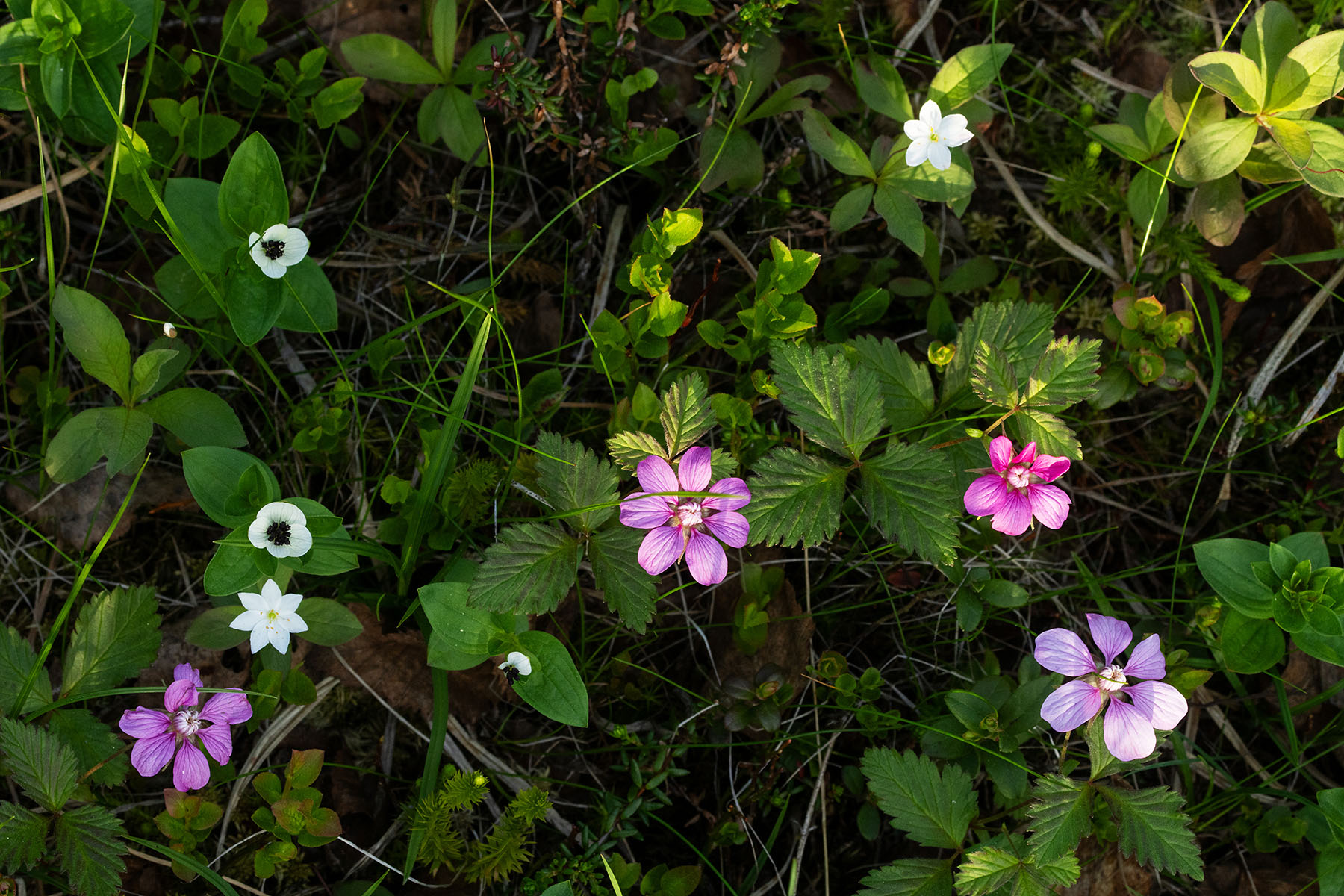
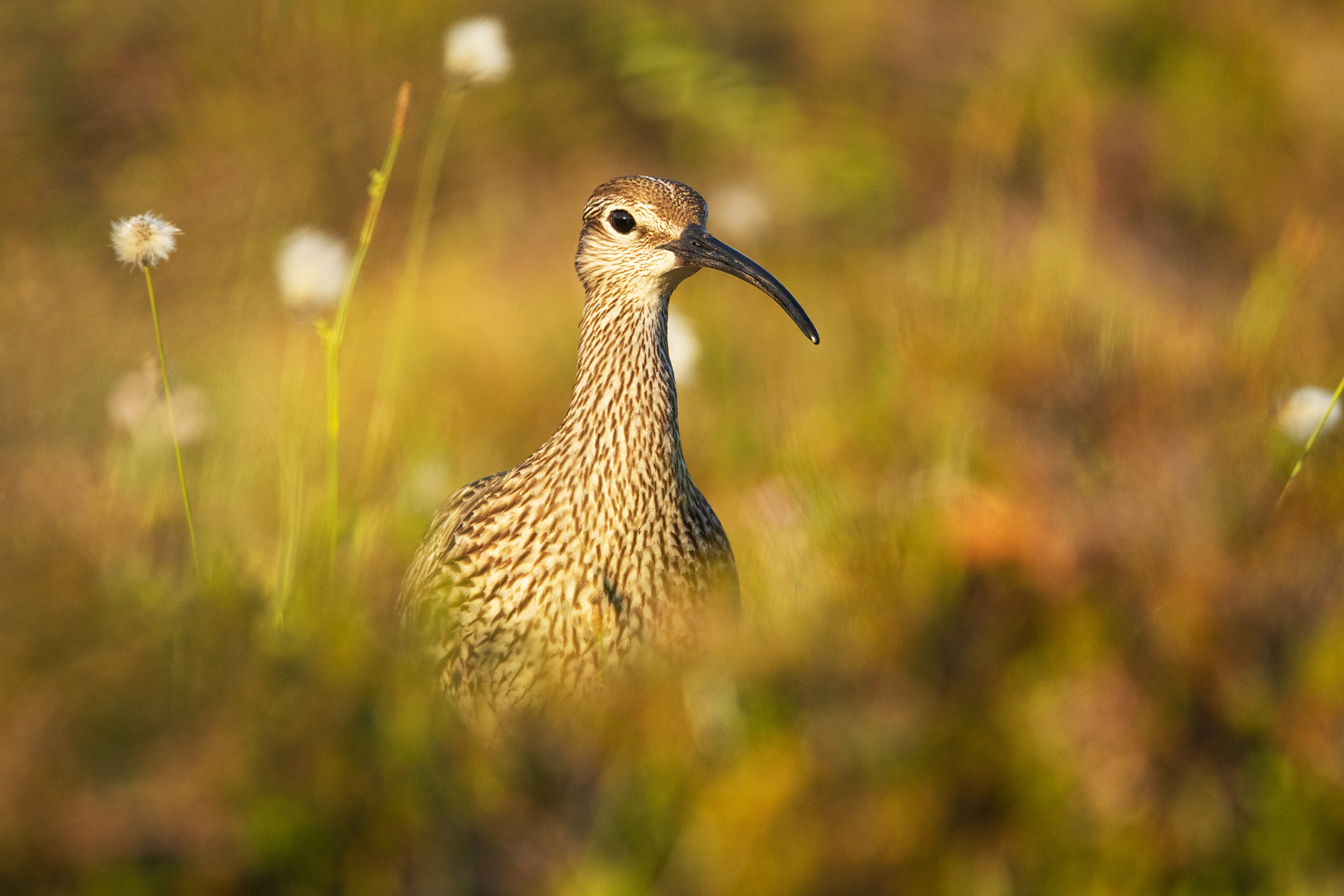
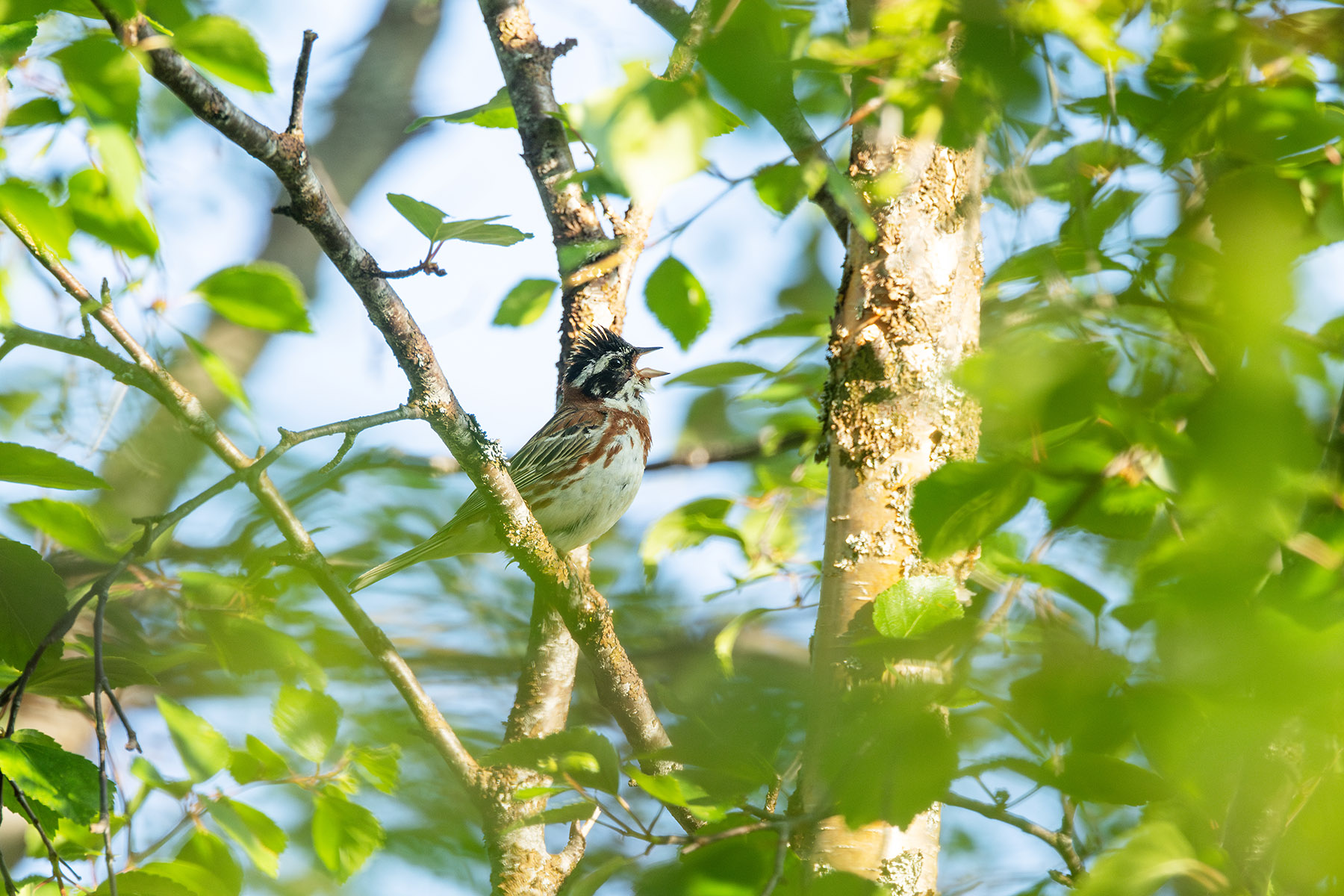
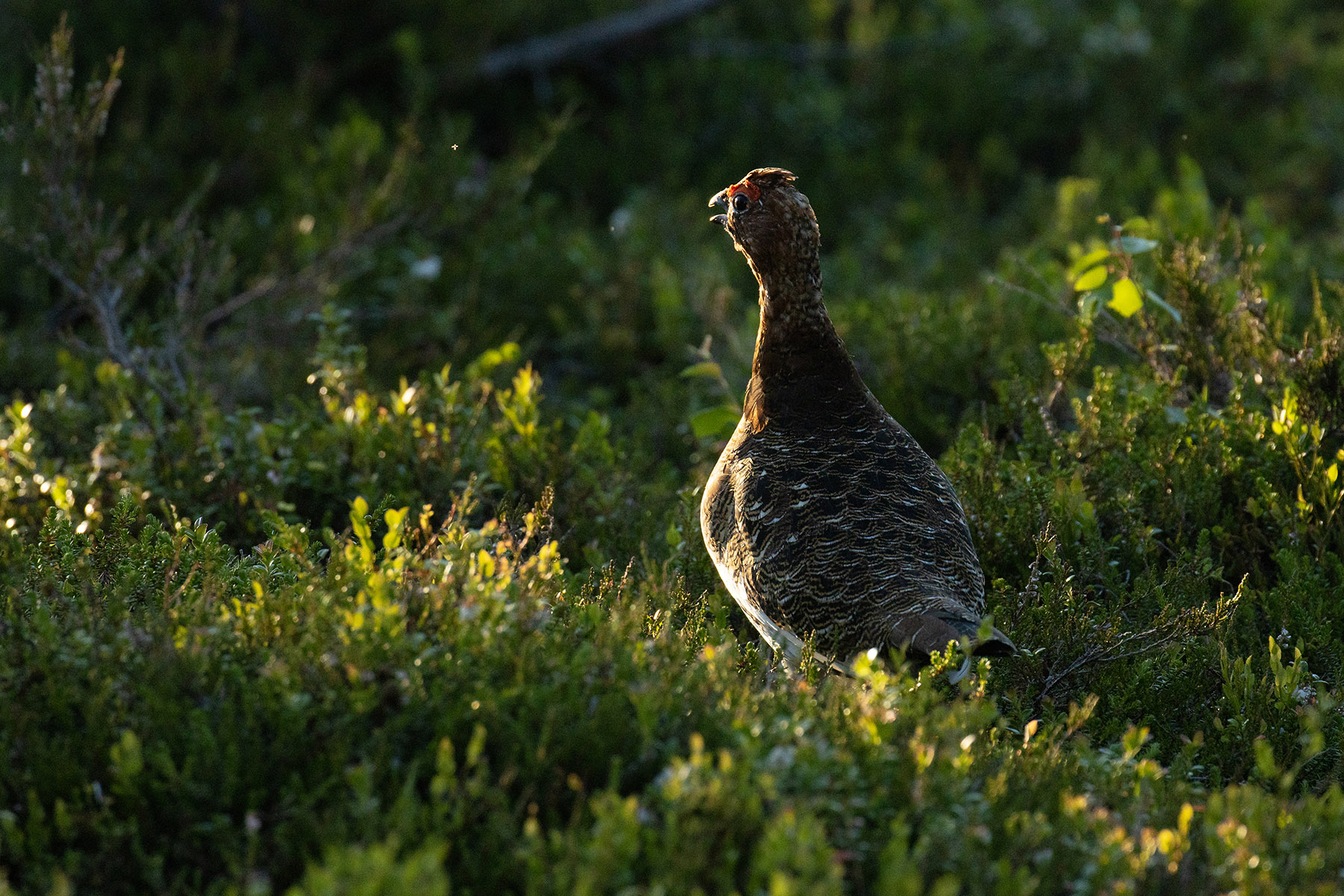
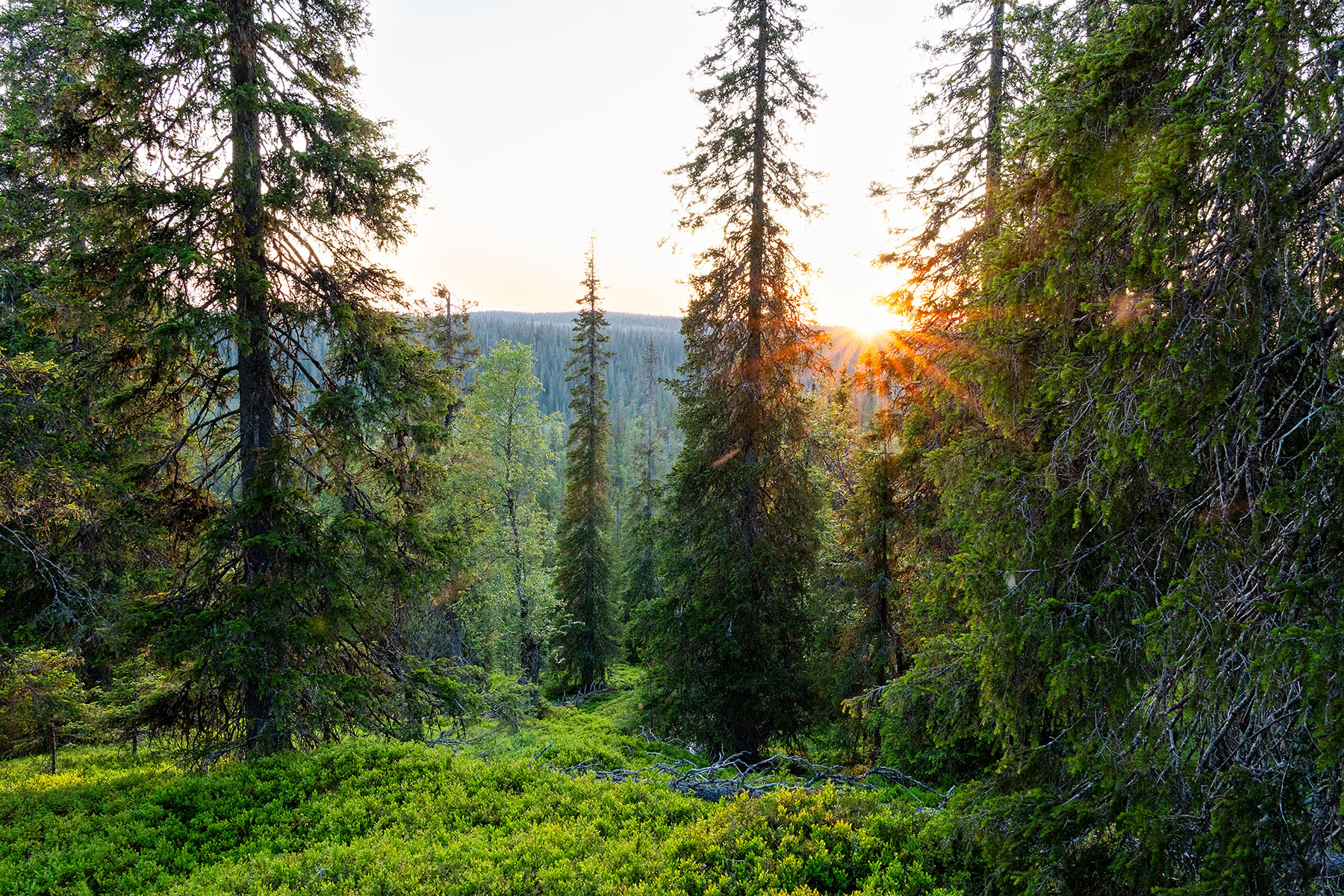
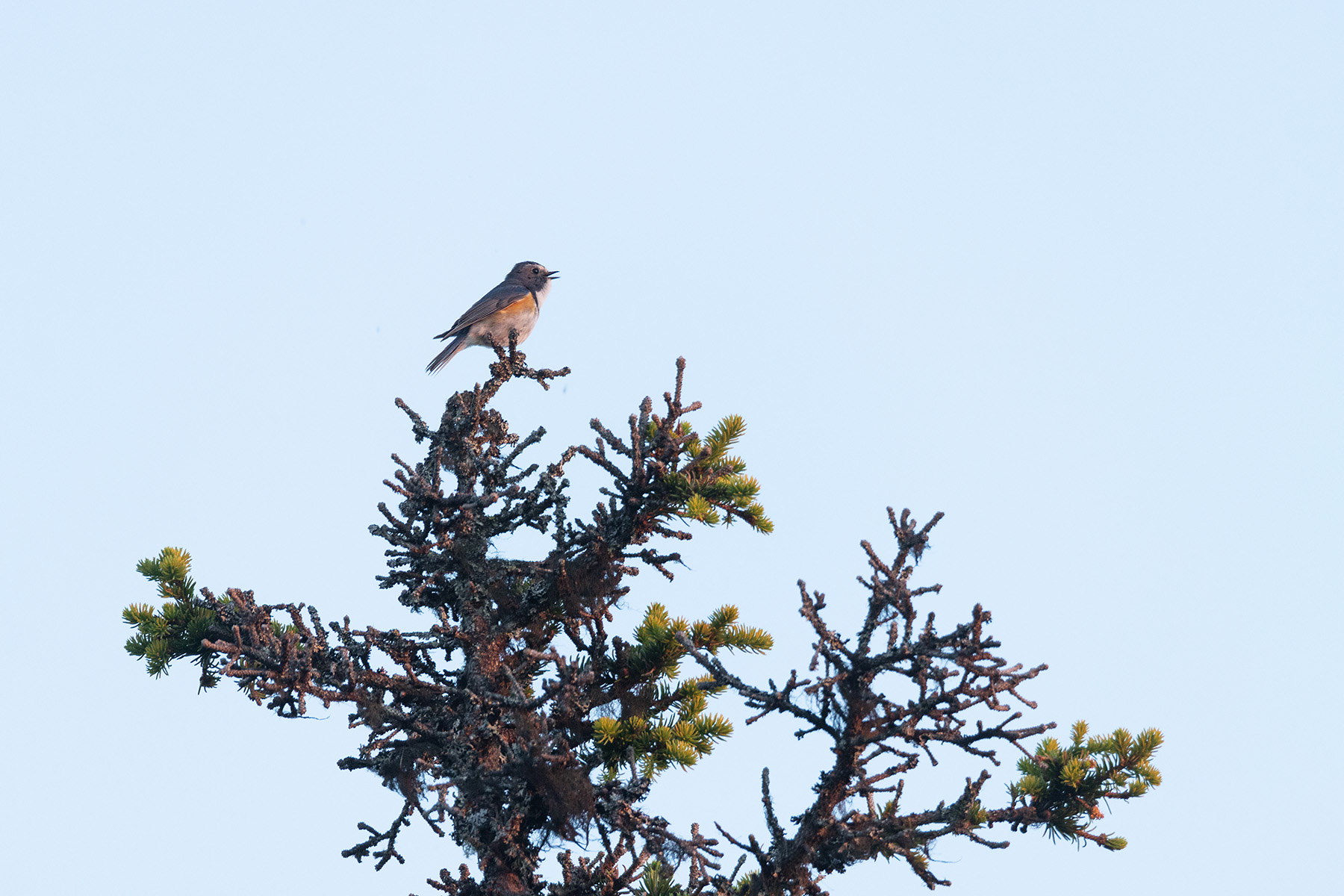
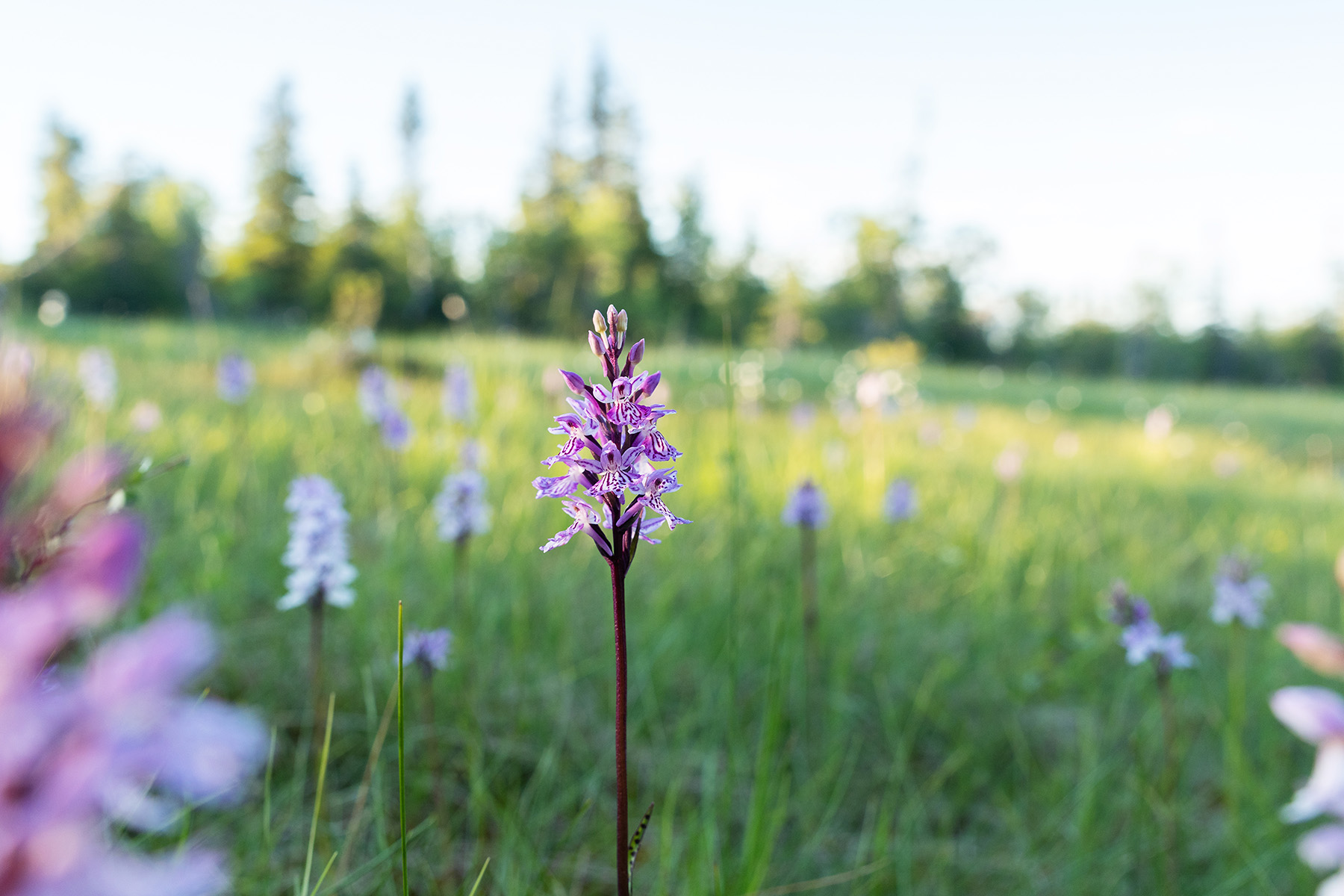
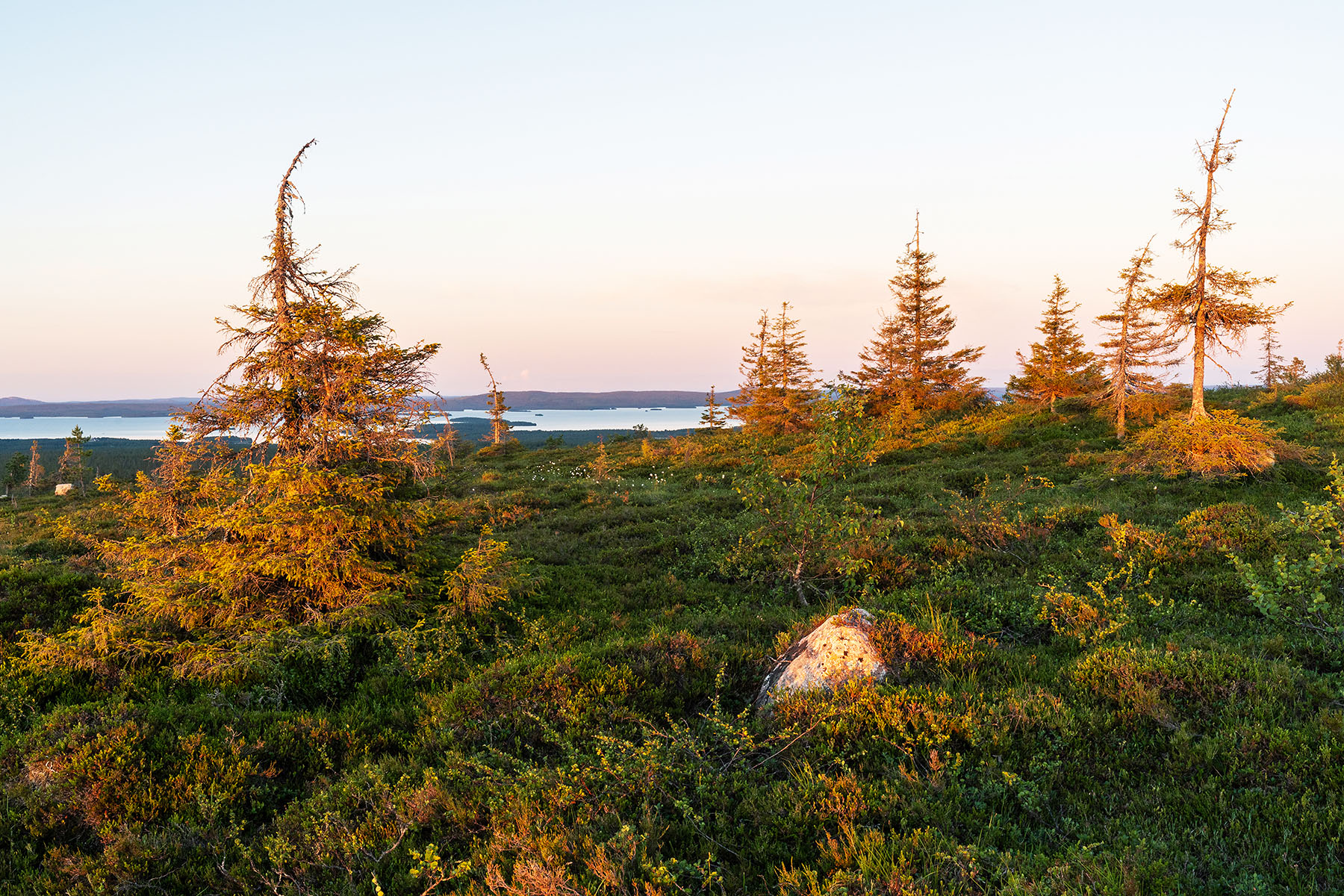
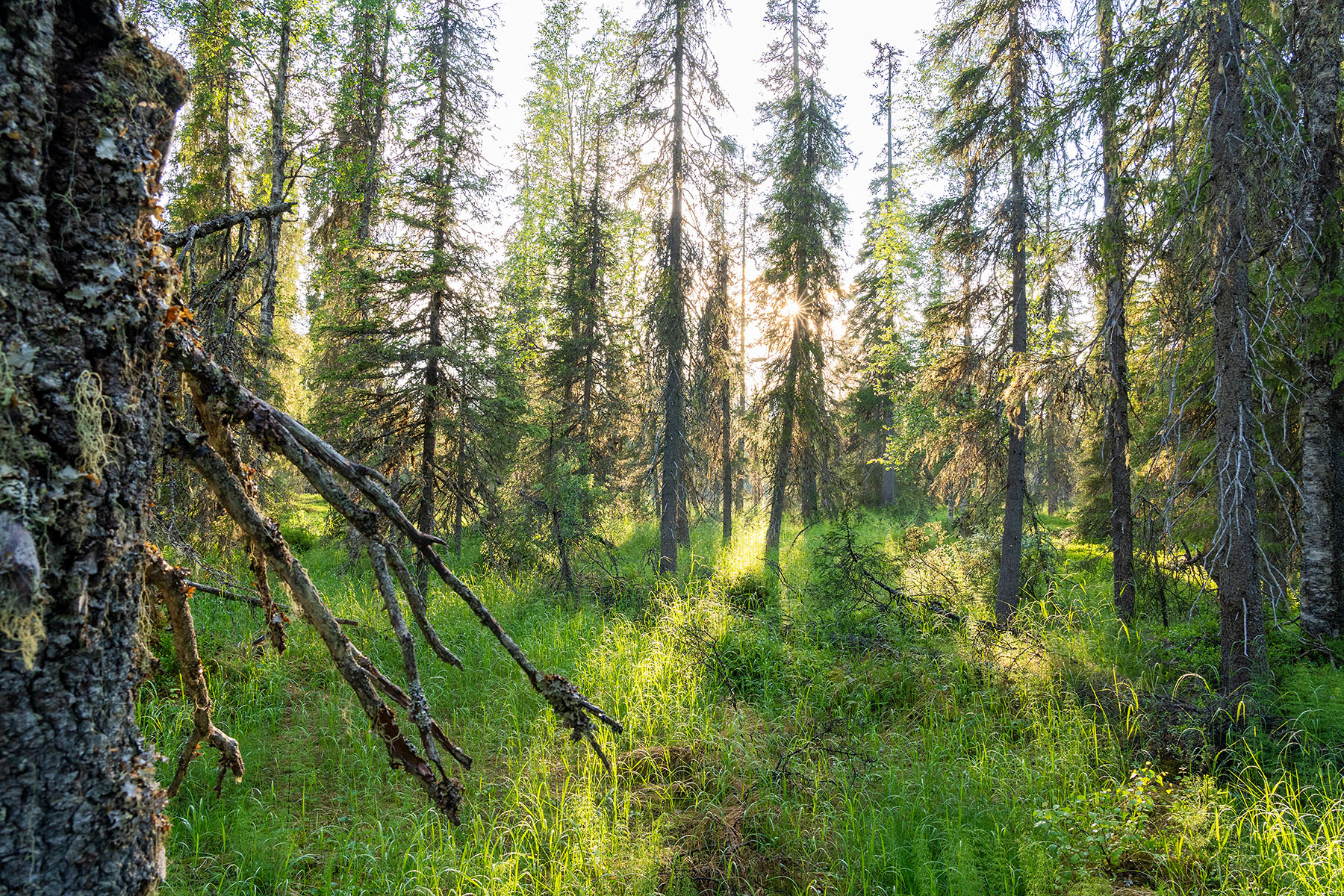
You can also spot blooming bog-rosemary, cowberries, mountain everlasting, wild rosemary, twinflowers, butterworts, cloudberries and other plants. There are a few plants in bloom even before and after this great season of abundance. For instance, various cottongrasses flower right after the snow melts, and by the end of late June the wind is already rustling their white fluffy tufts. Everything bursts into life within a very short space of time, driven by long, sun-filled days. Perceiving night and day becomes a little trickier. Fortunately, there is still a slightly dimmer period, which serves as a brief moment of rest for many birds and animals. Before and after this twilight, there are as much as three hours of sweet light that makes the entire landscape particularly enchanting.
Just like in Estonia, most birds in Riisitunturi also stop singing in the first week of July, because proclaiming territories becomes unimportant while raising the final chicks. Bustling birdlife becomes a lot quieter in mid-July, however. I have never visited Riisitunturi from the second half of July to the end of August, but based on stories from acquaintances and friends, Riisitunturi is exceptionally quiet at that time. Since the main seasons are in winter, June, and around the time of the autumn colours, slightly fewer people are also about in August.
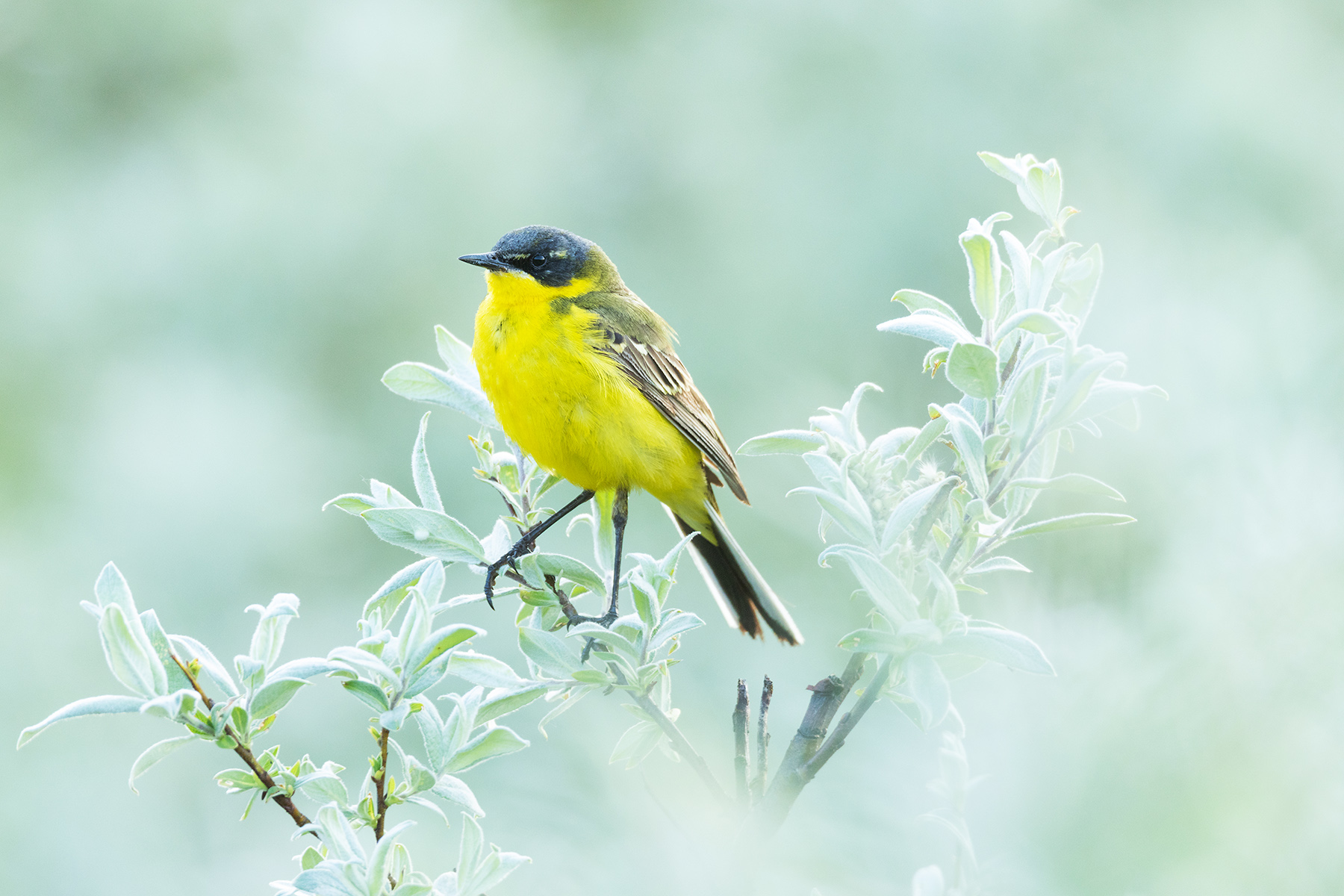
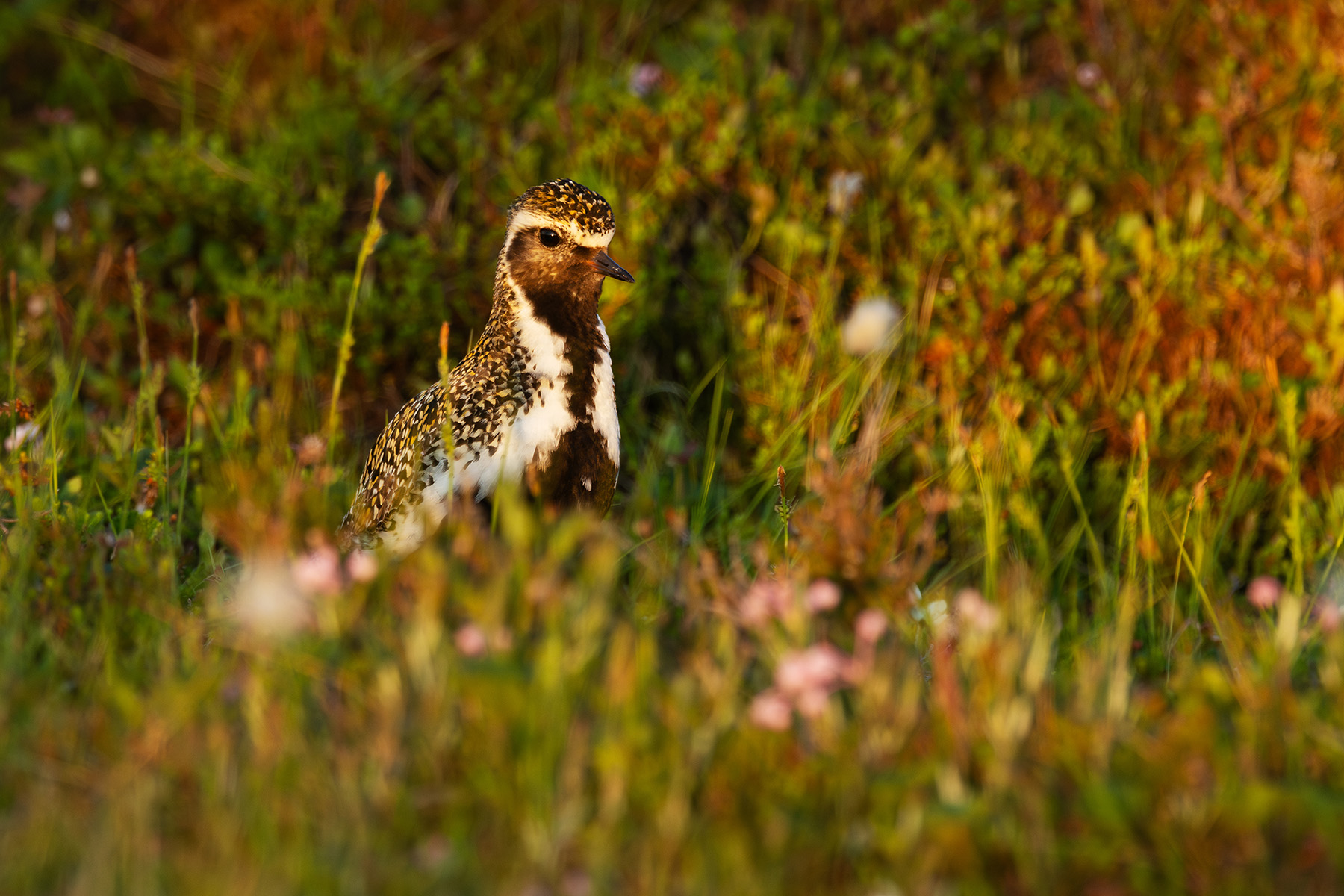
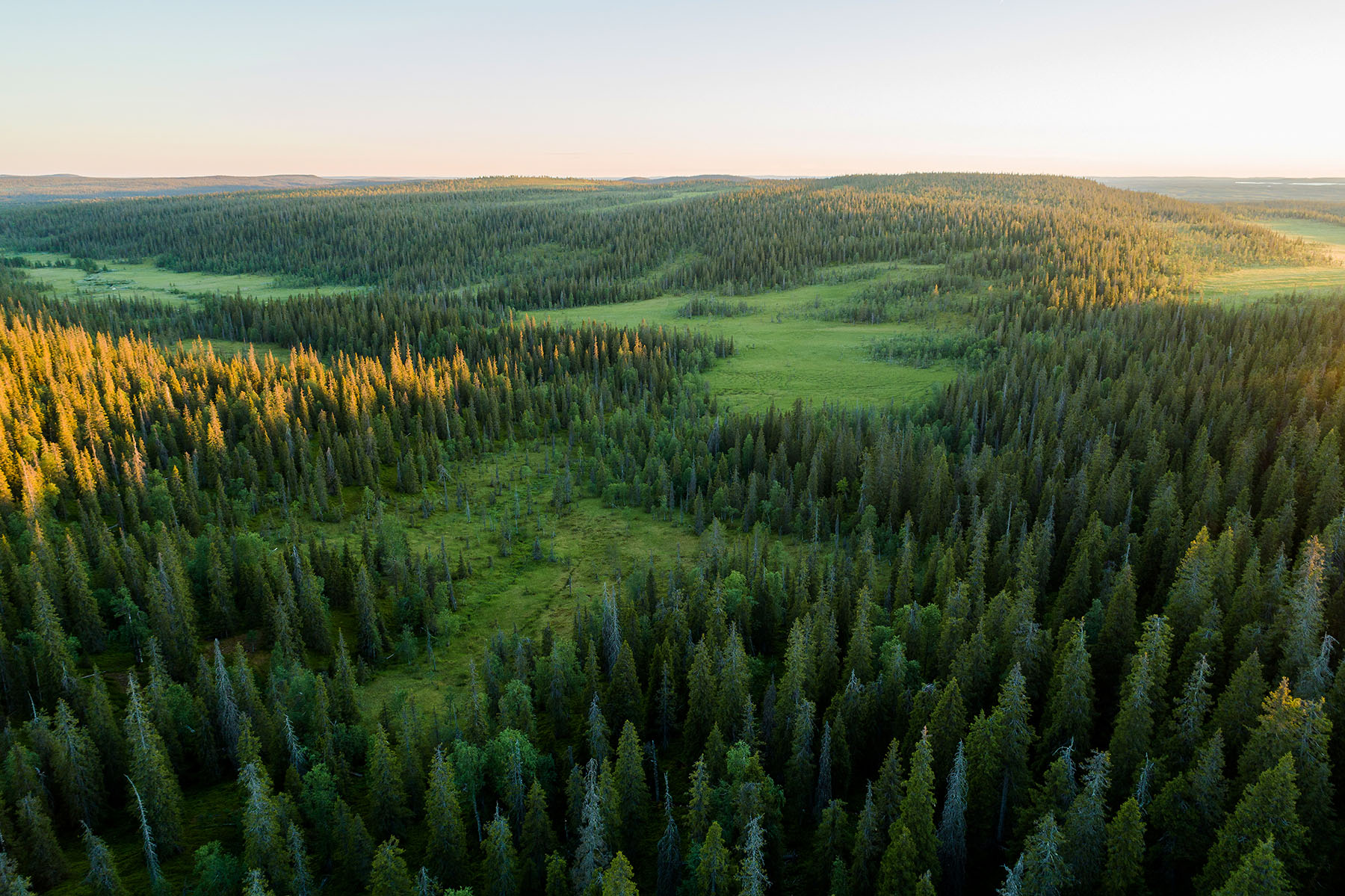
At first glance, habitats suitable for various feathered creatures seem abundant, but when walking the shorter trails of Riisitunturi, you might not encounter a single bird. Even less so larger mammals. Years vary a great deal, of course. In addition to disturbances, bird numbers are affected by the prevailing weather and the amount of food available. For example, in some years the rodent population may increase significantly, and as a result, several pairs of hawk owls even breed in Riisitunturi. There are also years when hawk owls are seen in the area only during migration.
I have repeatedly been lucky enough to encounter that bird of prey, which adorns the national park's coat of arms, in winter, autumn and even summer. On most occasions, the northern hawk-owl has accompanied passers-by with a stern gaze right near the trails. The most memorable encounter took place last summer, when I decided to stray slightly off the trail. I should mention that in Riisitunturi it is not permitted to break branches, damage trees, reshape the landscape or take rocks with you. Obviously, disturbing nesting birds, running unleashed dogs and much more are also not allowed. In addition, I do not recommend straying off the trail on your very first visits.
So, amongst the towering trees one must move with the utmost respect. That is what I did on a summer evening teeming with mosquitoes, until my eyes fell upon a waxwing, a siskin and a redstart trying to herd a great grey shrike sitting in the top of a spruce tree a little further away. The shrike had had enough of this minutes-long, incessant nagging and descended among the more distant pines. Instead of even following the shrike, I took the completely opposite course. I walked along the green-hued landscape until, on the dry branches of a giant spruce, a northern hawk-owl stared back at me.

Previous encounters, both right there in Riisitunturi and even nearly 1000 kilometres away on my home doorstep, have shown that this barred-patterned owl is hardly afraid of humans. Over the course of nearly half an hour, I watched from a distance as it made a couple of swoops for small rodents active on the ground. Although tens of thousands of people visit the national park, few get to see the owl.
Behind the hawk owl revealing itself to me so repeatedly may also be the fact that I have now visited Riisitunturi National Park over 30 times. Although sometimes I feel like I have already seen everything in Riisitunturi, every additional trip points to the fact that I have still been a witness to quite few moments.
The article was published in an edited form in the autumn 2021 issue of the magazine Estonian Nature.
Read the story too About autumn in Riisitunturi.